
When you think of Dr. Seuss, the first thing that comes to mind is a brightly colored children’s book populated with imaginative creatures and silly (but insightful) rhymes.
Theodor Geisel, a.k.a. Dr. Seuss, was a brilliant children’s book author and illustrator, publishing 60+ titles that have sold a collective 600 to 700 million copies worldwide. But before turning his focus toward children’s books, Dr. Seuss used his artistic talent to build a very different—yet similarly successful—career as an advertiser and political cartoonist. Although Seuss was not Jewish, himself, his political cartoons were such a powerful cornerstone of the anti-Fascist movement in the United States that he earns a place as an upstander during the Holocaust era.
Dr. Seuss & Standard Oil
Dr. Seuss was hired by Standard Oil in 1928, at twenty-four years old, to promote Flit insect repellent, and he spent seventeen years drawing advertisements in which characters of all kinds shouted the catchphrase, “Quick, Henry, the Flit!” as they battled insects both literal and metaphorical.
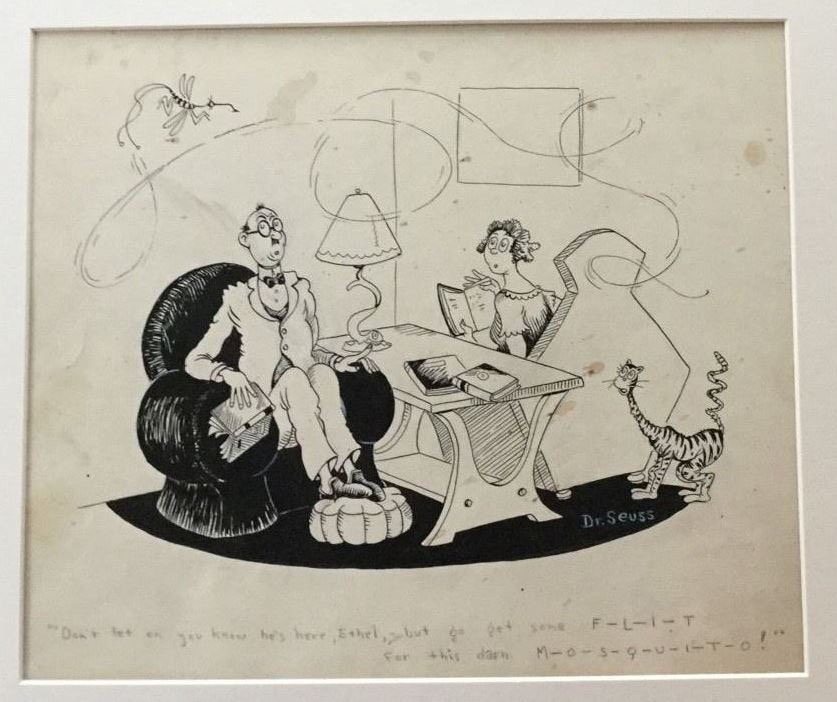
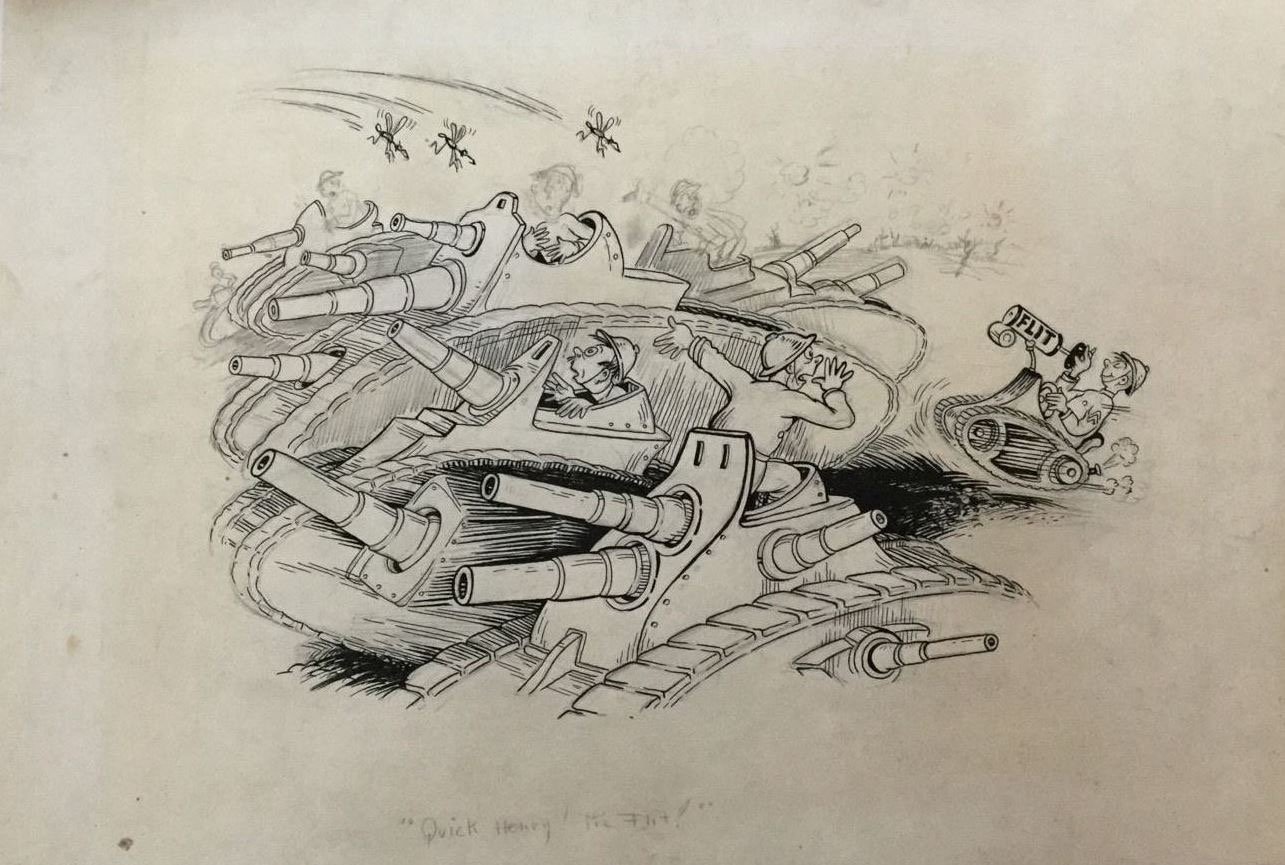
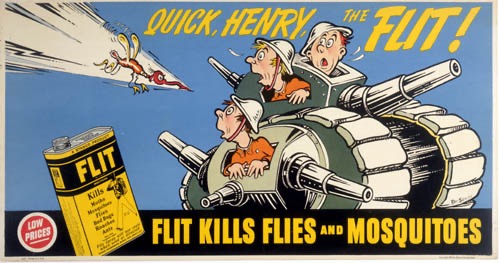
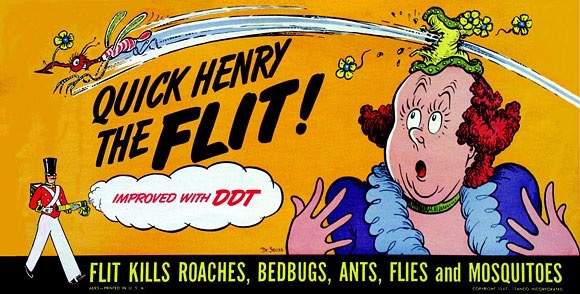
Simultaneously, Seuss was penning advertisements for another Standard Oil product, Esso motor oil.
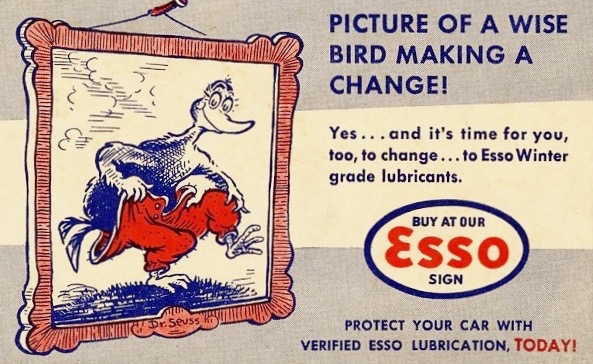
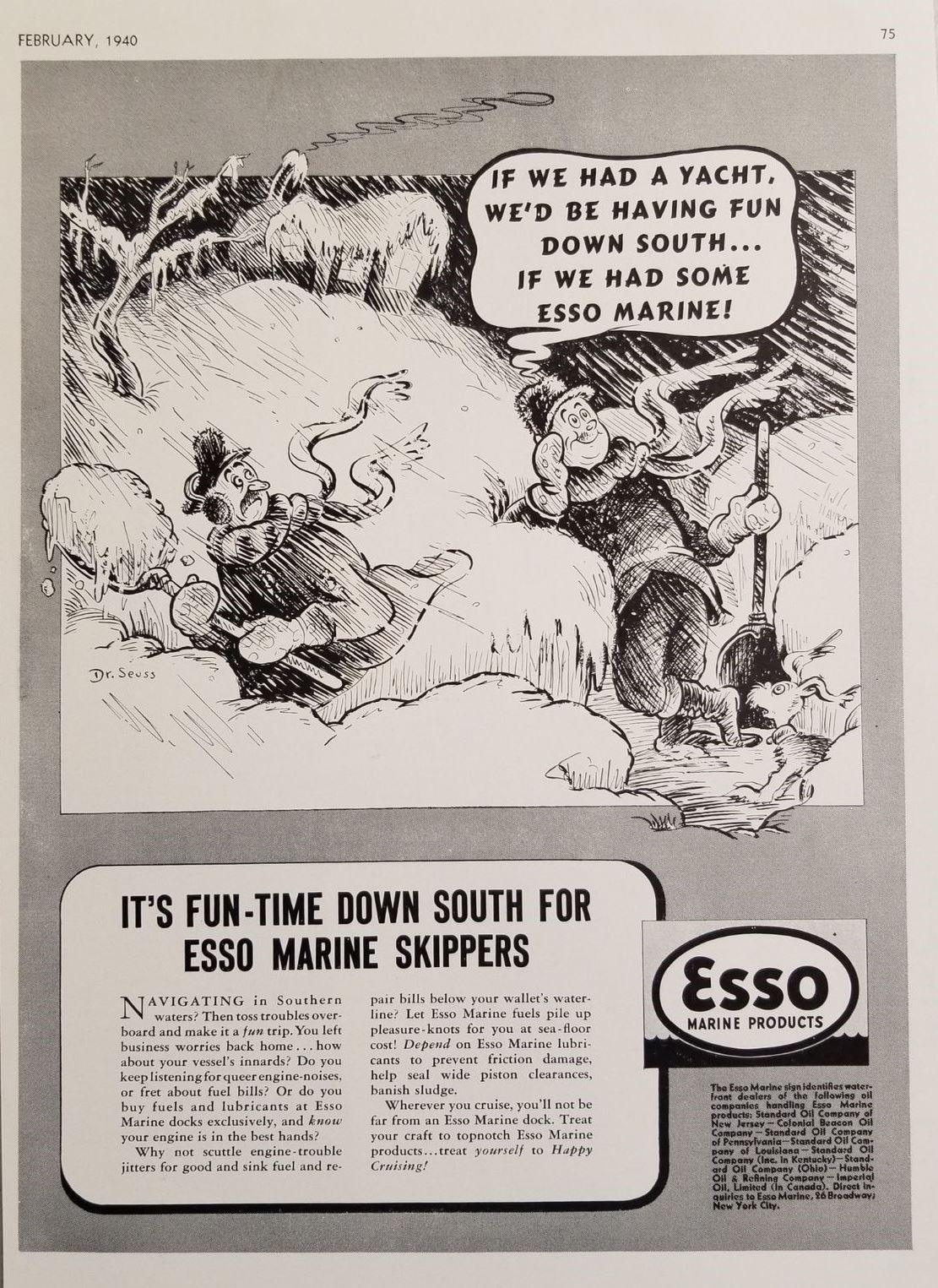
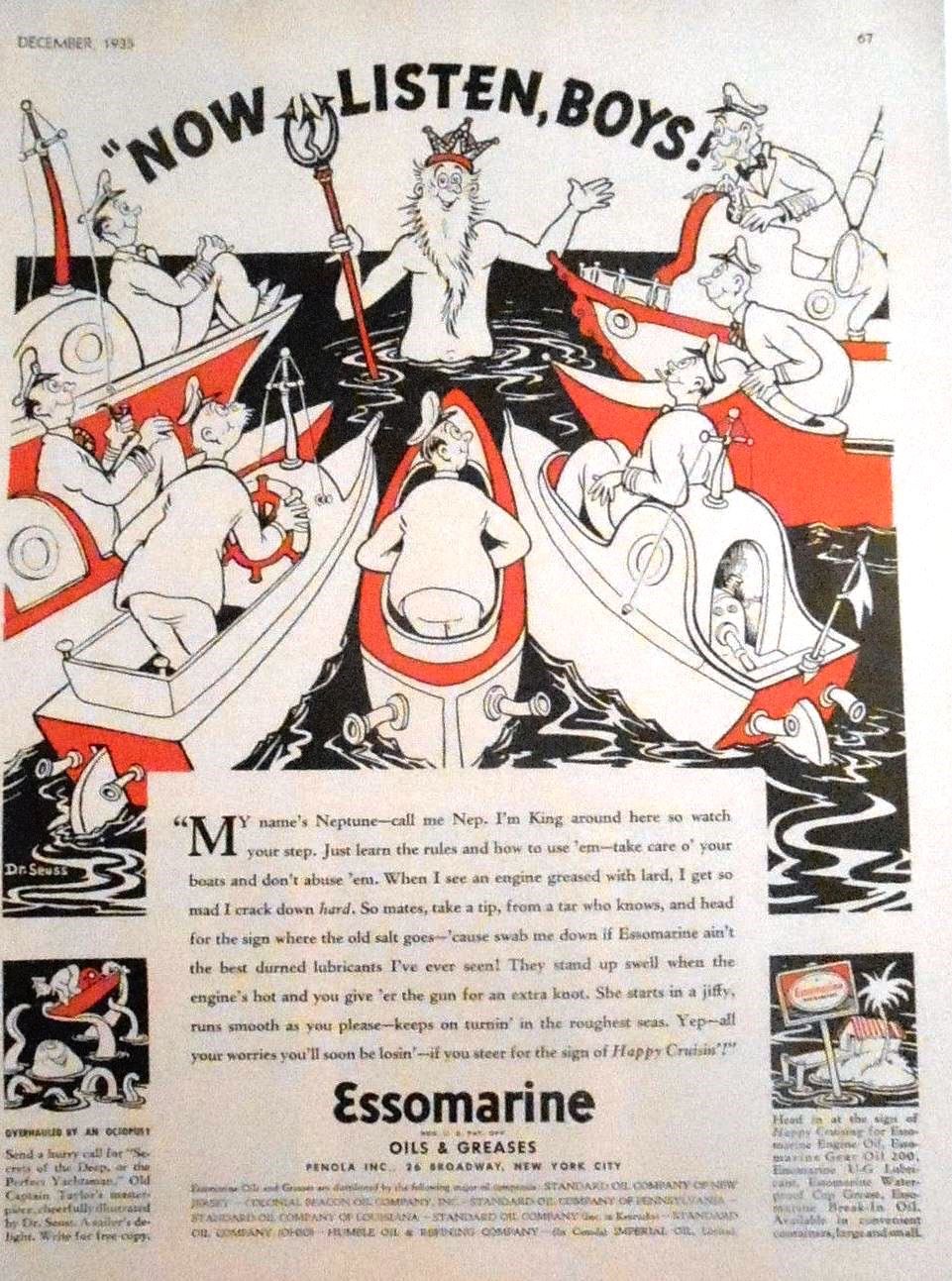
These ads supported Dr. Seuss and his wife through the Great Depression and gave Seuss the opportunity to experiment with and hone the style that would ultimately define his children’s illustrations.
WWII Political Cartooning
In 1940, Dr. Seuss became the chief editorial cartoonist for the left-leaning New York newspaper PM, where he drew over 400 cartoons lambasting Axis leaders and American isolationism.
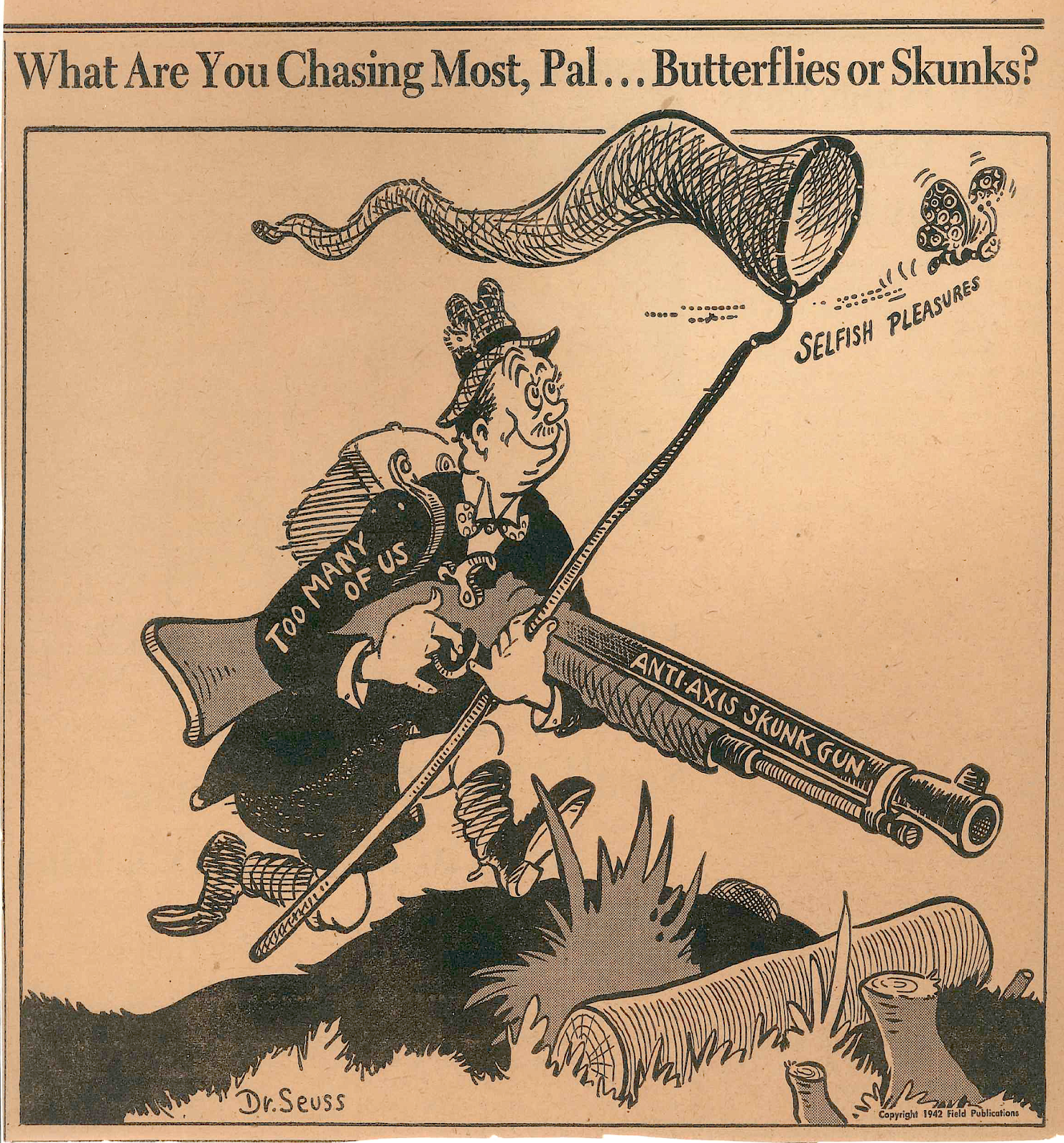
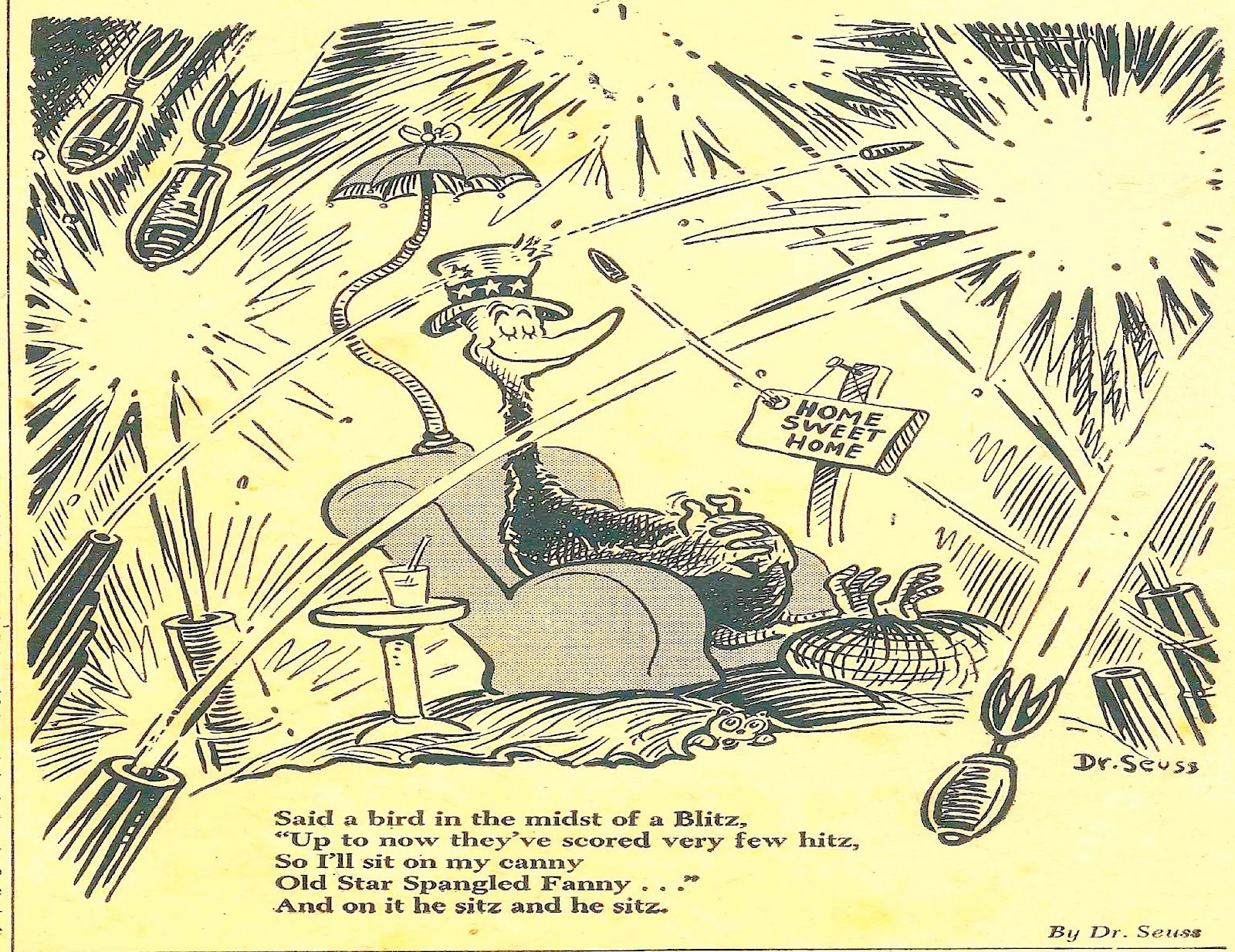
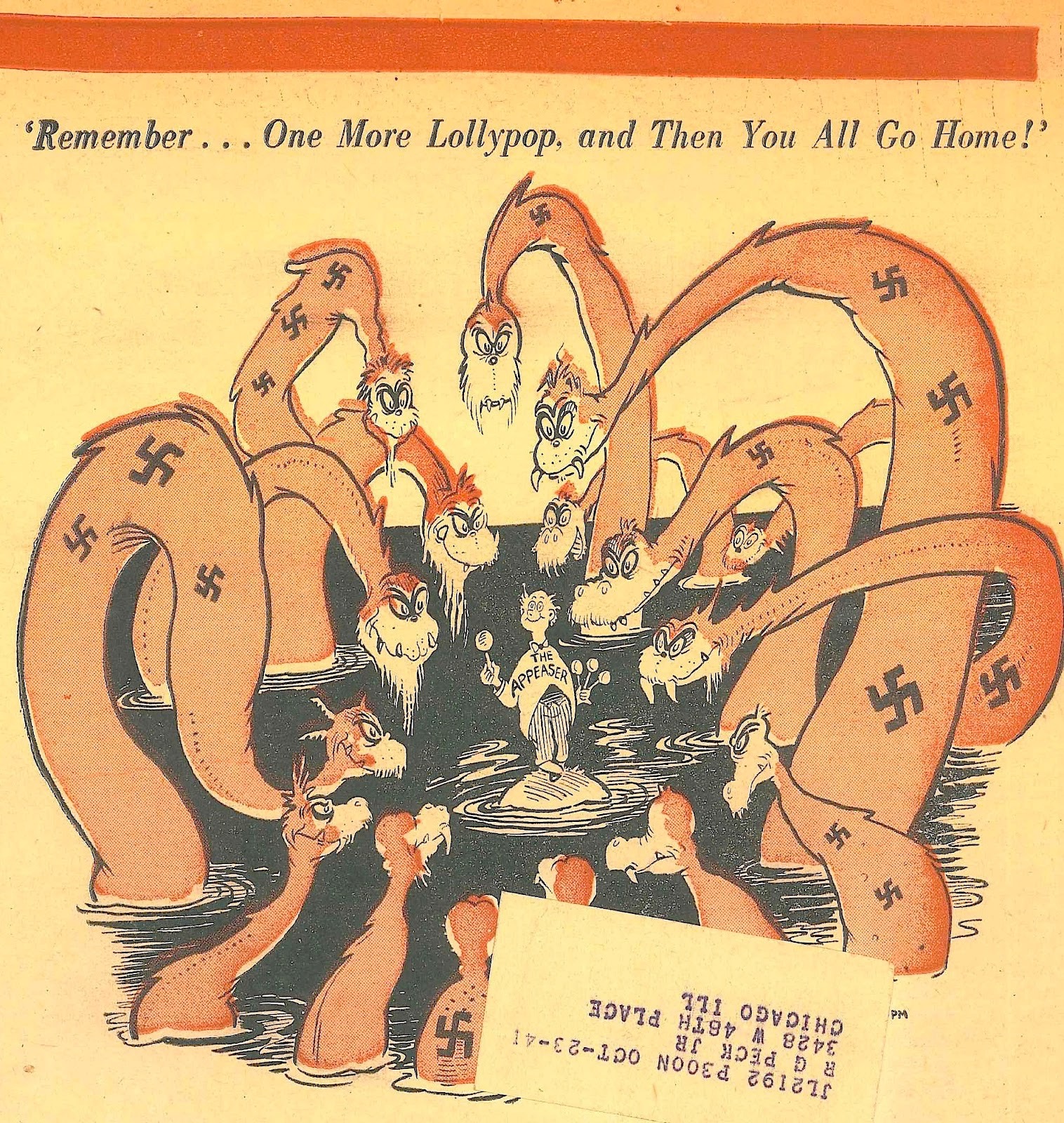
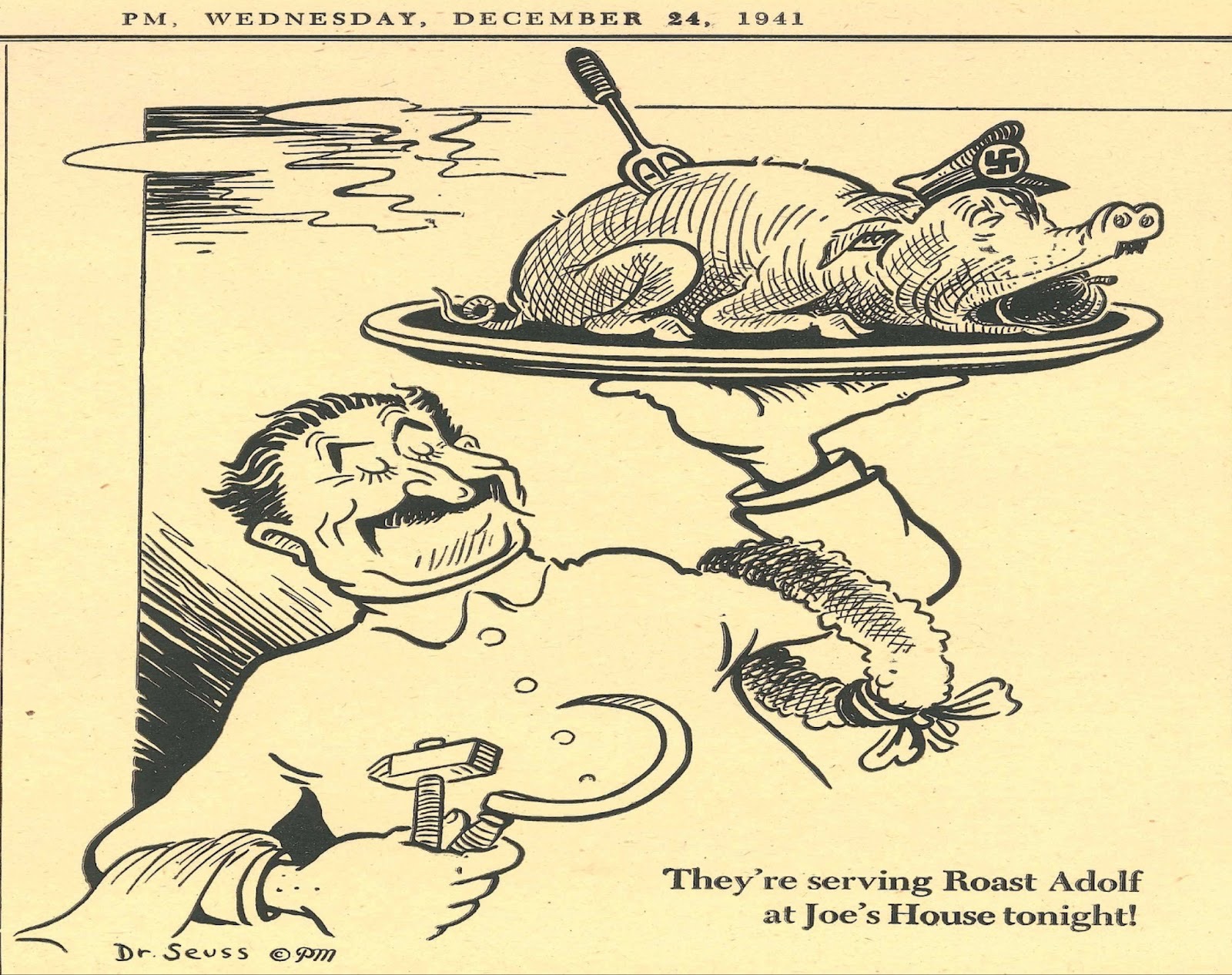
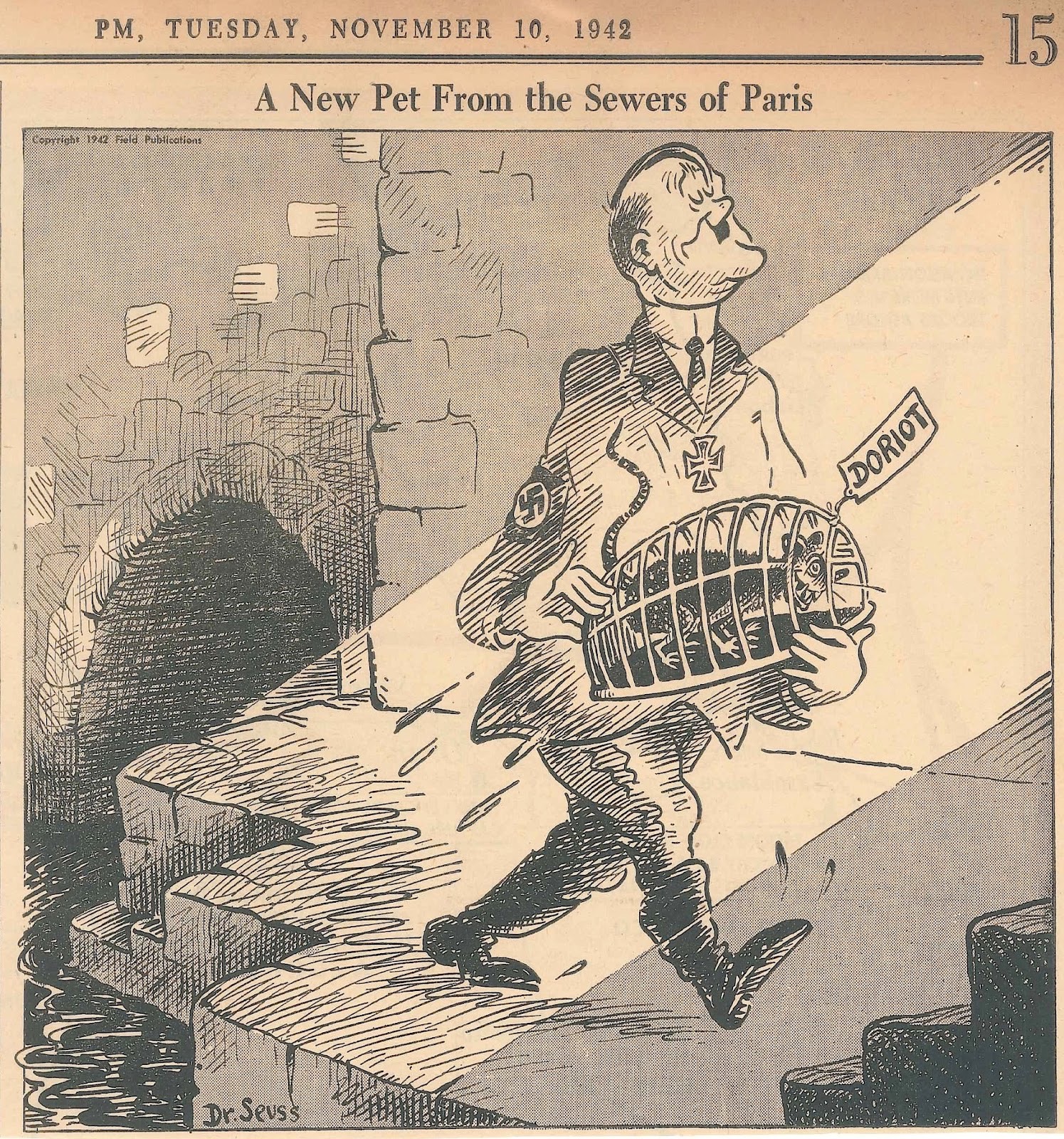
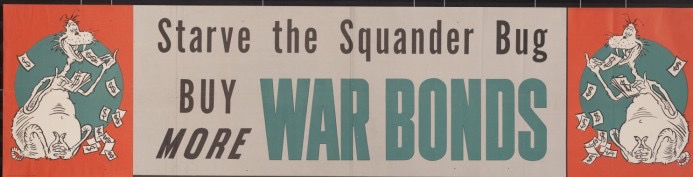
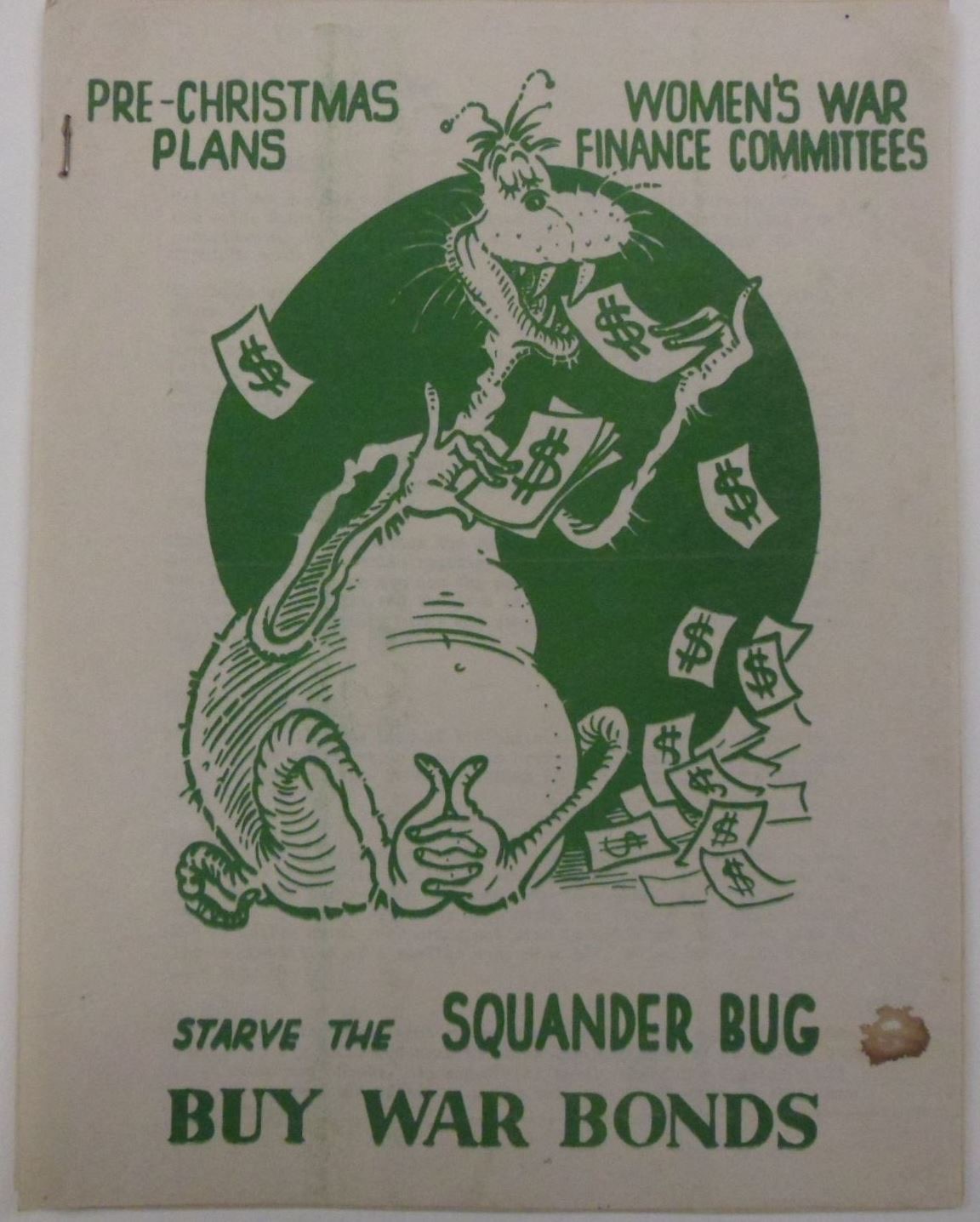
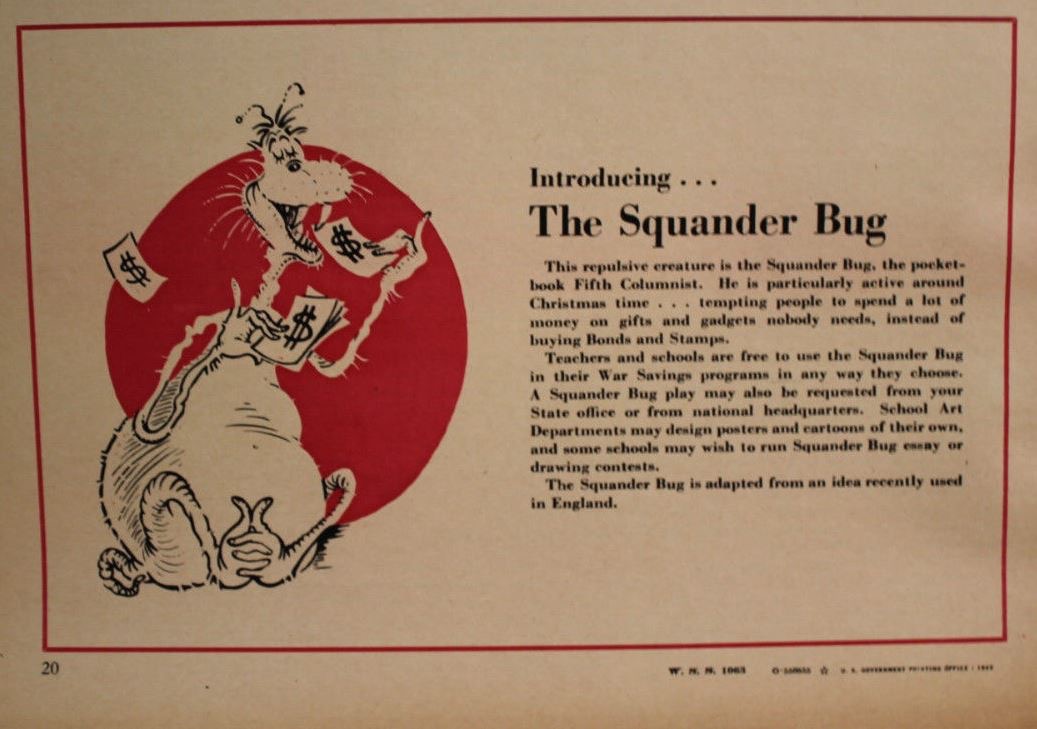
When he wasn’t drawing for PM, Seuss was creating propaganda for the US Treasury Department and War Production Board. One of his most notable campaigns was “the Squander Bug,” which urged citizens to curb their excess spending and reroute that money to war bonds.
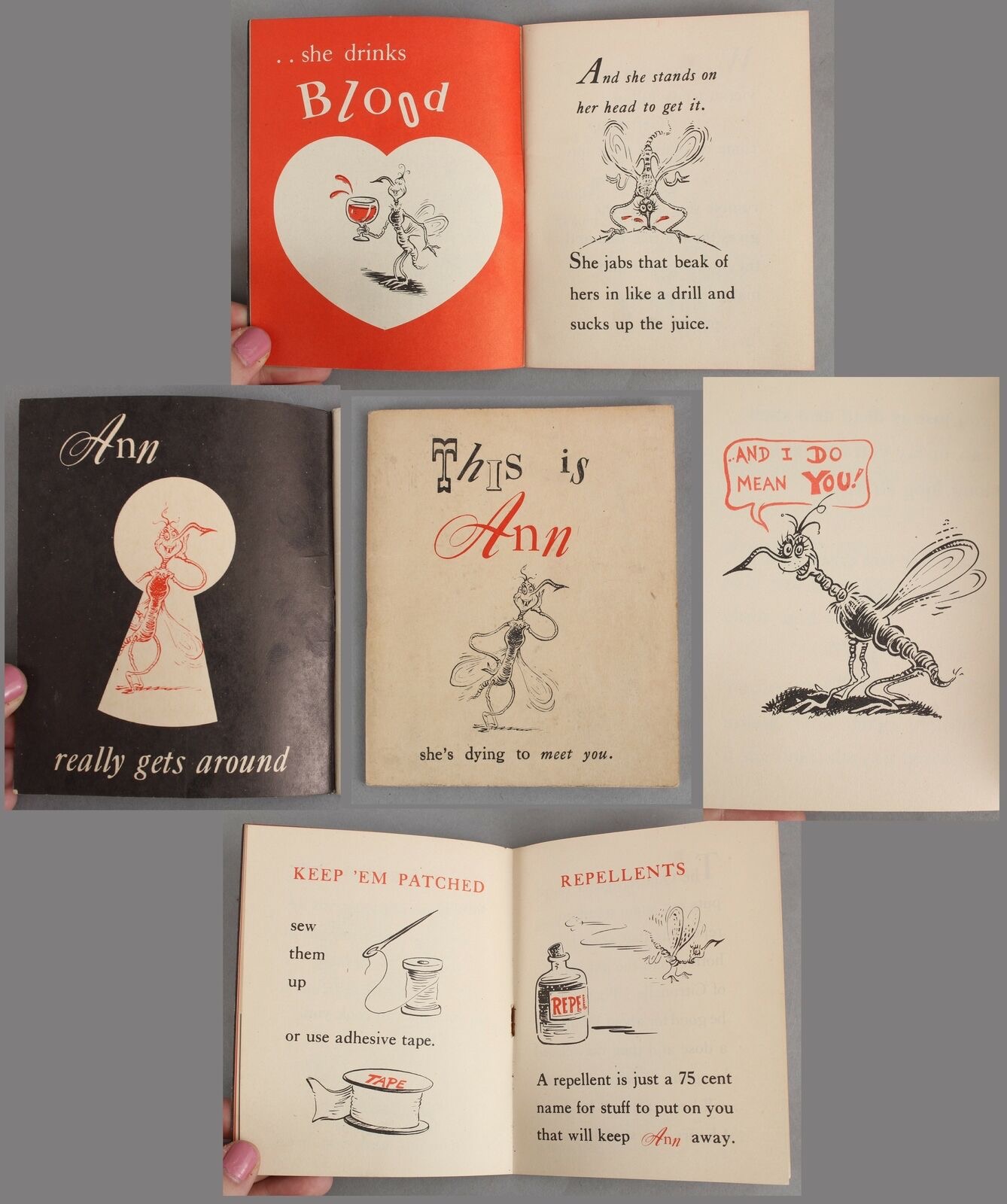
His “Mosquito Ann” campaign warned citizens about the spread of malaria, which was considered a significant “second enemy” in WWII, particularly in the South Pacific.
In 1943, Seuss left PM to join the US Army, where he served in the Signal Corps unit under Hollywood director Frank Capra. There, he commanded the animation department of the 1st Motion Picture Unit, creating pamphlets and humorous instructional series for Army personnel.
Perhaps his best known WWII work, however, was a film called Your Job in Germany, for which Seuss wrote the script.
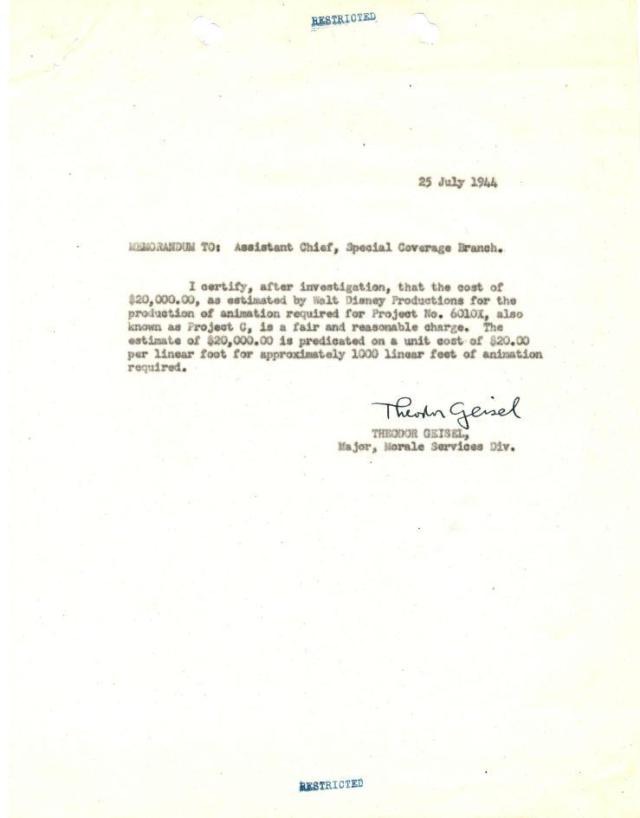
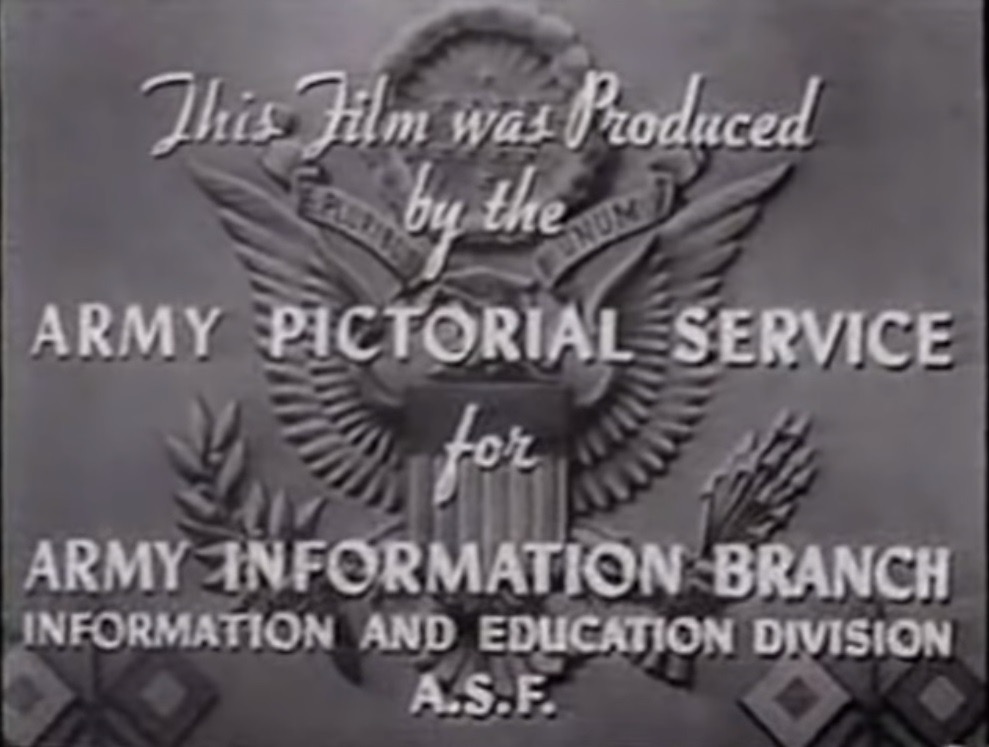
Made as an orientation for soldiers who would be occupying Germany after the war, the film is considered by some to be vicious anti-German propaganda as it urges US soldiers against any friendly interactions with German citizens and portrays post-war German society as diseased. (On the other hand, the companion film, Our Job in Japan, also written by Seuss, was considered to be too sympathetic to the Japanese.)
Oh, the Places He Went
Dr. Seuss left the army in 1946. He’d already published a few children’s books but to no great accolades. It wasn’t until the 1950s when he published Horton Hears a Who (1954), The Cat in the Hat (1957), and How the Grinch Stole Christmas (1957) that his third and most notorious career took off.
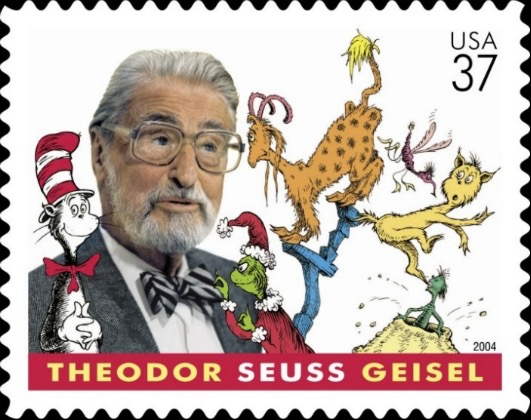
As you look through the images in this blog post and throughout the collection, see if you can spot shades of the Dr. Seuss illustration style we know and love in his early advertising and political work.