
With the anti-Jewish hatred in Germany—and elsewhere—at a fever pitch in the 1930s as a result of the Nazis’ relentless anti-Jewish radicalization campaigns (supported by their far too many collaborators), the Nazis were in the perfect position to begin taking the next steps toward their “final solution.”
Let’s look at three ways the Nazis—and the German citizens they’d so fully immersed in their rhetoric—sought to obliterate Jewish society and culture altogether, stripping the Jewish people of everything they had before carting them off to the camps. Artifacts from our collection illustrate the “strategies” the Nazis employed in their efforts to eradicate not only the Jewish people but everything they had built and everything they stood for.
Identification
The first step in eradicating a culture is “othering” it. Requiring Jewish people to wear the yellow star badges was a psychological tactic to separate them from the rest of society, marking them as being “different” and therefore “inferior.”
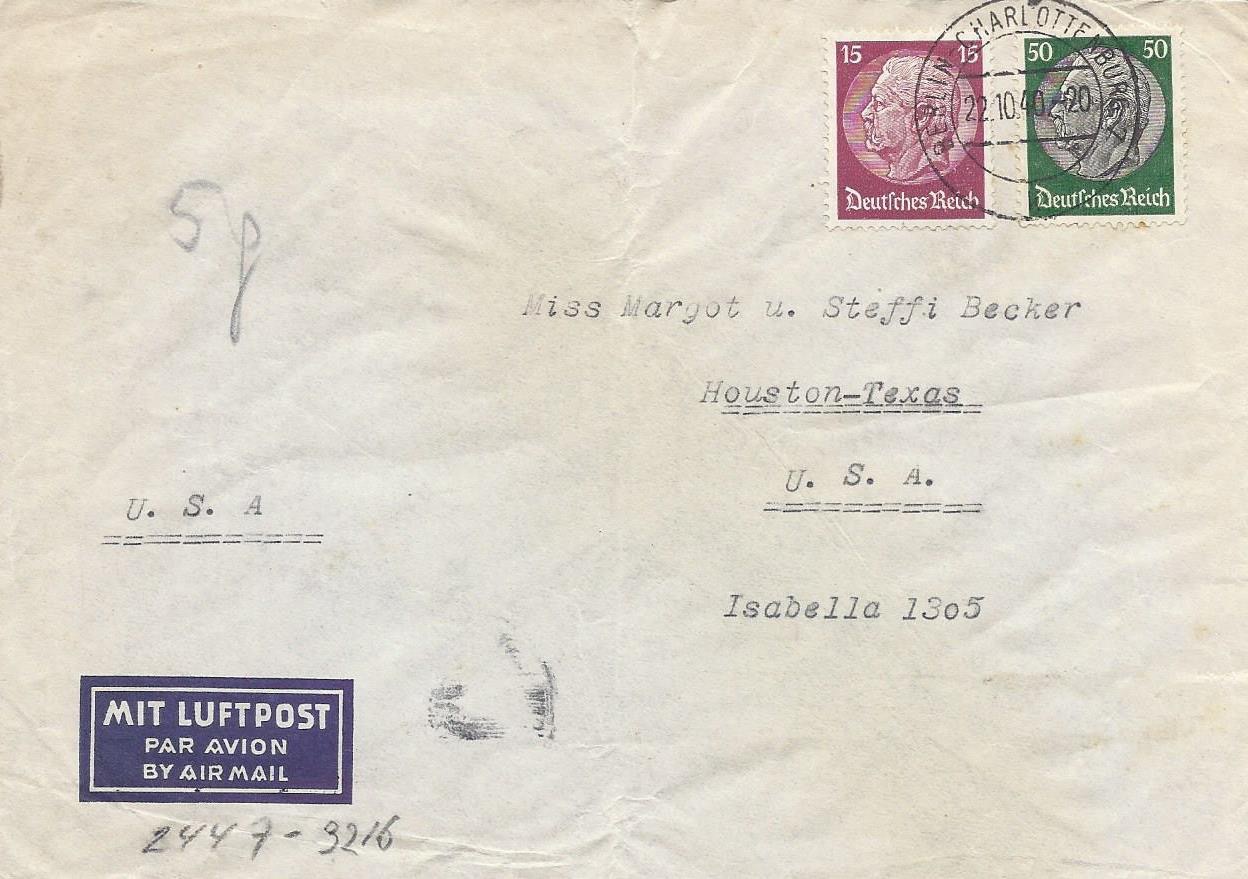
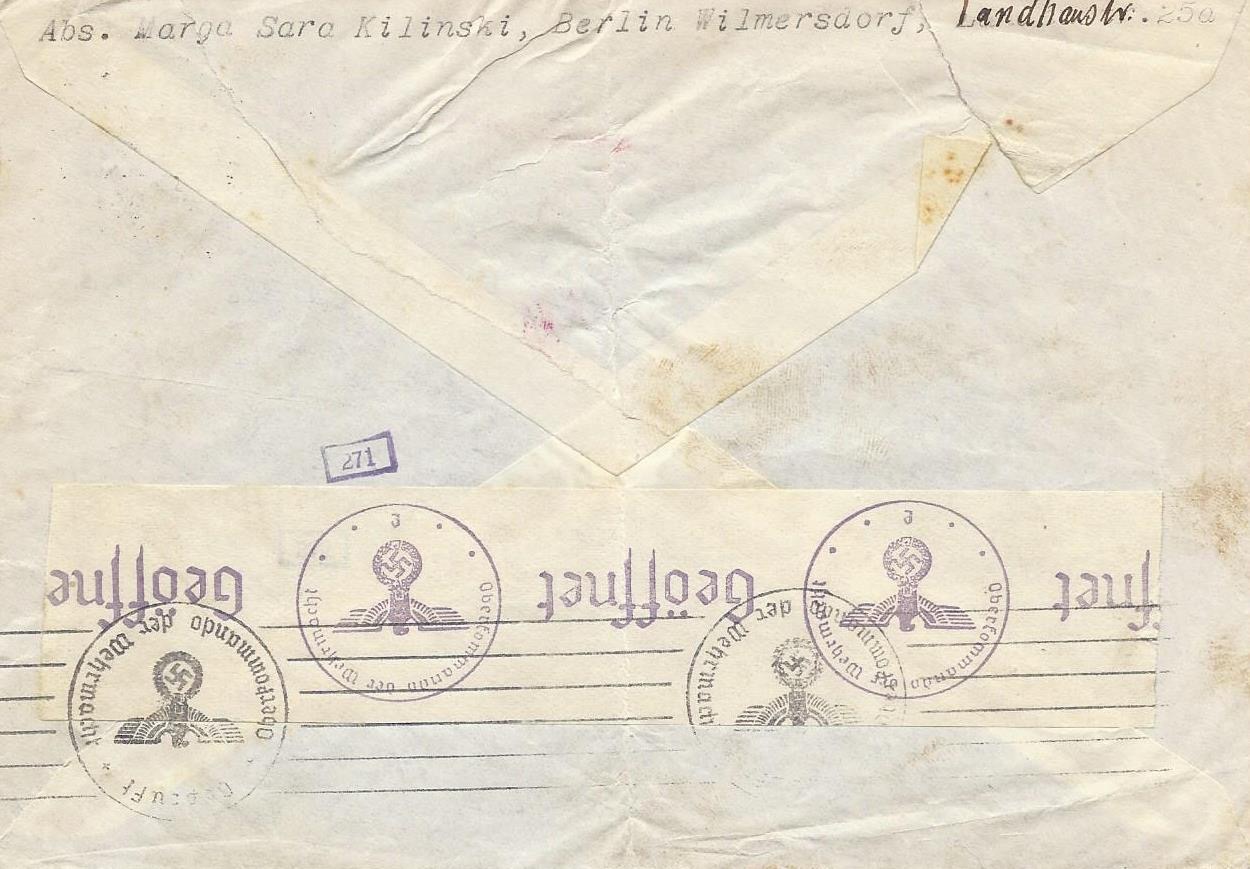
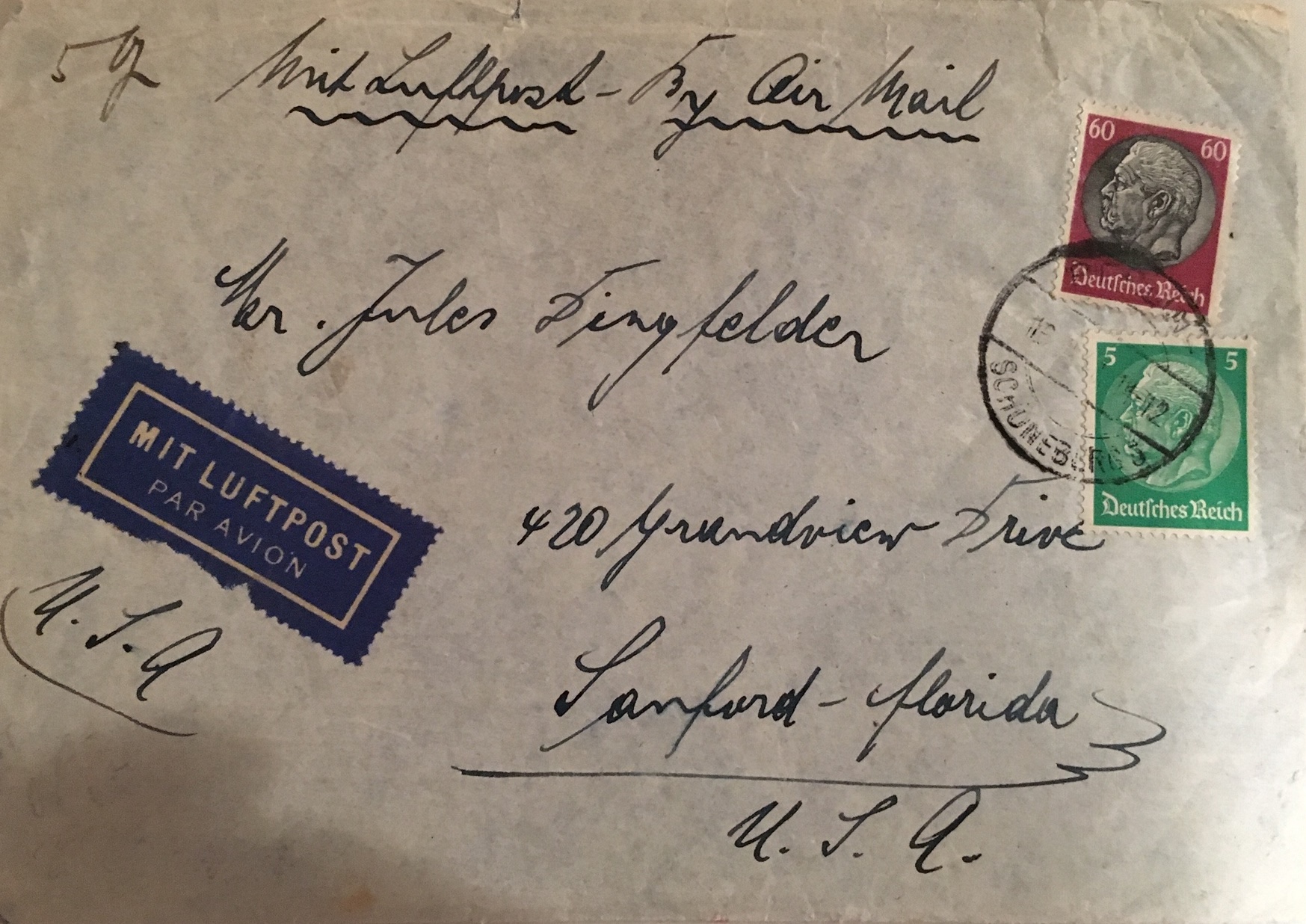
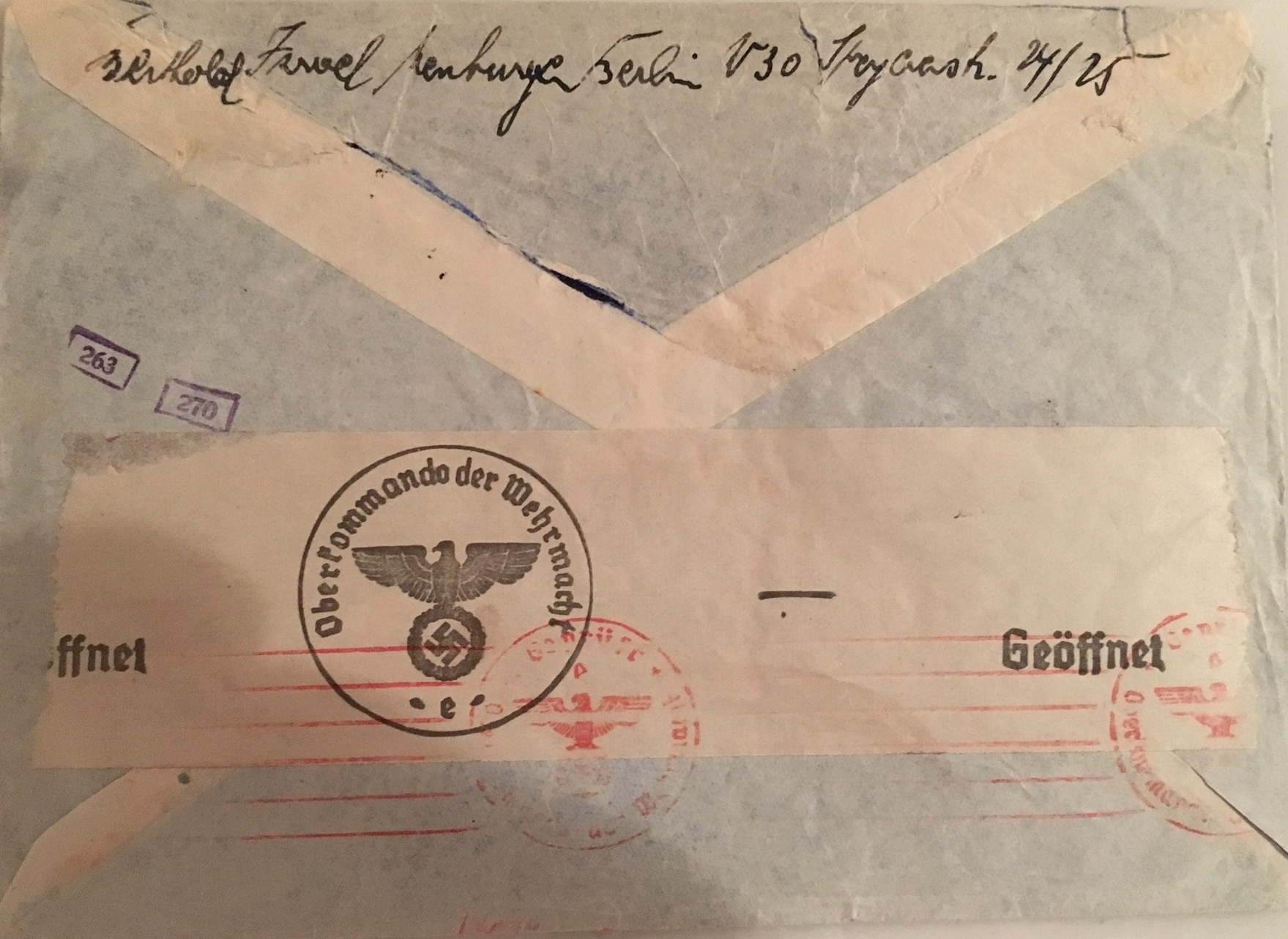
In addition, the Nazi regime required Jewish people to identify themselves as Jewish on any mail they sent out. This was done by adding Sara (for women) or Israel (for men) to their names on their return address labels. Less about publicly othering Jewish people, this tactic highlighted which letters “needed” to be read and redacted before sending. The envelopes below—one “Sara” and one “Israel”—both have censorship tape resealing them.
Exclusion & Isolation
Making Jewish people easily identifiable also made them more easily excluded. Businesses barred them with signs posted in the windows, their community organizations kicked them out, and their workplaces fired them. Jews were no longer allowed to hold public office, and a general boycott against German Jews was declared in early 1933. Anti-Jewish propaganda was everywhere, with mail bearing labels encouraging people not to do business with Jewish people and anti-Jewish programming on state-sponsored radio.
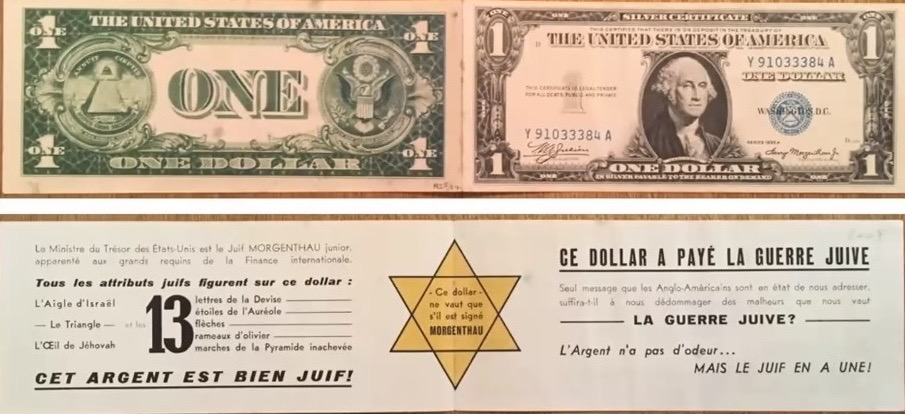
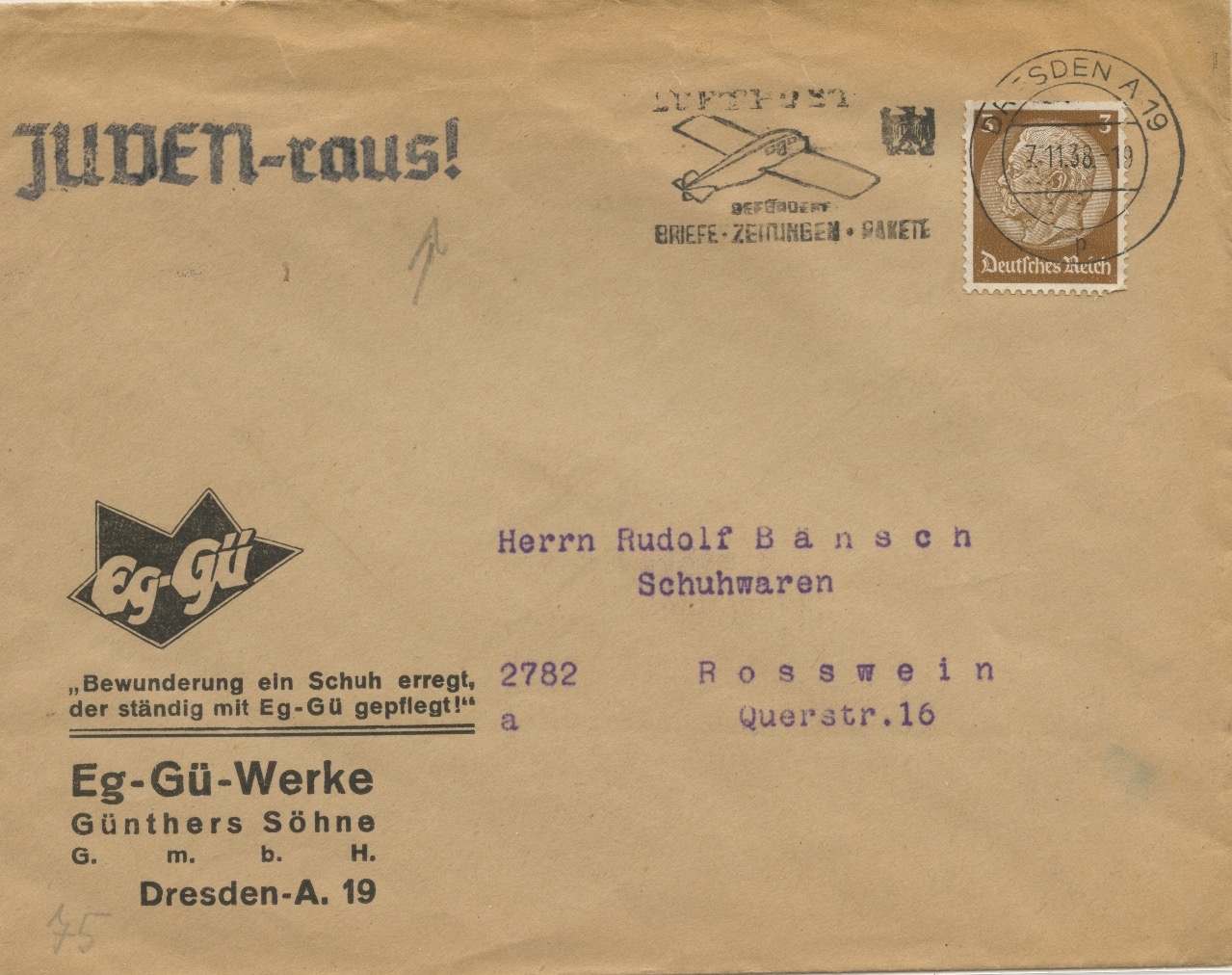
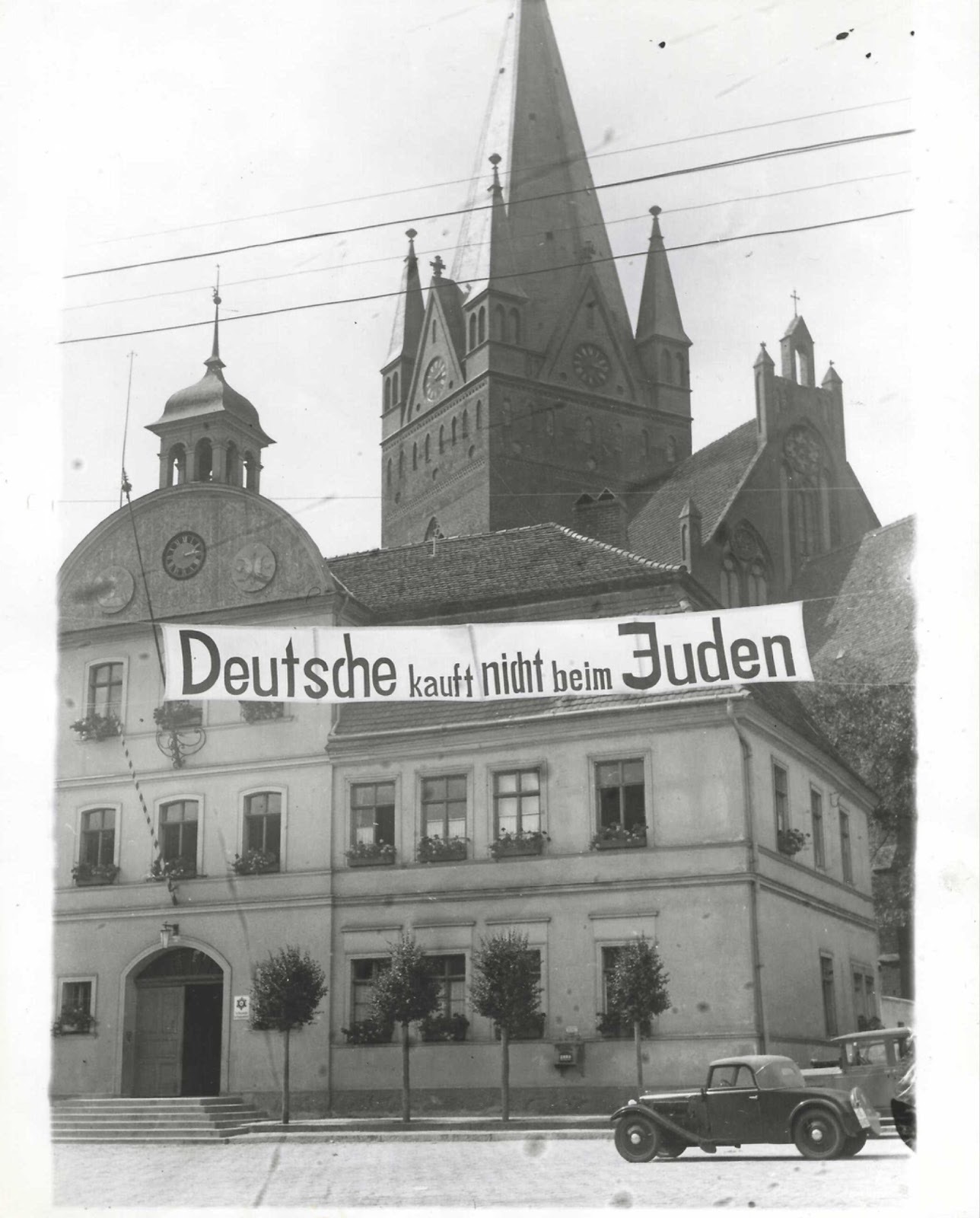
Then, in 1935, the Nuremberg Laws provided the legal scaffolding for this discrimination. German Jews were stripped of their citizenship and prohibited from marrying German citizens. Jews were formally banned from universities; Jewish authors were no longer published in research journals, newspapers, or any other outlet; and Jewish actors were let go from theaters.
In short, the Jewish people were completely excluded from German society, isolated from communities and even prohibited from earning a living. Next to go were their homes and possessions.
Confiscation & Ghettoization
The Jewish people had lost their livelihoods, but the Nazis didn’t stop there. They began confiscating Jewish people’s possessions as well—some to fund the war efforts and some to line the pockets of high-ranking officials.
Perhaps the most infamous example occurred on November 9 and 10, 1938, when the Party’s paramilitary forces (with the aid of plenty of German citizens and even Hitler youth) raided Jewish homes and businesses across Nazi Germany in a raid that would come to be known as Kristallnacht. Thousands of Jewish businesses were destroyed, tens of thousands of men incarcerated, and hundreds killed. Not long afterward, Jews were required to relinquish any precious metals and jewelry to pawn shops in February of 1939.
In September of the same year, shortly after the German invasion of Poland, Reinhard Heydrich ordered the segregation of Jews in Warsaw. The first Jewish ghetto was established a few days later in Piotrków Trybunalski—the first of more than 1,000 to be established in German-occupied territories.
Conditions in the ghettos were abysmal. The areas were surrounded by high walls, with nobody allowed in or out without a permit. Overcrowding and lack of resources led to hunger and starvation, poor sanitation, and wildfire-fast spread of disease. (For a little perspective: The Warsaw Ghetto, the largest one established, held roughly 450,000 Jewish people within about 1.3 square miles.) What’s more, the winter months brought freezing conditions with little or no access to heat. Numbers vary, but it is estimated that anywhere from tens of thousands to upward of half a million people died in the ghettos.
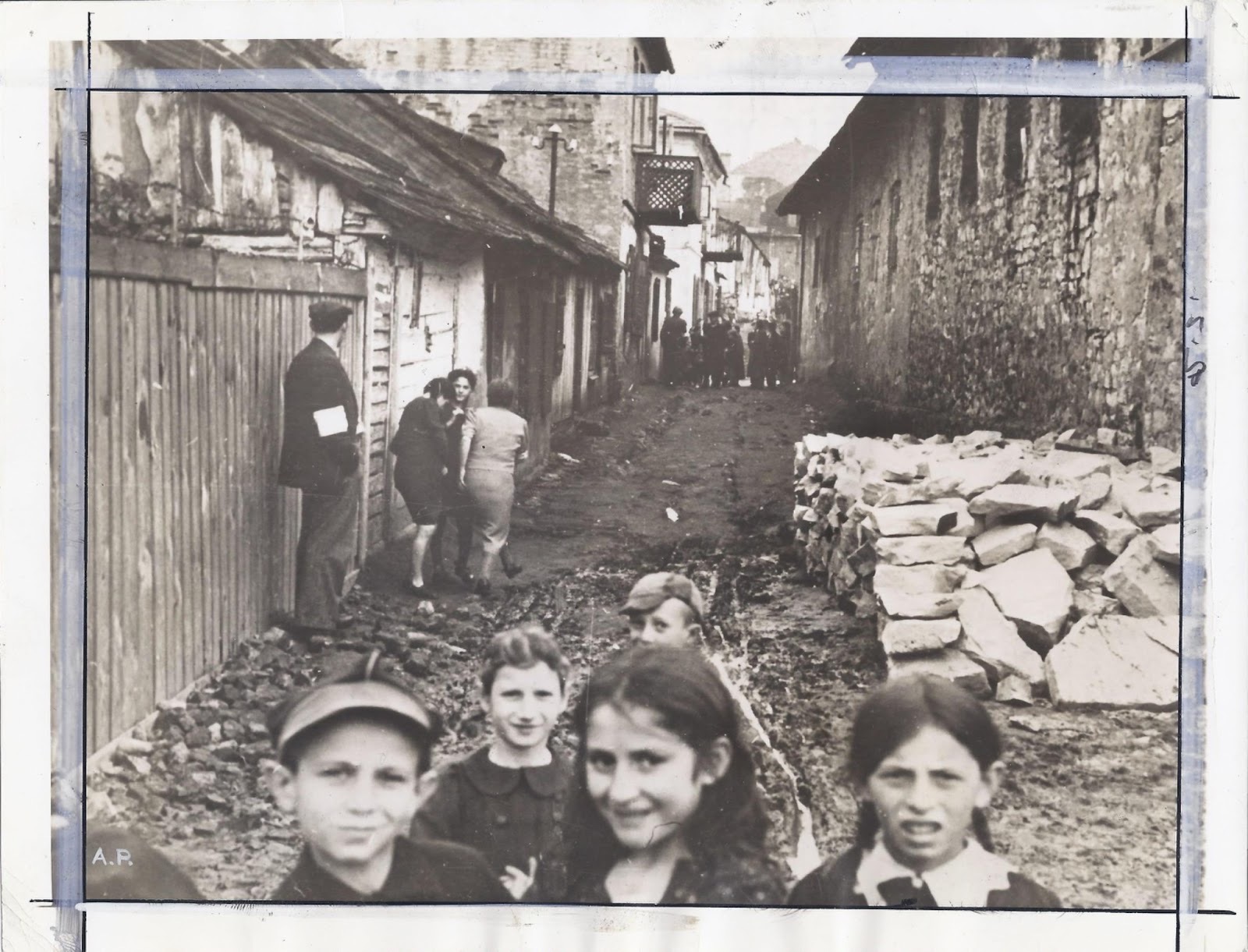

For a look at the conditions of the Warsaw Ghetto—and a powerful story of a Jewish hero—read “Janusz Korczak: Champion of Children.”
When Jewish people were “relocated” to the ghettos, they were only allowed to bring the barest minimum of their possessions. The rest was, no surprise, confiscated by Nazi soldiers, who looted homes for any remaining valuables.
The National WWII Museum website has a thorough overview of the ghettoization of German Jews that’s well worth a read. One note they make is that, according to historians, ghettoization was not intentionally designed to make mass deportations easier; rather, its initial purpose was strictly segregation. Of course, they ultimately did serve as gruesome “gathering points” as Jews were forced into cattle cars and sent to extermination camps.
Ensuring History Never Repeats Itself
The cold calculation behind the Nazis’ determination to eradicate Jewish people and their culture is chilling. And yet, it’s critical to understand how one thing led to another (to put it mildly) and systematized prejudice made way for mass murder while the rest of the world turned a blind eye. Only by studying these patterns and committing to act as upstanders, nipping them in the bud when they start to recur in today’s society, can we prevent this kind of atrocity from happening again—to anyone.