
Selections from the Philipson Warech Jewish Heritage Collection on Display at the Holocaust Museum Houston


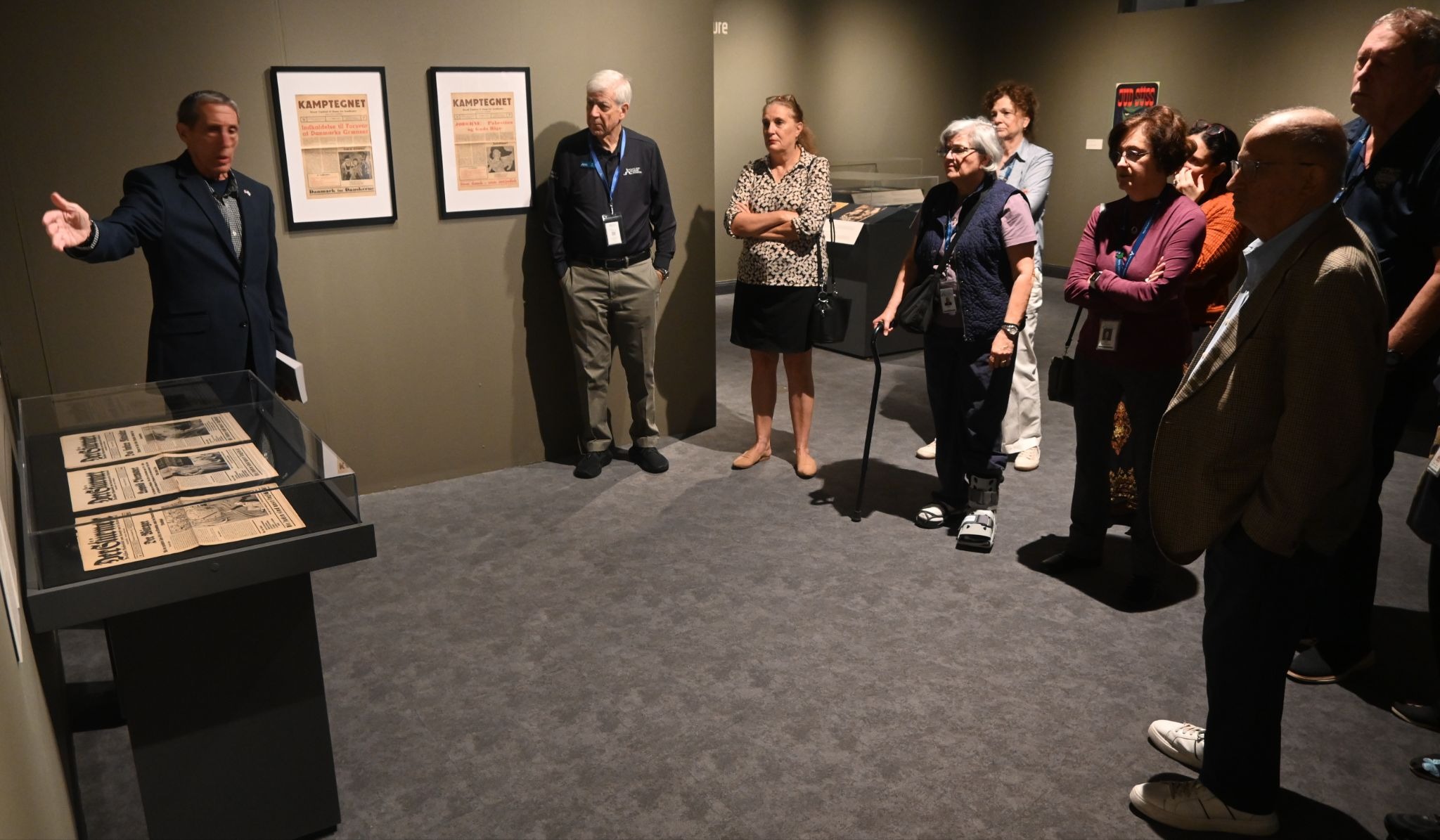
I visited the Holocaust Museum Houston last week to view our exhibit in person. What an honor to be invited to speak to a wonderful audience on “the banality of evil” and to guide groups of visitors through the exhibit Friday morning. It’s always meaningful to share the collection—particularly face-to-face—and discuss what its artifacts represent and how they still carry meaning in the world today.
Are You an Upstander or a Bystander?
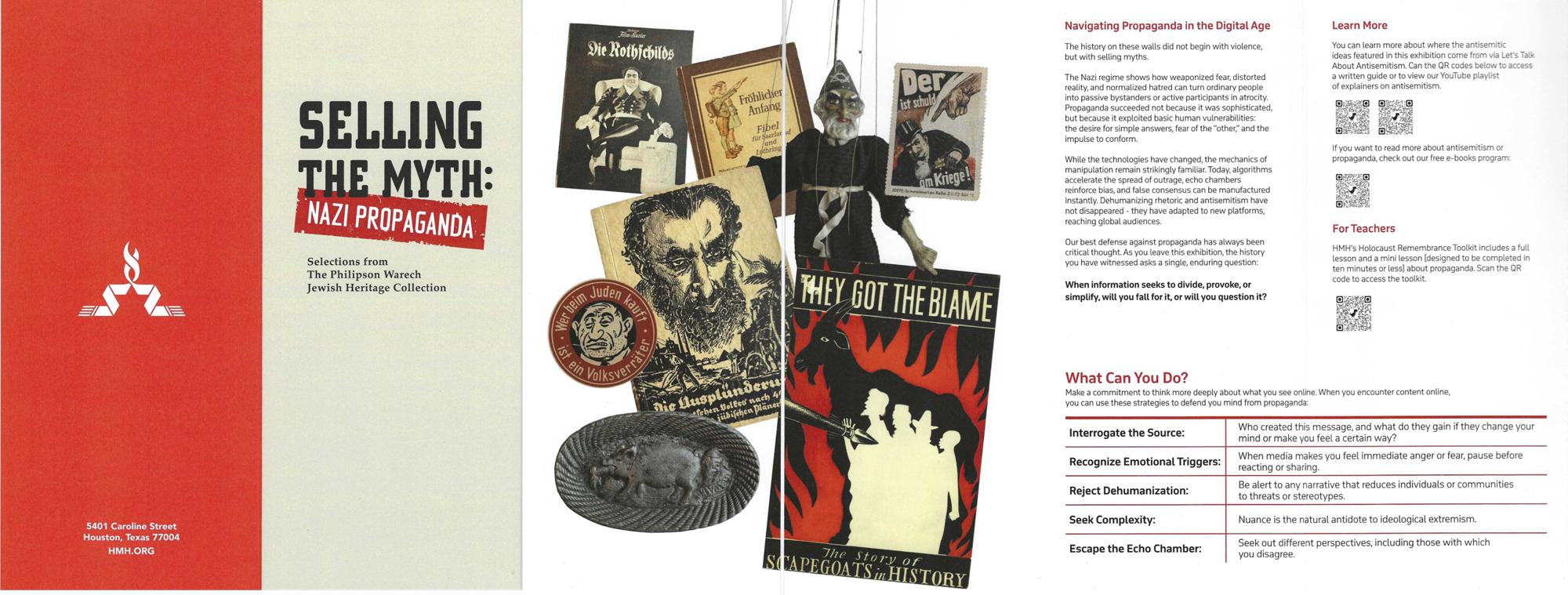
The museum exhibit focuses on anti-Jewish propaganda in the years leading up to the Holocaust (see some of it in our digital collection), and I was impressed at the way the curators tied these artifacts to today’s digital age in the exhibit brochure:
The history on these walls did not begin with violence, but with selling myths.
The Nazi regime shows how weaponized fear, distorted reality, and normalized hatred can turn ordinary people into passive bystanders or active participants in atrocity. Propaganda succeeded not because it was sophisticated, but because it exploited basic human vulnerabilities: the desire for simple answers, fear of the “other,” and the impulse to conform.
While the technologies have changed, the mechanics of manipulation remain strikingly familiar. Today, algorithms accelerate the spread of outage, echo chambers reinforce bias, and false consensus can be manufactured instantly. Dehumanizing rhetoric and antisemitism have not disappeared—they have adapted to new platforms, reaching global audiences.
Our best defense against propaganda has always been critical thought. As you leave this exhibition, the history you have witnessed asks a single, enduring question:
When information seeks to divide, provoke, or simplify, will you fall for it, or will you question it?
It’s a question we have to ask ourselves more and more often today as information comes at us nonstop, from every direction, and I’m grateful to the Holocaust Museum Houston for using items from the Philipson collection to shine a spotlight on what happens when we choose the wrong answer.