

Imagine a crowd gathered on the street. In the road, a man lies down flat on his back and braces himself. A truck begins driving toward him, full of people. It doesn’t stop; it doesn’t swerve; it drives right over him. The crowd gasps. But the man isn’t hurt. Instead, he leaps to his feet and takes a bow, as though he hadn’t just been pressed under the weight of several tons. The crowd goes wild, and the strongman prepares his next feat: biting through an iron chain.
This show could’ve featured any of a number of strongmen,but the one I had in mind was Zishe Breitbart, known during the earlynineteen-twenties as the “Strongest Man in the World.”
Born in Poland, Breitbart was an observant Jew who wore Stars of David on his costumes and spoke in Yiddish to the Jewish people in his audiences despite the growing anti-Jewish movements in Germany and Austria.
And he wasn’t alone. Breitbart is just one early example of the Jewish men who, deprived of professional opportunities in many “respectable” industries, leveraged their extraordinary strength into wildly successful careers—not just as performers, but as entrepreneurs, using their strength as the foundation from which to build real platforms and broad influence.
Lifting Even the Heaviest Barriers to Opportunity
In the early twentieth century, Jewish men across Europe and the United States encountered deep-seated institutional and social prejudices that created a barrier to professions like law, medicine, and academia. Through formal and informal systems, Jewish people were barred from these fields and many others.
But entertainment remained accessible, and in particular, impossible expressions of incredible physical strength were impossible to deny. A man who could stop a moving vehicle, bend iron with his teeth, or outmatch an opponent in the ring didn’t need an introduction. It didn’t matter his ethnicity or religion—the proof was immediate, magnetic, and crystal clear to anyone watching.
For Jewish strongmen, physical performance offered a rare kind of autonomy: a way to build a livelihood without waiting for acceptance. And for many of these men, what began as spectacle quickly evolved into entrepreneurial strategy.
Born for Strength; Trained to Perform
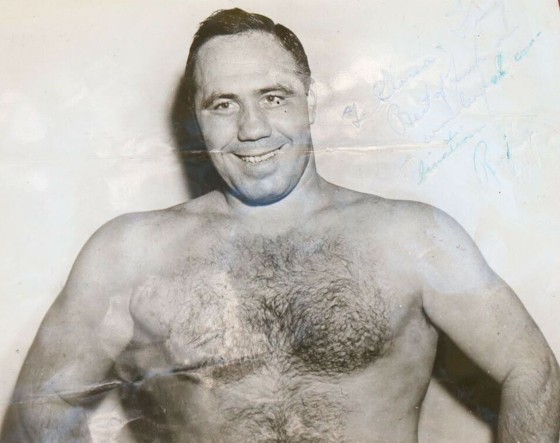
Many of the men in this collection did not set out to become performers but came from physically demanding backgrounds where strength was a necessity long before it was a marketable talent. Breitbart’s family were metalworkers; Barney Ross learned to fight in a Chicago gang; and Martin “Blimp” Levy had aspirations of playing football before turning to sideshows and, later, wrestling.
But at some point, the calculation shifted. Strength did not have to be a mere tool—it could be the main attraction. It could draw a crowd.
So, these men stepped into public view.
They lifted impossible weights, bent impossible metals, broke through wood and rock and iron. They wrestled, or they became stuntmen. They turned private skills into public spectacle, learning not just how to build strength, but how to show it off, command attention, and leave an audience wanting more. What might have been a single impressive feat became a program, a routine, and a livelihood.
Excluded from careers that traditionally promised wealth and prestige, these men built their own.

Household Names
As these men’s acts grew, so did their reach. What began on street corners or in small venues expanded into traveling shows, circuses, vaudeville circuits, film, and professional wrestling.
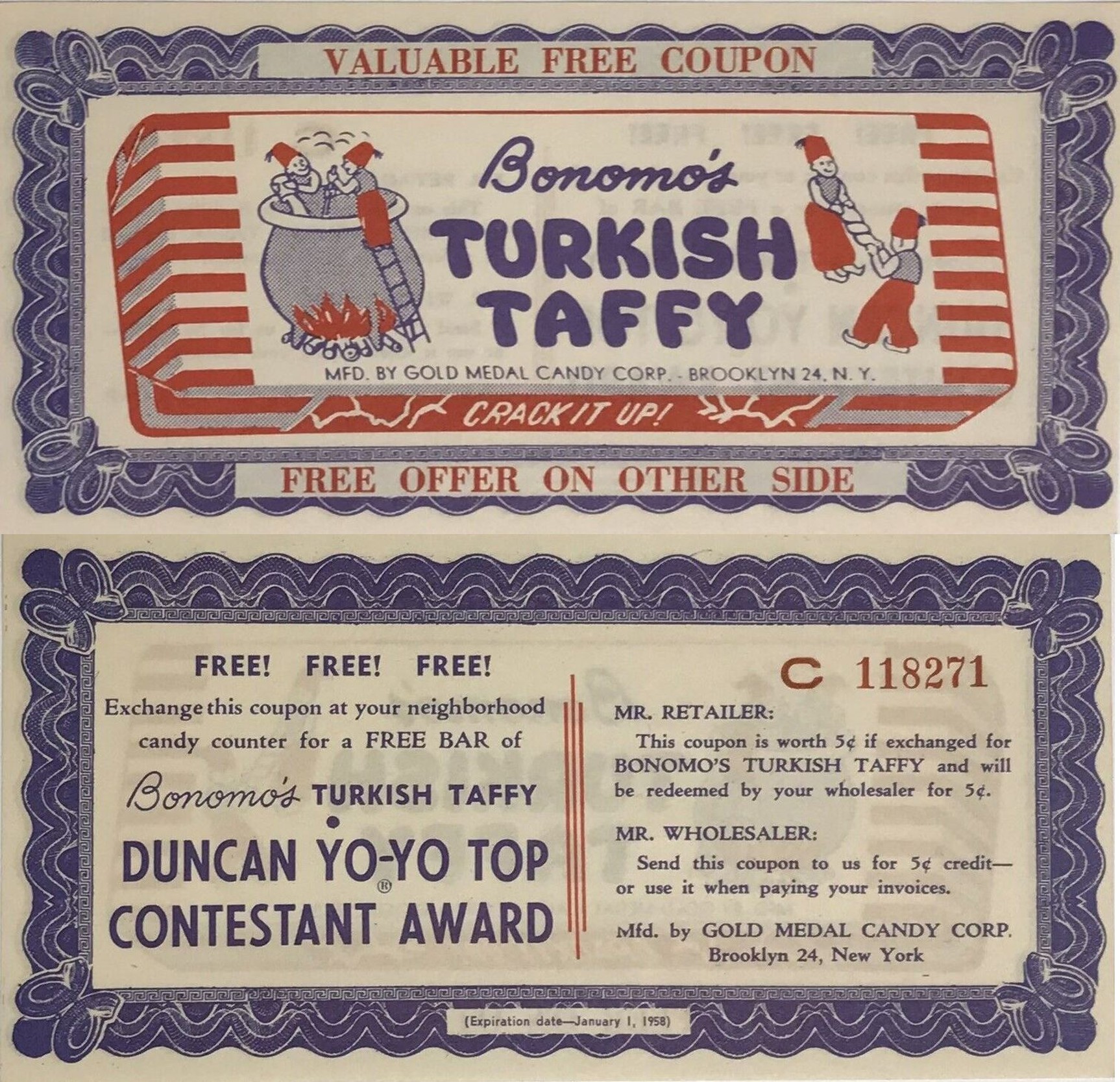
Figures like Joe Bonomo took their strength to Hollywood, where their physical prowess translated naturally into stunt work and screen presence. Others, like Joseph Greenstein, toured extensively, building reputations that extended far beyond a single city or country.
With each performance, audiences grew. Soon, these men had built reputations that traveled beyond exhibition programs and into households, turning isolated acts into sustained careers.

Packaging Strength
Loyal audiences, clamoring for more, gave many Jewish strongmen the opportunity to translate their physical abilities into products and systems: training guides, correspondence courses, branded methods of building strength. What they demonstrated on stage, they now promised to teach.
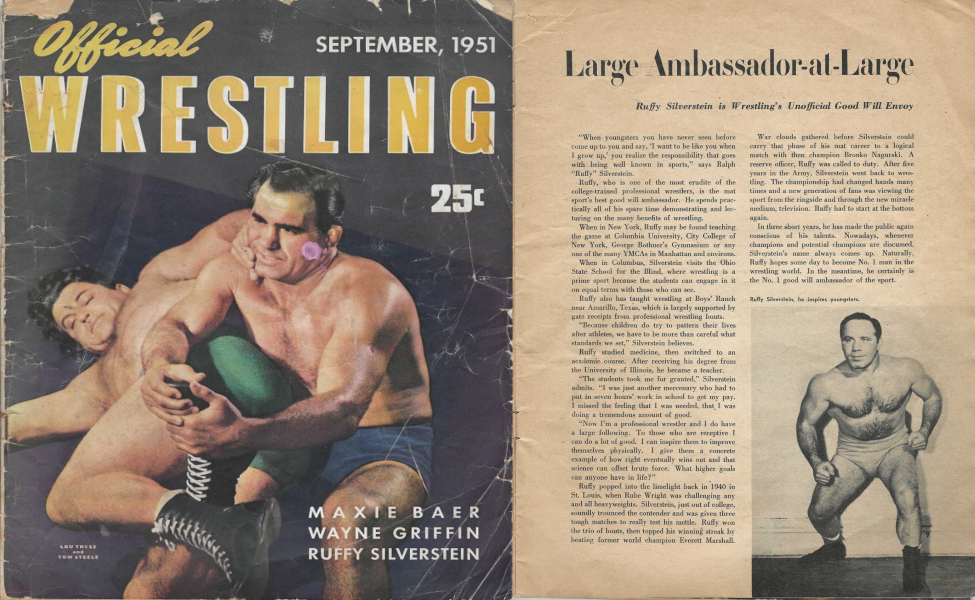
Joseph Greenstein was among those who extended his influence well beyond live performance, offering instruction that reached people he would never meet. Ralph “Ruffy” Silverstein and others similarly transformed their reputations into something scalable.
Joe Bonomo, for his part, built a fitness empire but also, perhaps counterintuitively, took his parents’ Turkish taffy company to unimaginable heights. “Unless your doctor advises your child is a special case, don’t credit such nonsense regarding candy not being good for children,” he once said. “If a child is normal, active and otherwise eating properly, a reasonable amount of candy is good medicine. I should know, I was raised on it.”
In expanding their spheres of influence, these strongmen became more than performers. They understood that an audience’s admiration could be converted into trust. And that trust, in turn, could support a business—one that lasted long after their bodies could no longer perform.
Jewish Icons in Public Life
Zishe Breitbart is now considered something of a Jewish folk hero because of his consistent demonstrations of pride in his faith. Even as the countries he performed in grew increasingly hostile to Jews, he made sure his identity was part of his act, not a footnote.
Others made similarly deliberate choices. Ralph “Ruffy” Silverstein was selected for the U.S. team for the 1936 Olympics but refused to compete in Berlin, boycotting in protest of Nazi Germany. And Joseph Greenstein, known as “The Mighty Atom,” famously confronted members of the German American Bund in New York after encountering a sign that read, “No Dogs or Jews Allowed.”
These moments were not part of the performance; they were inseparable from these men’s lives and values. The same visibility that allowed them to draw crowds and build careers also placed them squarely in public life, where their actions carried weight beyond the stage or the ring. Whether through personal expression, public refusal, or direct confrontation, they made clear that their full identities—not just as strongmen but as Jews—were nonnegotiable.

Tangible Memories
These men’s stories are preserved not just in headlines or anecdotes, but in the tangible artifacts they left behind: photographs, programs, advertisements, and correspondence. Each item reflects a moment in that process—proof of how strength moved from ability to livelihood to influence.
It is easy, at first glance, to write off their work as spectacle, but this collection shows us that it was so much more. These men were not simply displaying what they could do. They were building lives around it—carefully, creatively, and with a clear understanding of what was possible.
Strength & the Jewish Identity Today
The world Breitbart and Ross and Silverstein lived in is not the same one we inhabit today, but unfortunately, the question of how, when, and whether to visibly claim Jewish identity in public life has not disappeared.
For the Jewish strongmen in our collection, the visibility of their Jewish faith was not incidental. It was intentional. Sometimes it was woven into performance; sometimes it appeared in smaller but equally deliberate decisions.
That tension remains familiar. In different ways and indifferent contexts, many Jewish people today still navigate when and how to express their identities and what it means to do so in spaces that may or may not feel welcoming.
The strongmen in this collection did not resolve that tension. But they did model one response: to build lives that did not require its erasure.
And in that sense, their stories are not just historical—they are ongoing.