One of the items in my collection is a suitcase.
It’s a suitcase that a Jewish family hastily packed when they were taken from their home to a concentration camp by Nazi soldiers. The original owners were ____, and they were murdered at _____.
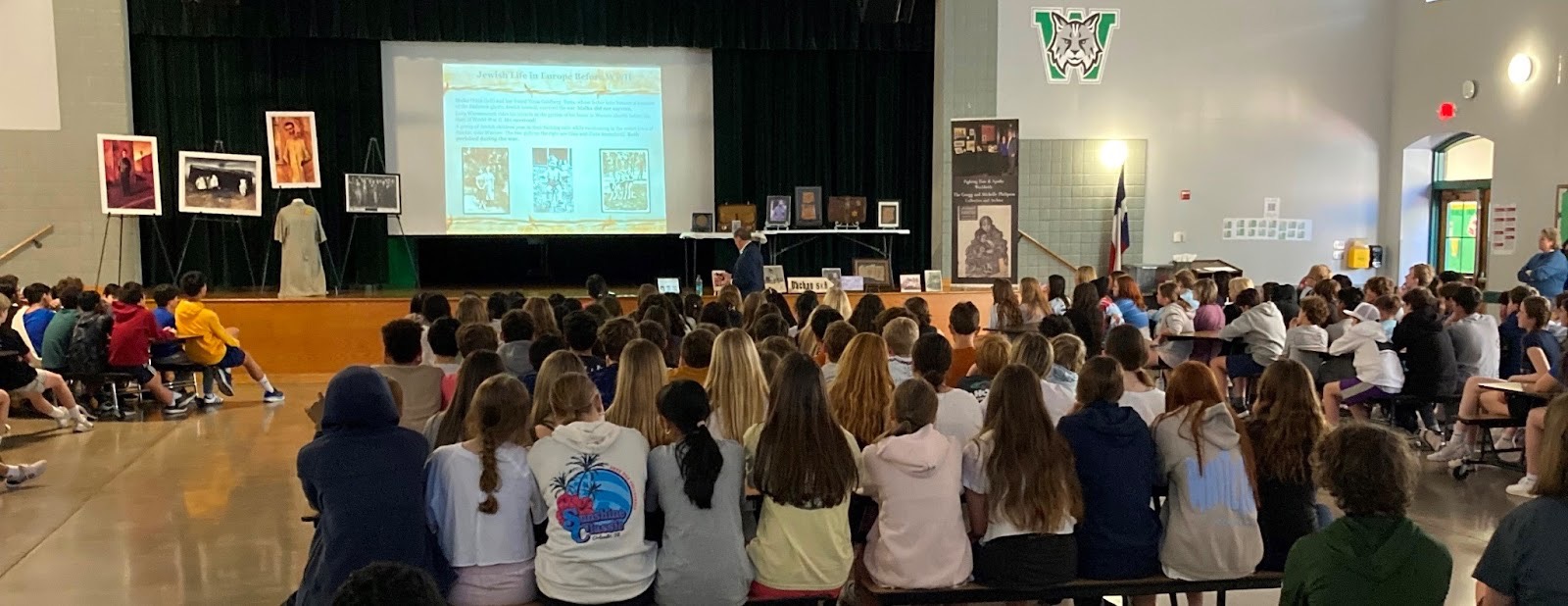
I bring this suitcase with me every time I speak about the Holocaust at a middle school, because in some ways, more than any gruesome images of bodies piled high or dumped into pits, this simple suitcase puts the historical era into perspective in a way that can really resonate with young people.
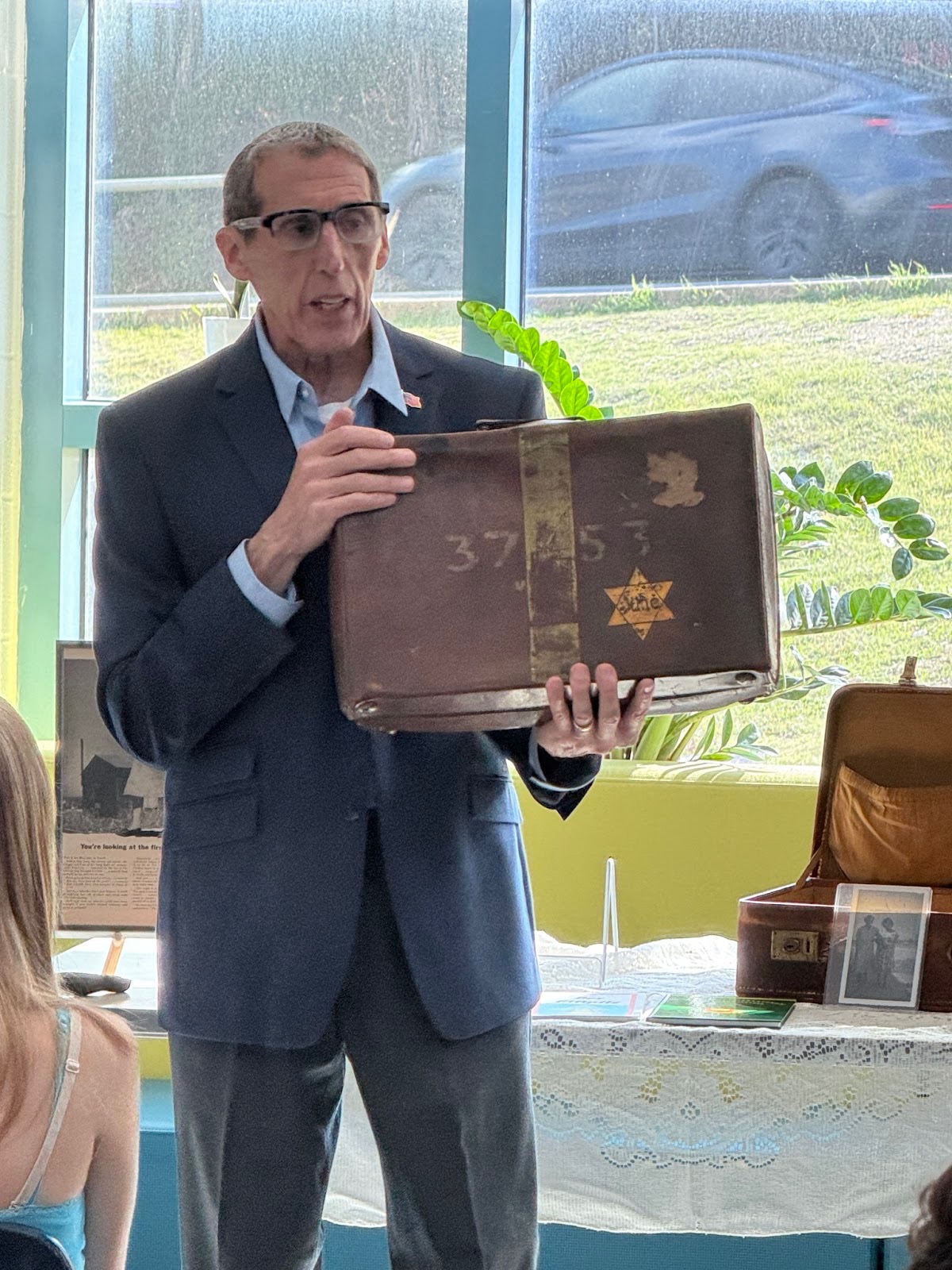
“What would you have packed in your suitcase?” I ask.
When Jewish families were rounded up, there was no time to pack anything more than their most prized possessions and barest essentials. I pass the suitcase around, letting the kids hold it and feel the weight of it.
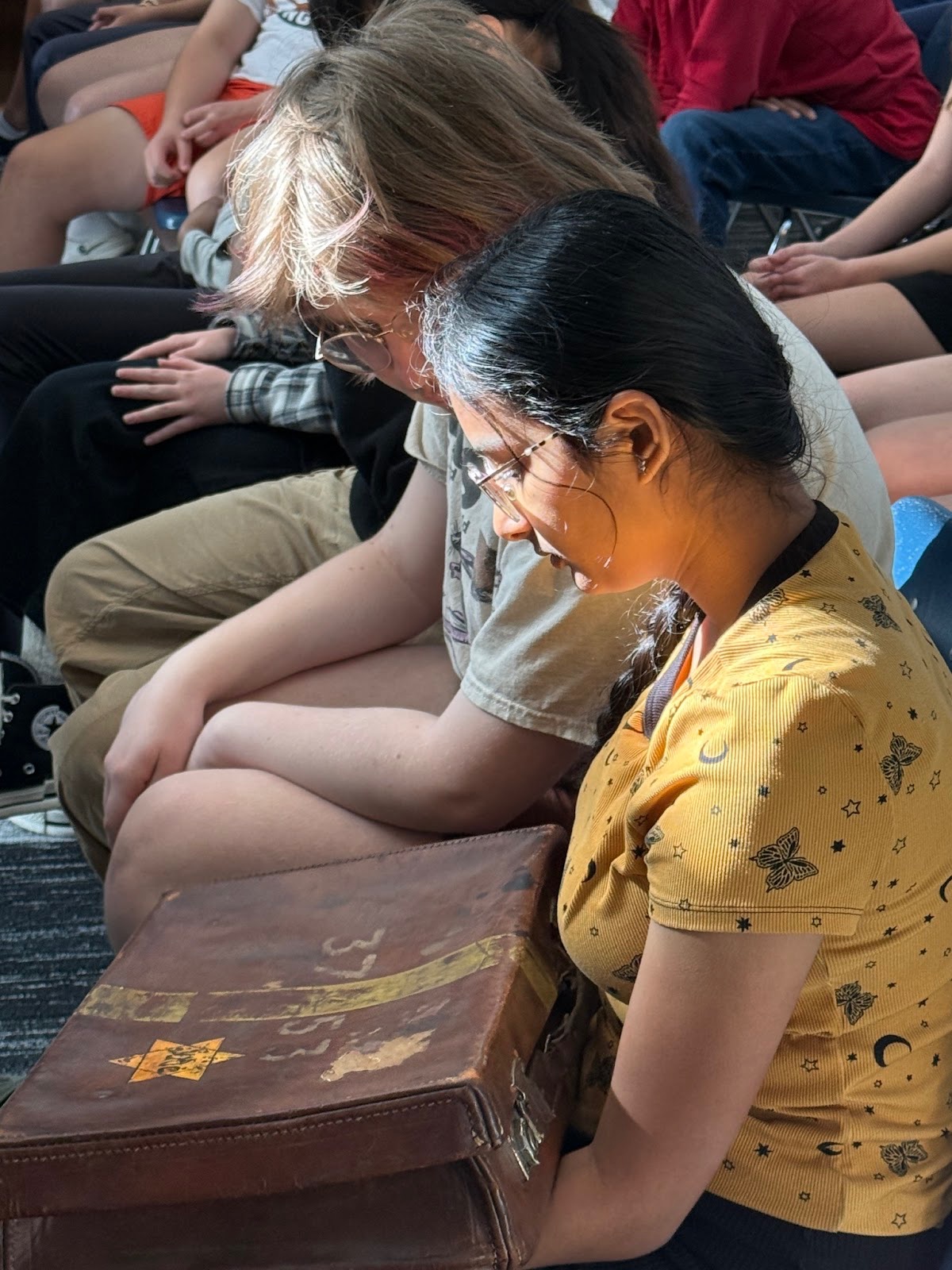
“What would you pack?” I ask again.
The owners of the suitcase wouldn’t have packed gold or silver or jewelry—that had all been confiscated already. Maybe they packed their child’s beloved doll or a handkerchief a grandmother had embroidered and given them as a wedding gift.
As they pass the suitcase around, the kids toss out a few ideas—toys or books they love. Electronics, sometimes. Diaries. Treasured possessions they feel define their childhoods. But mostly, they study the suitcase quietly and somberly, reflecting on what the act of packing it must have been like for the family that owned it.
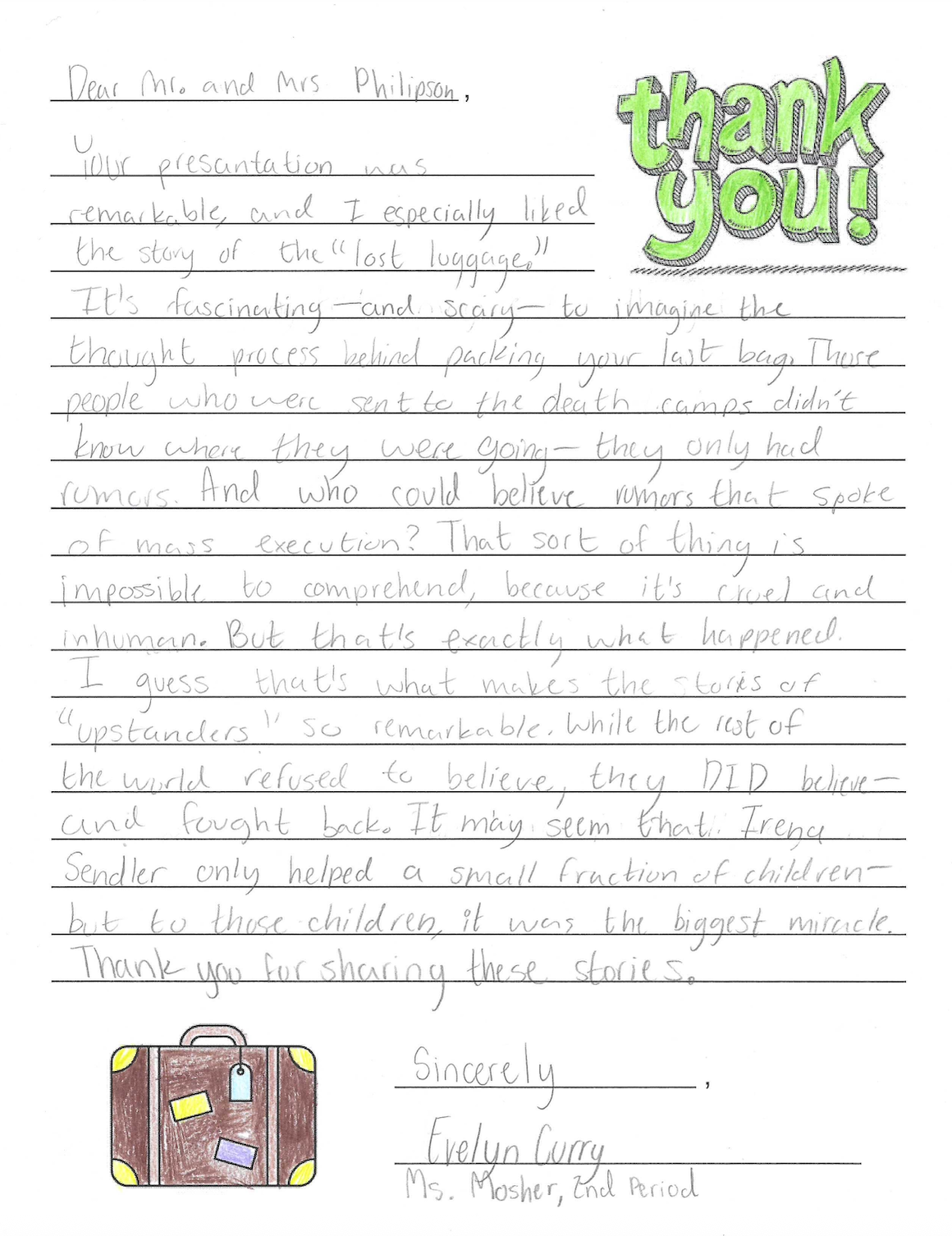
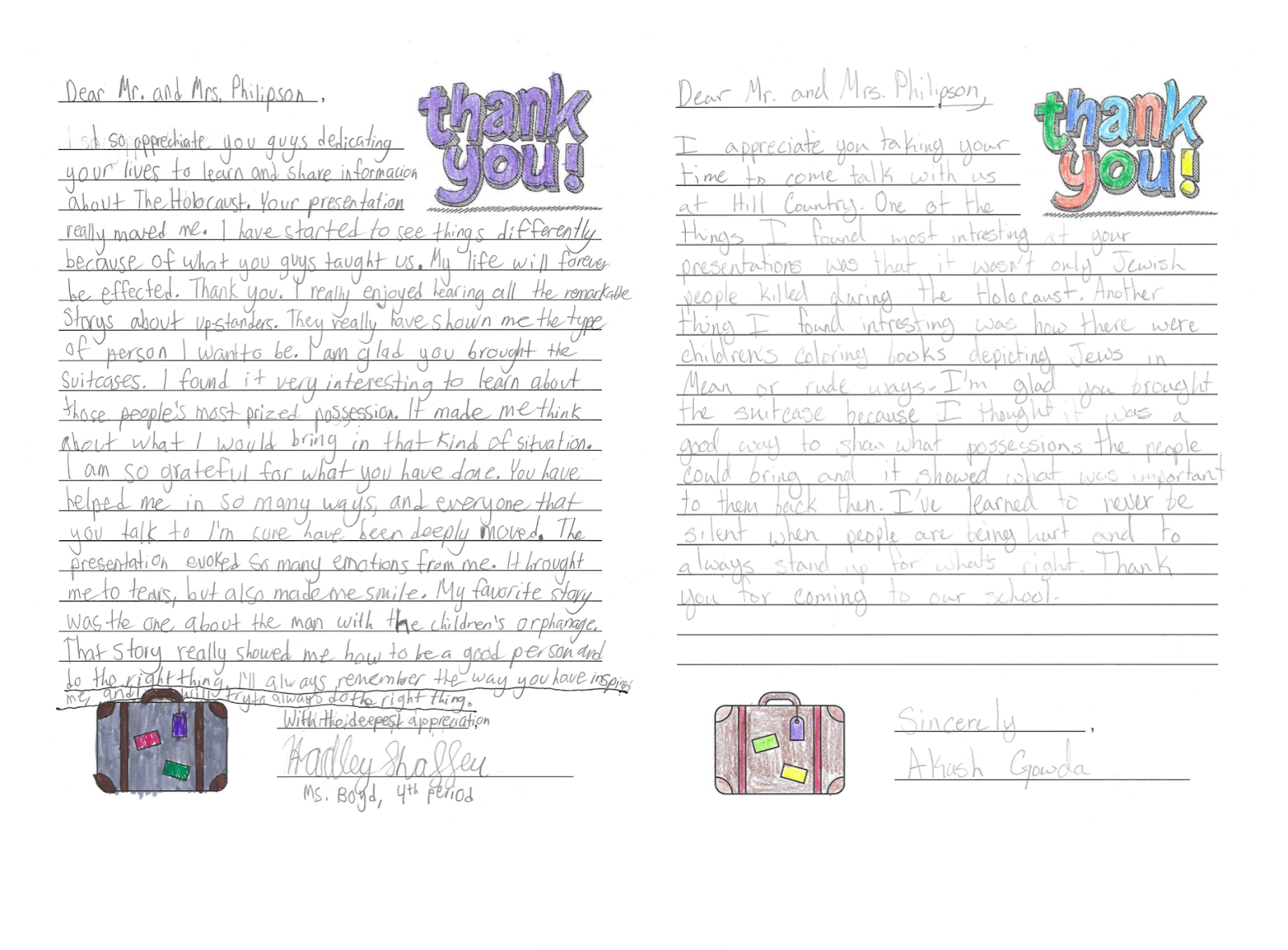
These reflections show up in the thank-you notes I am grateful to receive from so many of the young people I speak to. “I especially liked the story of the ‘lost luggage’,” one said.
“It’s fascinating—and scary—to imagine the thought process behind packing your last bag. Those people who were sent to the death camps didn’t know where they were going—they only had rumors.”
“I’m glad you brought the suitcase. I found it very interesting to learn about those people’s most prized possessions. It made me think about what I would bring in that kind of situation.”
These are exactly the responses I’m hoping to elicit by passing around that old suitcase. Only by finding ways to connect on a personal level with those who were dehumanized, oppressed, and murdered in the Holocaust can we start to develop the empathy required to stop this horrible history from repeating. If I can help today’s middle schoolers build that empathy and become “upstanders” who won’t tolerate hate—no matter who it’s directed to—that gives me great hope for the future.