
On June 15, 1942, the U.S. Post Office Department officially inaugurated V-Mail service in which letters to and from members of the Armed Forces overseas were microfilmed for transporting, then printed out for the recipient. The name was derived from the "V for Victory" symbol used during World War II. Developed and operated in cooperation with the War and Navy Departments, V-Mail reduced the weight and bulk of military mail, creating more space for other, vital military cargo and providing safer, faster mail service for the military overseas. A combination letter and envelope on distinctive stationery, V-Mail received preferential sorting and transportation. V-Mail included space for a message on one side and instructions for sending the letter on the reverse.
Letters were opened by machines at the V-Mail stations then filmed mechanically at a rate of 2,000 to 2,500 an hour. Roughly 1,600 letters would fit on one roll, reducing them to approximately three percent of their original weight and volume.
For example, 150,000 un-microfilmed V-Mail letters weighed 1,500 pounds and filled 22 mail sacks. When microfilmed, they weighed 45 pounds and filled one mail sack — a great space saver on crowded transports. Military authorities censored the letters and decided if they would be filmed or sent in their original form, depending on the distance to be traveled, mail volume, and available space. Microfilmed V-Mail later was reproduced at the V-Mail facility of destination onto four by five-inch photographs, then forwarded to the addressee in specially designed War-Navy Department V-Mail penalty envelopes.
Film was not destroyed until authorities were sure that letters had reached their destination. If not, the mail was reprinted and re-sent. This process was used at V-Mail stations both in the United States and overseas.
The Post Office Department was responsible for domestic dispatch and handling of mail. The Post Office sorted V-Mail by respective Army and Navy post offices and delivered it to the V-Mail stations in the United States. Postal authorities divided the continental U.S. into three regions and funneled the incoming and outgoing V-Mail to three facilities: New York, San Francisco, and Chicago. At the ports of embarkation, the War and Navy Departments took over postal duties and Kodak ran the V-Mail photography operations. The military was responsible for the transportation of mail destined for overseas personnel. Getting V-Mail to and from the field depended upon a network of V-Mail plants at key locations in the European and Pacific theaters.
The Airgraph Service was launched by the British Post Service, in conjunction with Kodak Limited, in1941. The new form of communication was designed to solve the problem of sending mail between Britain and the Middle East once Italy joined the Axis powers and air transport became the only option. Equipment was set up in Cairo to allow the letters, written on specially designed stationery, to be shrunk onto microfilm and flown to the UK where they were then enlarged. The light-weight nature of the Airgraph allowed space to be saved on aircraft for other supplies and also reduced the travel time for the letters. The Airgraph Service formally concluded in Australia after the end of WWII in March 1945.
My V-Mail collection is extensive and varied. (You can view it here.) These documents give clear faces and voices to the WWII history we learn in school. Some are funny, some are political, and some are heartwarming. Of particular meaning to me are the V-mails from my father, Bernard Philipson (z”l) in the U.S. Army, to my grandmother Sylvia Philipson (z”l), as well as to his brother Herb (z”l), who was serving in the U.S. Navy. There are also V-mails from friends of the family addressed to my grandparents and c/o Philipson’s Army and Navy Stores in Utica, NY.

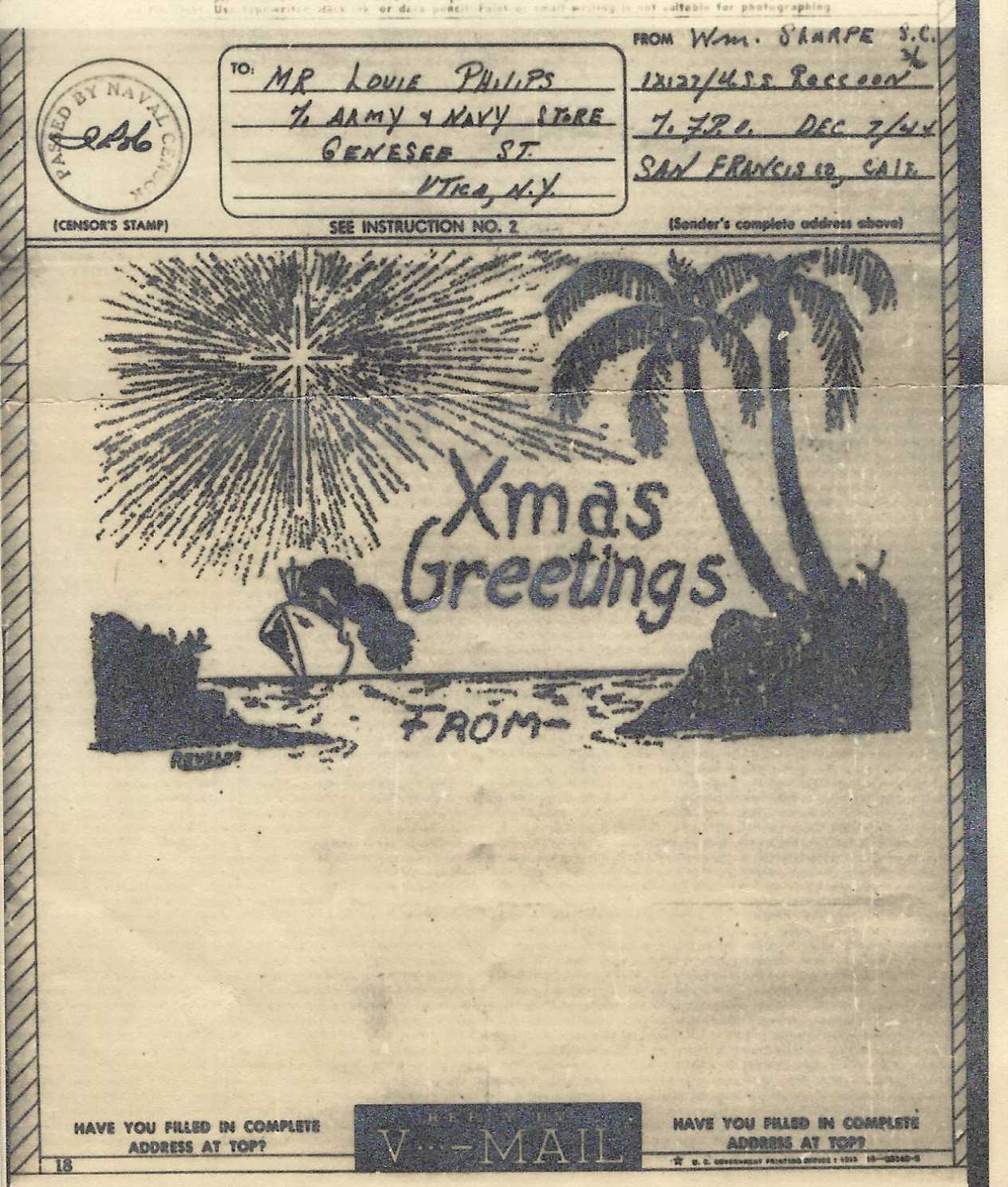
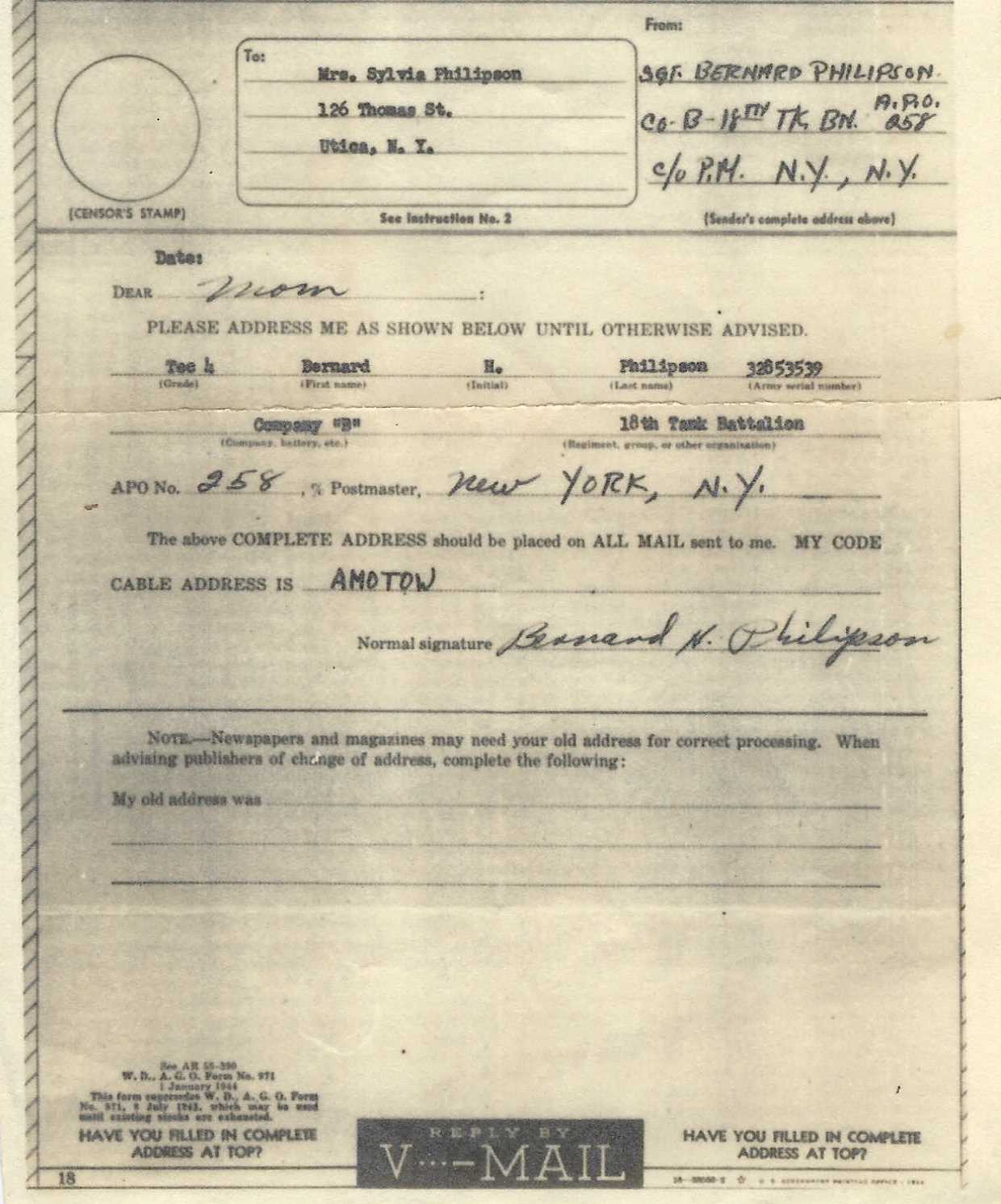
The other V-mails that are of great interest to me are those illustrated with Jewish holiday themes including Passover and Rosh Hashanah.
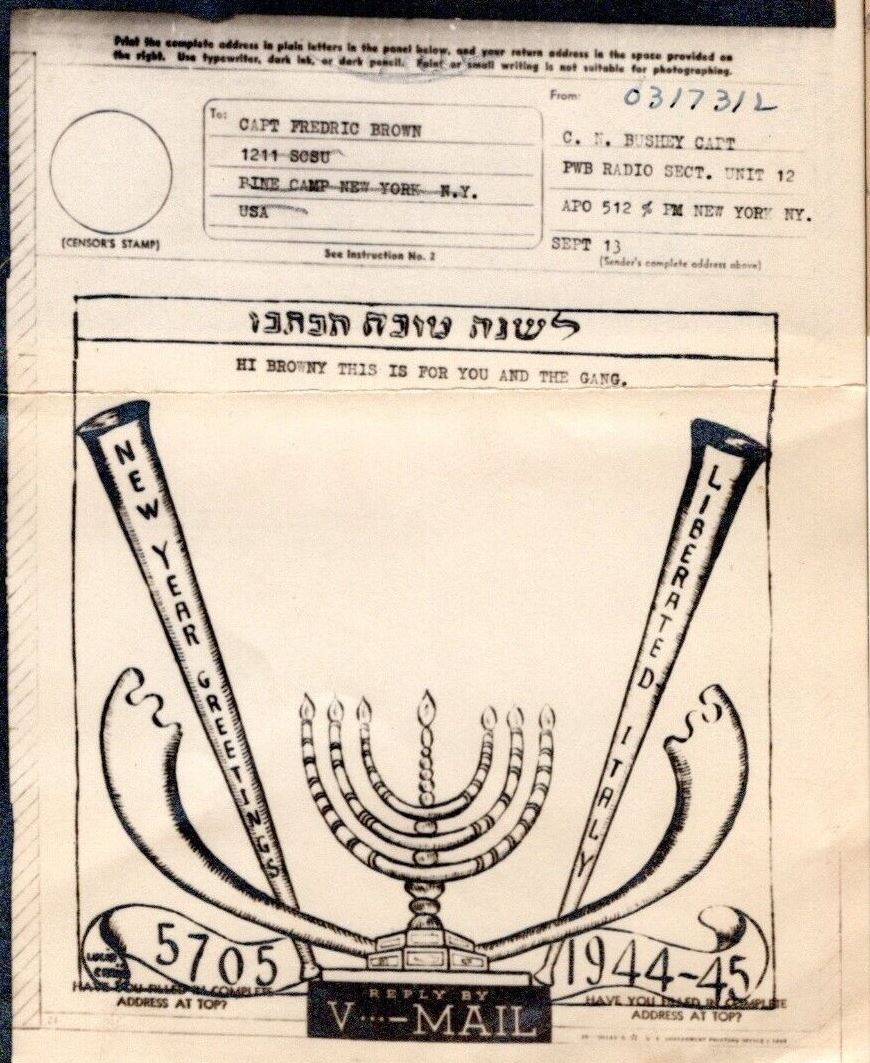
As the war raged on in Europe and the Pacific more and more Jewish soldiers, sailors and marines from many countries found their way to distant shores. More Jewish chaplains were deployed to military installations here and abroad to meet the spiritual demands of over a half million Jews fighting the Axis powers. Many of the chaplains were stationed at military hospitals where the need was also great. Illustrated V-mail and Airgraph messages provided a means to bring a bit of joyous Jewish life into a world needing it badly. Chaplains used V-mail as a means of letting loved ones back home know that they had met with a loved one that was in harm’s way or recovering from wounds received in battle and letting them know that that all was OK. For those in service, it provided some relief from the horrors of war and brought back memories of celebrating the Jewish holidays back home in peace.
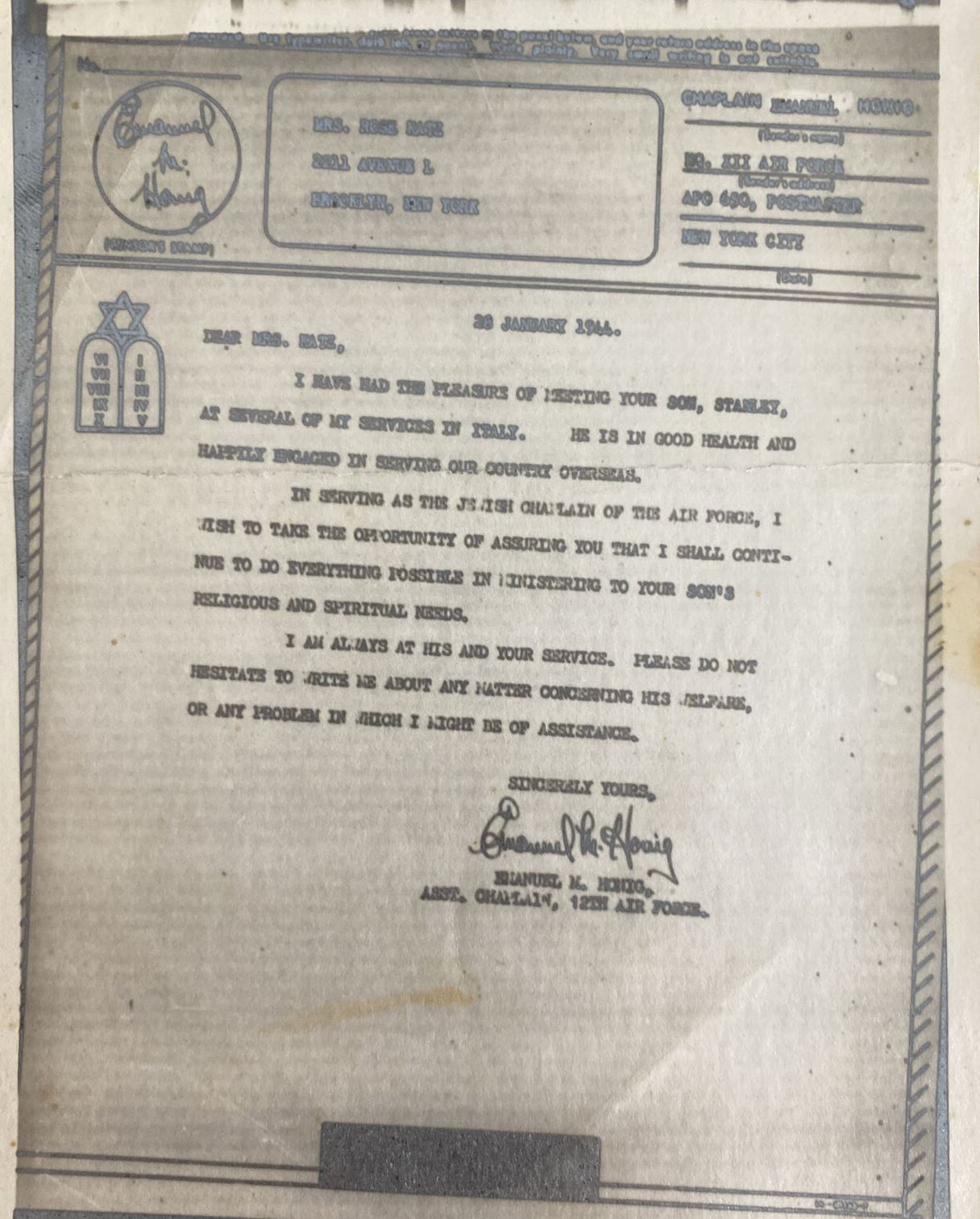
From a historical perspective V-mail messages give us a glimpse into the daily lives of those in service in faraway places and the importance of their connection to Judaism.
View the V-Mail collection here.
Sources
https://about.usps.com/who/profile/history/pdf/v-mail.pdf
https://collections.museumsvictoria.com.au/articles/16591#:~:text=The%20Airgraph%20Service%20was%20launched,transport%20became%20the%20only%20option.
A version of this article was published in the Society of Israel Philatelists in 2022.