
The Geisler Holocaust Collection, a new acquisition of the Philipson Warech Jewish Heritage Collection, is special in many ways. The letters inside give us a detailed look at a German-Jewish refugee couple’s efforts to rebuild their lives after leaving Germany.
However, one item in particular stands out to me: a censored letter, postmarked Köln, Germany, March 18, 1941. The letter is from a relative of the Drs. Geisler, Wilhelm David, who documents the increasingly deteriorating conditions for German Jews in Cologne, asks for $200 to assist with travel expenses to Lisbon, and expresses fear that he will not be able to leave Germany as planned.
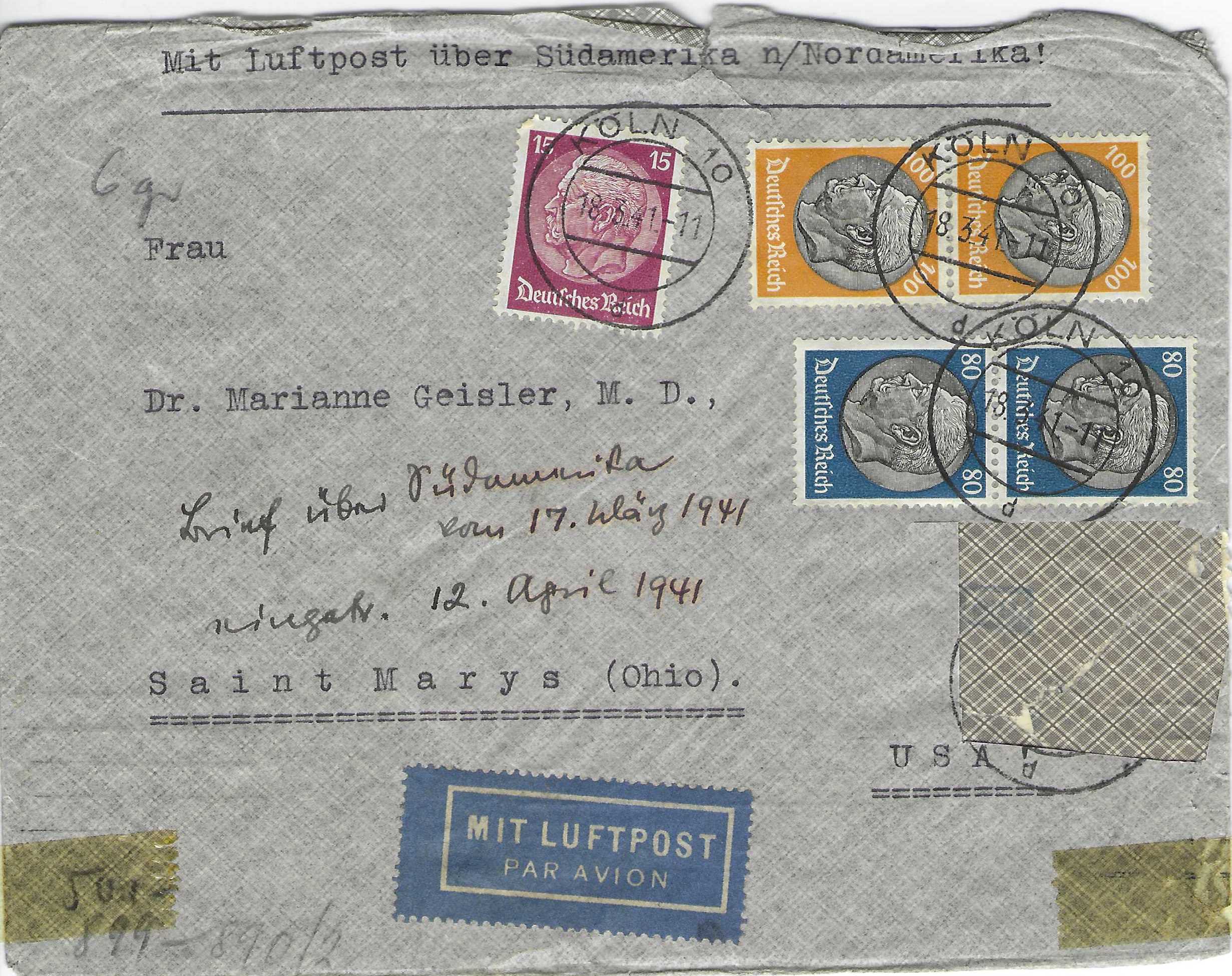
On the back of the envelope, as part of the return address, Wilhelm has written his name as Wilhelm Israel David. His middle name wasn’t Israel; rather, he was required to include it in adherence to an August 1938 Nazi decree requiring all Jewish men in Germany to add "Israel" to their legal names on official correspondence, with Jewish women required to add "Sara." Covers bearing that imposed name are collected today as grim artifacts of Nazi bureaucracy, but they are rarely found with their letters still inside. This one is, and it gives Wilhelm David a voice.
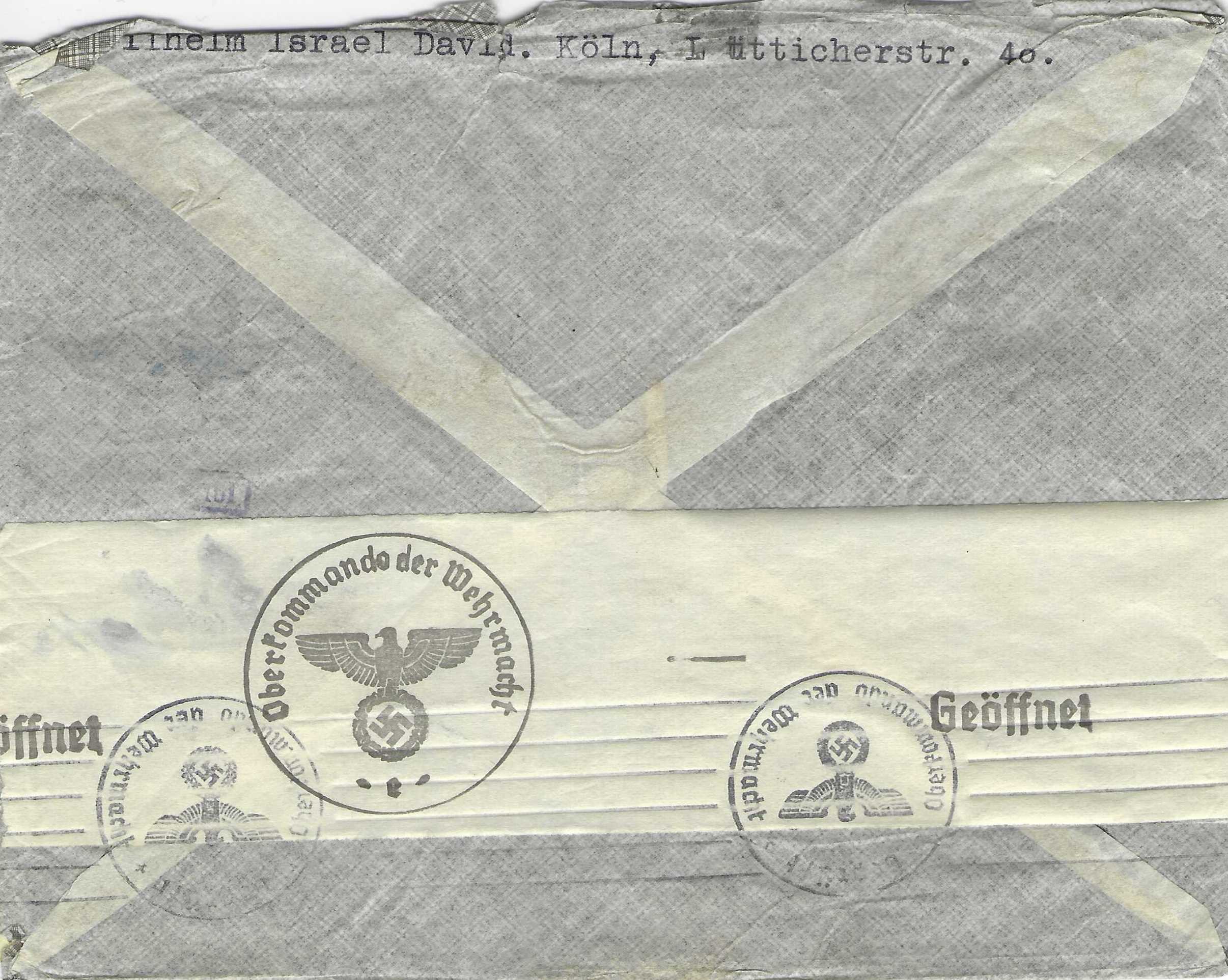
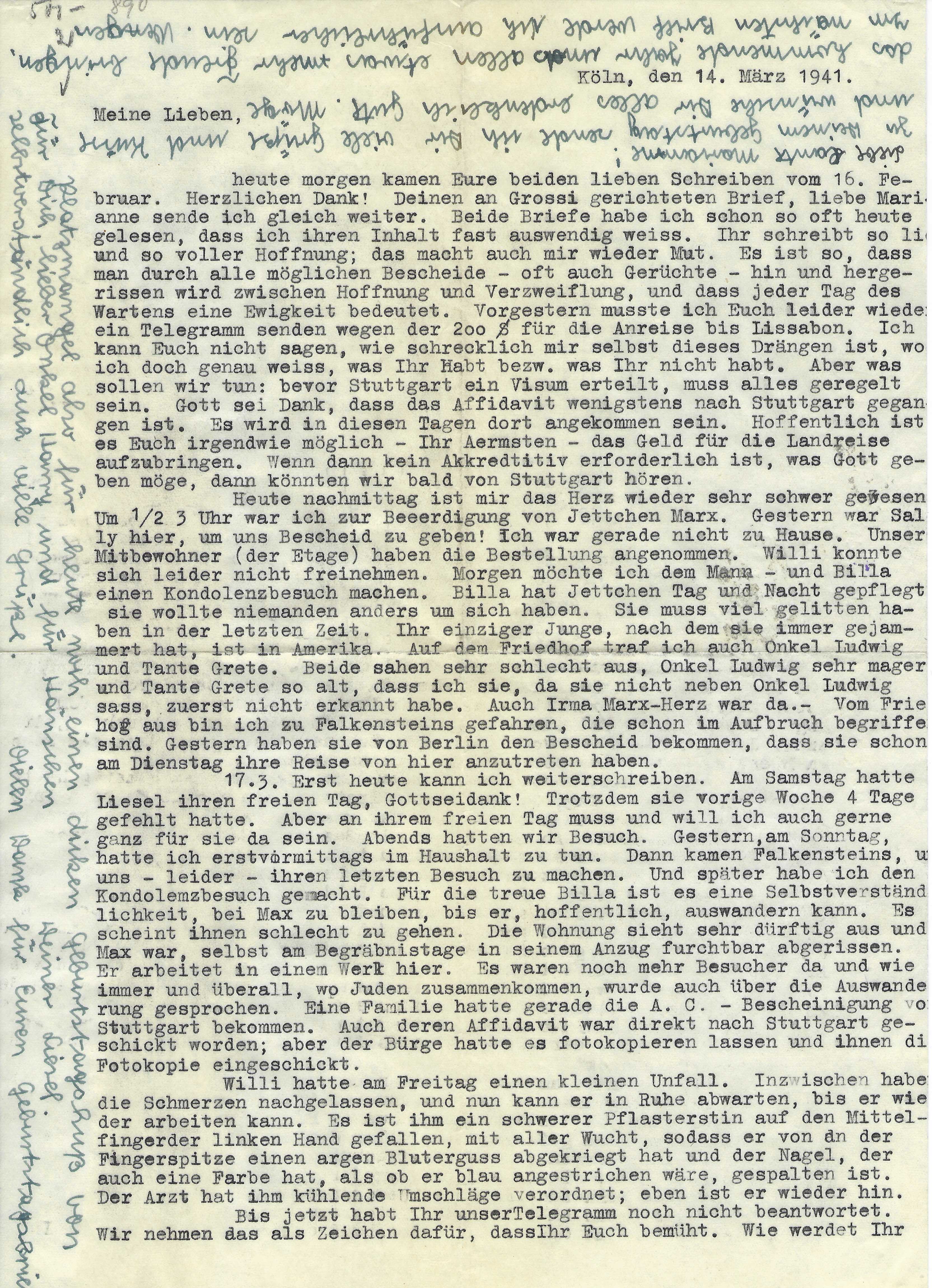
I wanted to learn more about David, so I enlisted the help of my good friends and fellow collectors in the UK and Germany. The speed with which they were able to piece together David’s story was truly incredible, although I wish that they’d discovered a happier ending.
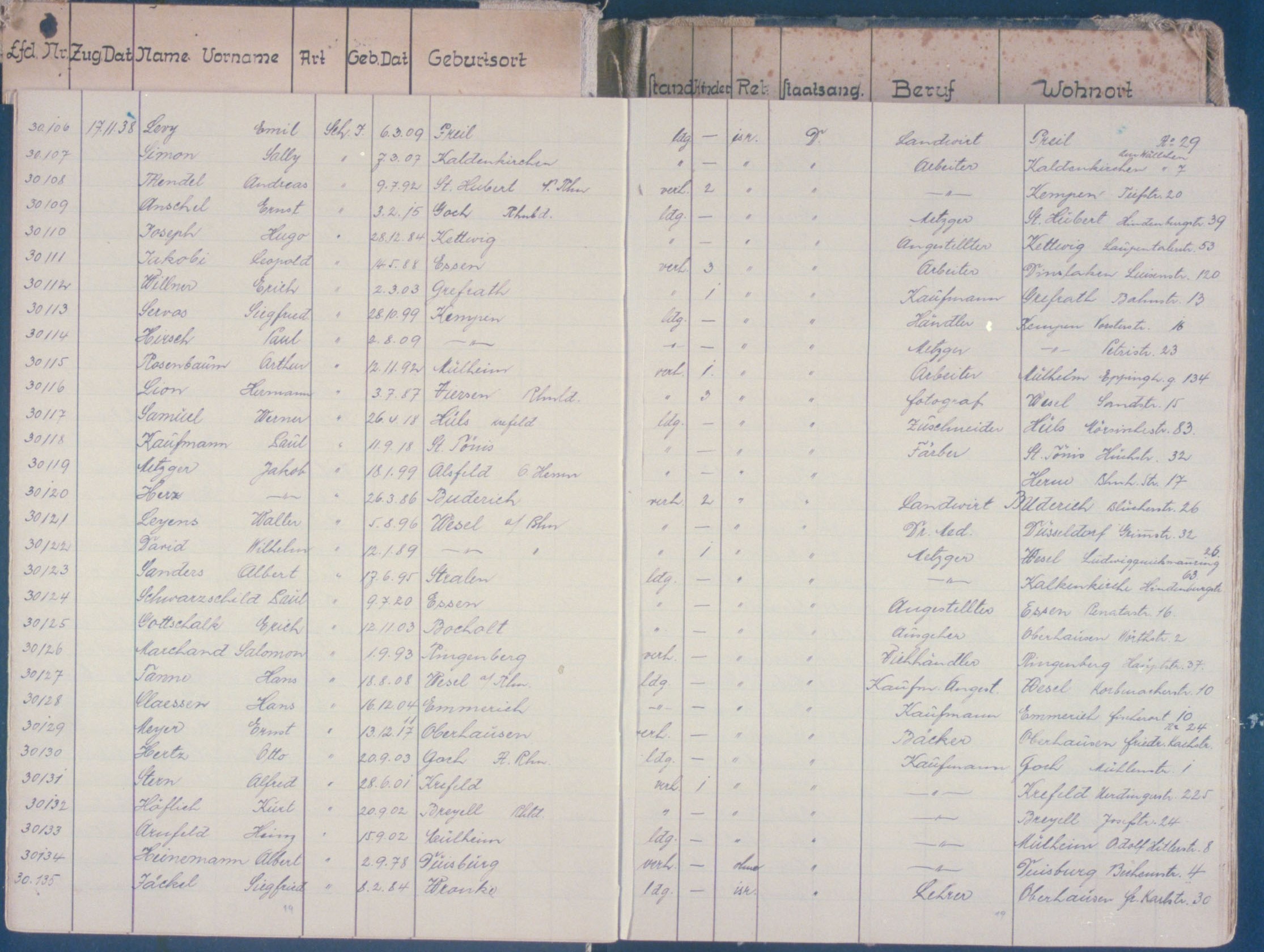
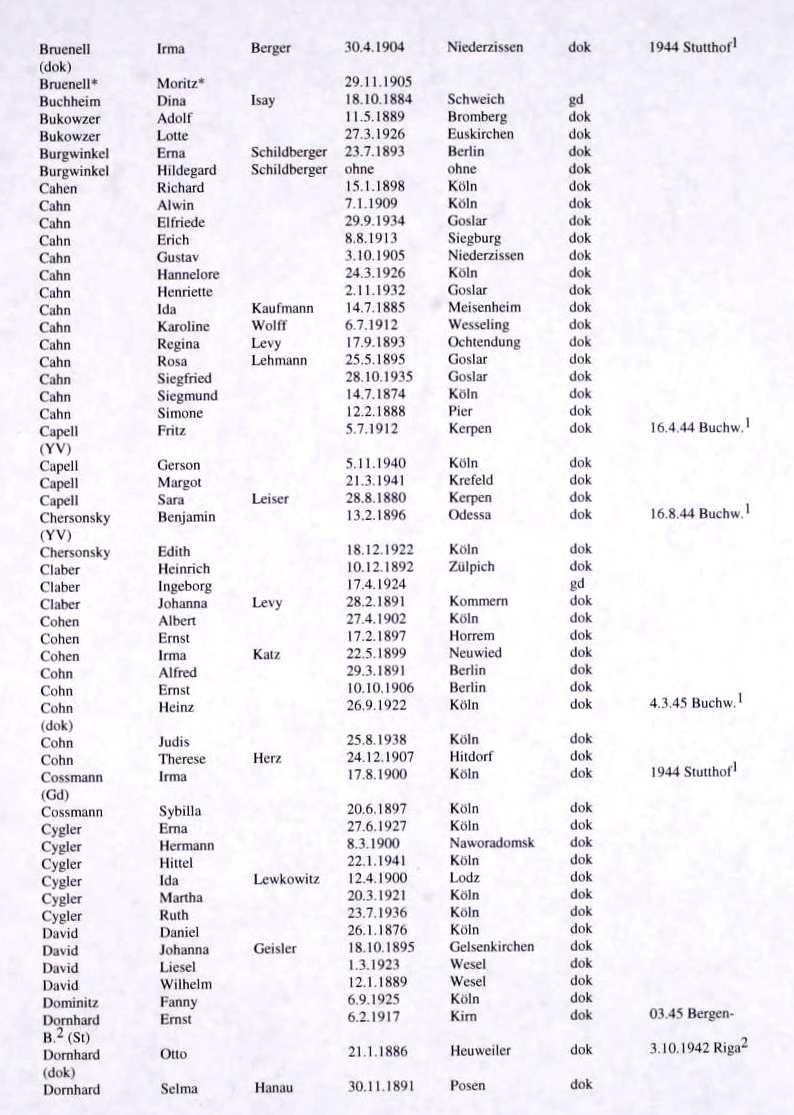
Wilhelm David was born January 12, 1889, in Wesel, Germany, where he worked as a butcher. He married Johanna Geisler—a relative of Dr. Harry Geisler, Marianne’s husband—and the couple had one daughter, Liesel, born in 1923. By the late 1930s the family had relocated to Cologne, living at Lütticherstraße 40. Wilhelm was swept up in the arrests that followed Kristallnacht in November of 1938, which we know from a surviving transport register that lists him, arrested on November 17, 1938, alongside dozens of other Jewish men from the region—merchants, laborers, farmers, a photographer, a teacher… Each entry reduces a life to a birthdate, an occupation, and a hometown.
Wilhelm survived that arrest, and by 1941 the family was doing what thousands of German Jews were doing: trying to get out. His March 1941 letter to Marianne Geisler in St. Marys, Ohio, describes the effort in stark terms—the $200 needed just to reach Lisbon, the wait on a visa from the American consulate in Stuttgart, fear that Spanish and Portuguese steamers would stop sailing before they could book passage. Dr. Harry Geisler tried to help: refugee aid records show he deposited $200 toward the family's passage on March 25, 1941. But the visa never came through. The deposit card shows the money sitting untouched until it was refunded—minus a $2.50 cable charge—on February 3, 1942. The account was marked closed. By then, it was already too late to matter.
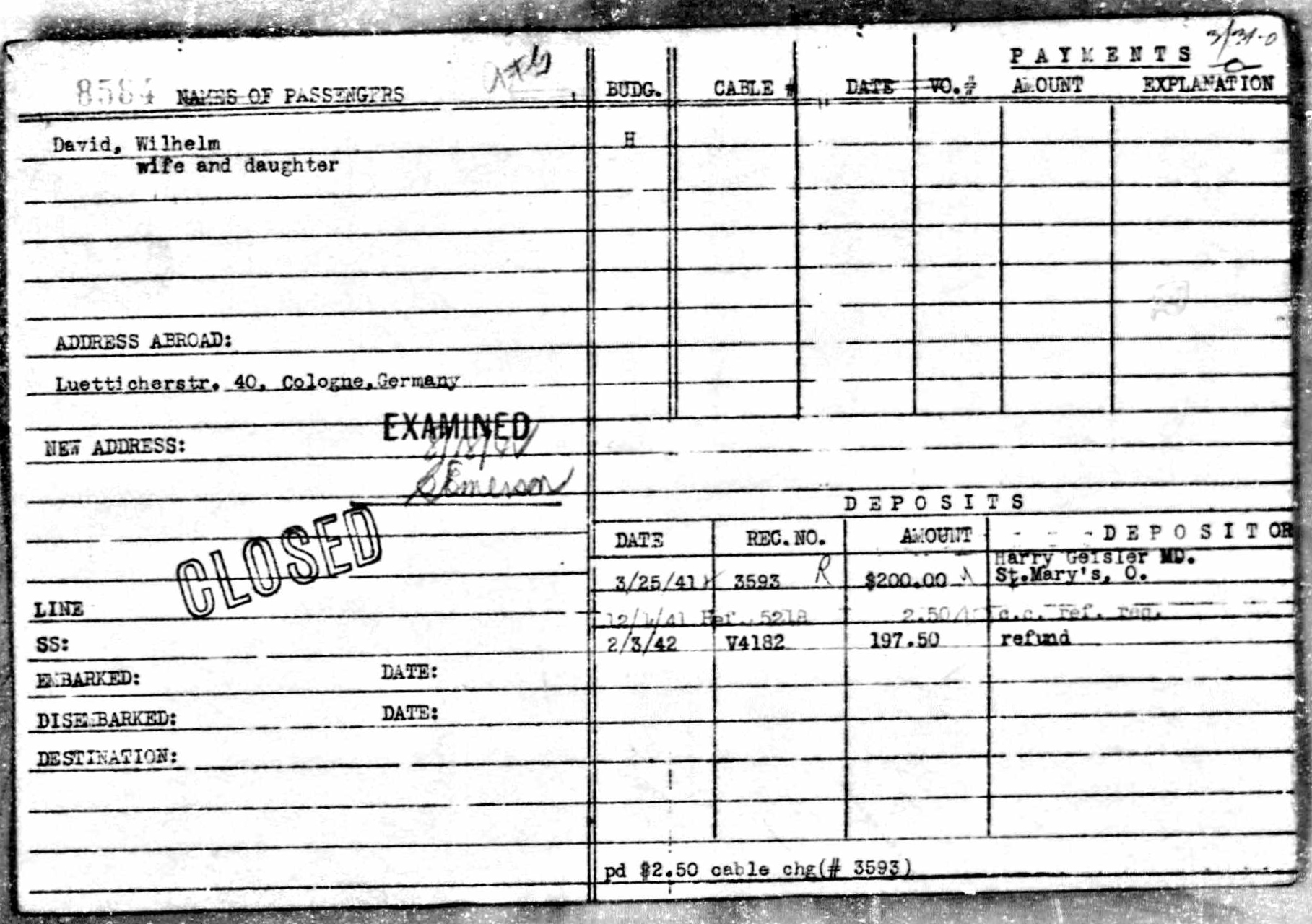
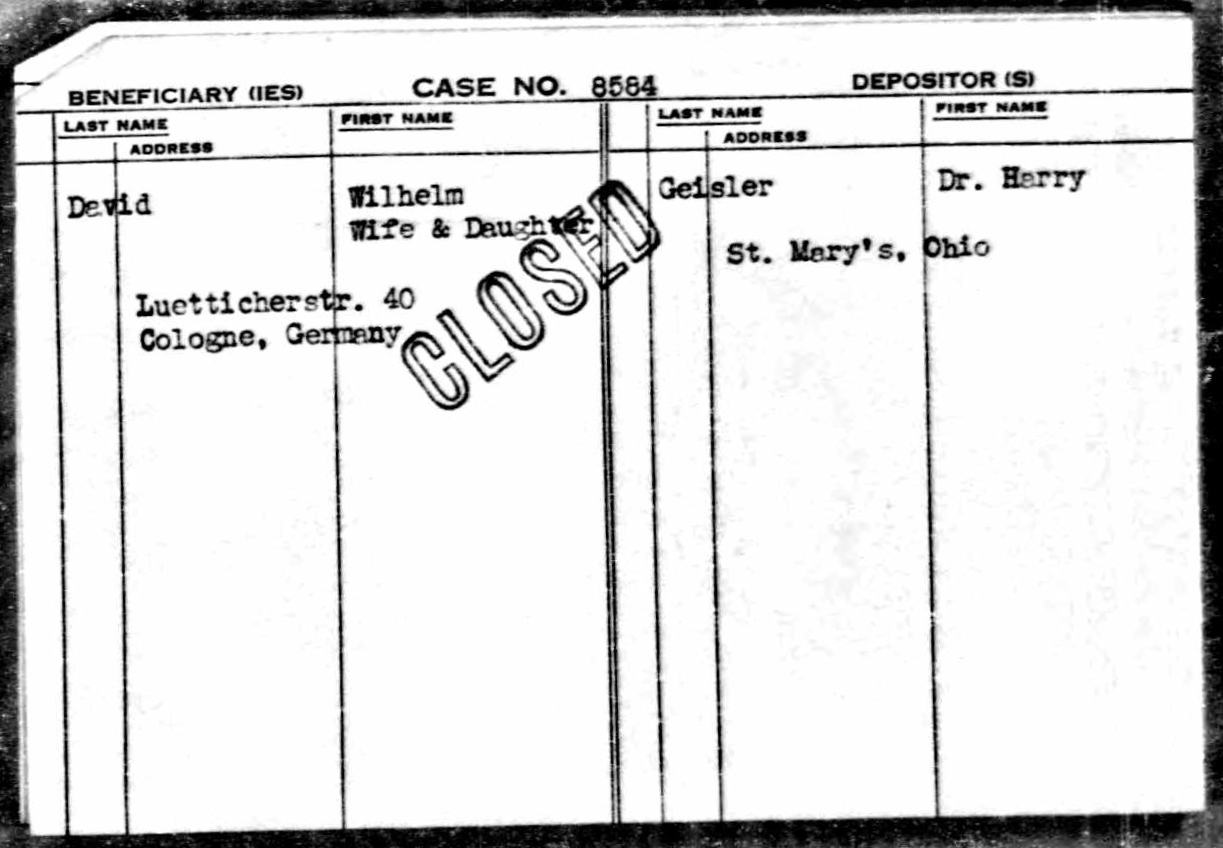
On December 7, 1941, Wilhelm, Johanna, and Liesel David were marched to the Cologne railway station before dawn and put aboard an unheated passenger train bound for the Riga Ghetto in German-occupied Latvia. The journey took three days. Survivors later described arriving in biting cold, luggage confiscated and never returned, to a ghetto already emptied by earlier mass shootings. Of the 1,011 Jews deported from Cologne to Riga, only 87 survived the war. The David family was not among them. Yad Vashem's Pages of Testimony, submitted decades later by relatives, record their fate simply: umgekommen — perished — at Riga.
It's the letter that makes Wilhelm David more than a name on a deportation list. That letter, with its “Israel” return address, took me down the path of discovering one more murdered Jewish person’s story, so I could preserve and share it rather than letting it be lost to history. This letter is a poignant reminder of why I do the work I do, and a nudge to keep going even when it’s hard.
May his memory be a blessing.