
Barney Ross

Barney Ross, born Dov-Ber Rasofsky to Jewish immigrants on New York’s Lower East Side, rose from extreme poverty to become one of boxing’s greatest champions, winning world titles in three weight classes during the 1930s. Openly proud of his Jewish identity at a time of widespread anti-Judaism, Ross became a symbol of toughness and perseverance both in and out of the ring. During World War II, he enlisted in the U.S. Marines and was awarded the Silver Star for extraordinary bravery at Guadalcanal, where he held off an enemy assault despite being seriously wounded. His wounds contributed to severe morphine addiction and in 1946 he voluntarily entered a rehab facility in Kentucky. After successfully overcoming his addiction, he went on to use his celebrity status to advocate against drug use.
Important Moments
Highlights from the Collection

This 1957 press photo features Barney Ross along with Harry J. Anslinger and George W. Cunningham, commissioner and deputy commissioner of the federal narcotics bureau. Ross had served in the marines and fought in the Battle of Guadalcanal. He was awarded the Silver Star for heroism, but he also contracted malaria and sustained several wounds—both of which contributed to severe addiction to morphine. In 1946, he voluntarily entered a rehab facility in Kentucky and, after successfully overcoming his addiction, he went on to use his celebrity status to advocate against drug use.

During his military service, boxer Barney Ross was awarded a medal of valor for his heroic actions during the Battle of Guadalcanal. This cover cachet is one of a series of twenty commemorating American heroes of WWII—including Ross. The stamp was cancelled in Alabama on April 2, 1944, and it’s franked with a 1-cent Four Freedoms Stamp and a 2-cent John Adams issue.
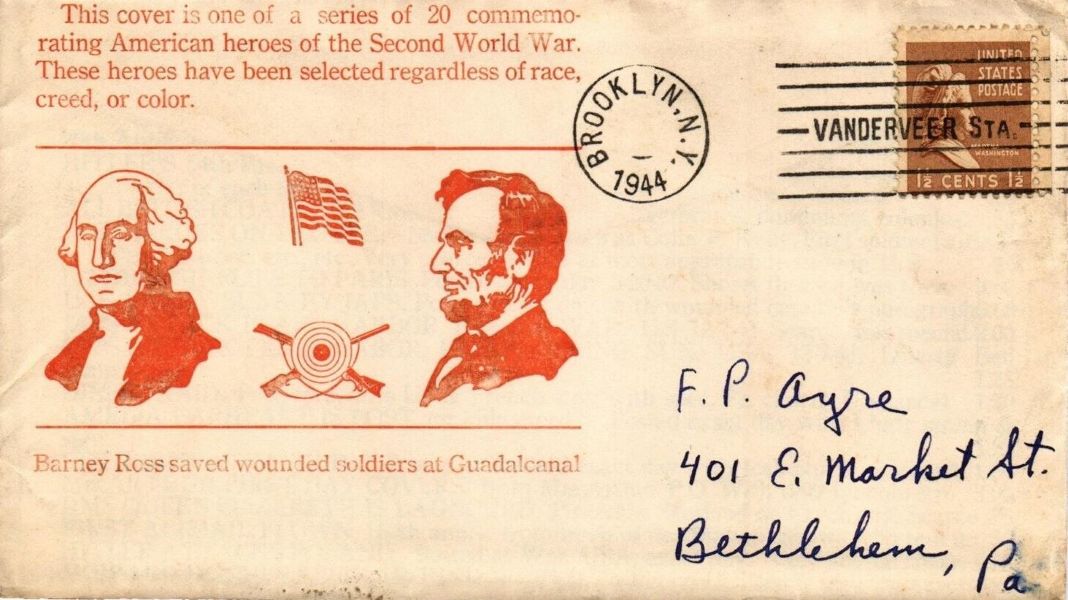
During his military service, boxer Barney Ross was awarded a medal of valor for his heroic actions during the Battle of Guadalcanal. This cover cachet is one of a series of twenty commemorating American heroes of WWII—including Ross. The stamp was cancelled in Brooklyn, NY, in 1944, and it’s franked with a 1.5-cent Martha Washington stamp.

Jewish boxing champion Barney Ross in his September 17, 1934, fight with Jimmy McLarnin. The caption on the back of the photo, which was taken by Acme Newspictures, Inc., reads, “Barney Ross landing a long left to Jimmy McLarnin’s mid-section in their much-postponed fight, finally held at The Madison Square “Garden Bowl,” Long Island City, L.I.. Sept. 17th. In a surprise decision McLarnin was awarded the fight.

An original photo taken of Barney Ross, championship boxer and future war hero, in the 1930s.
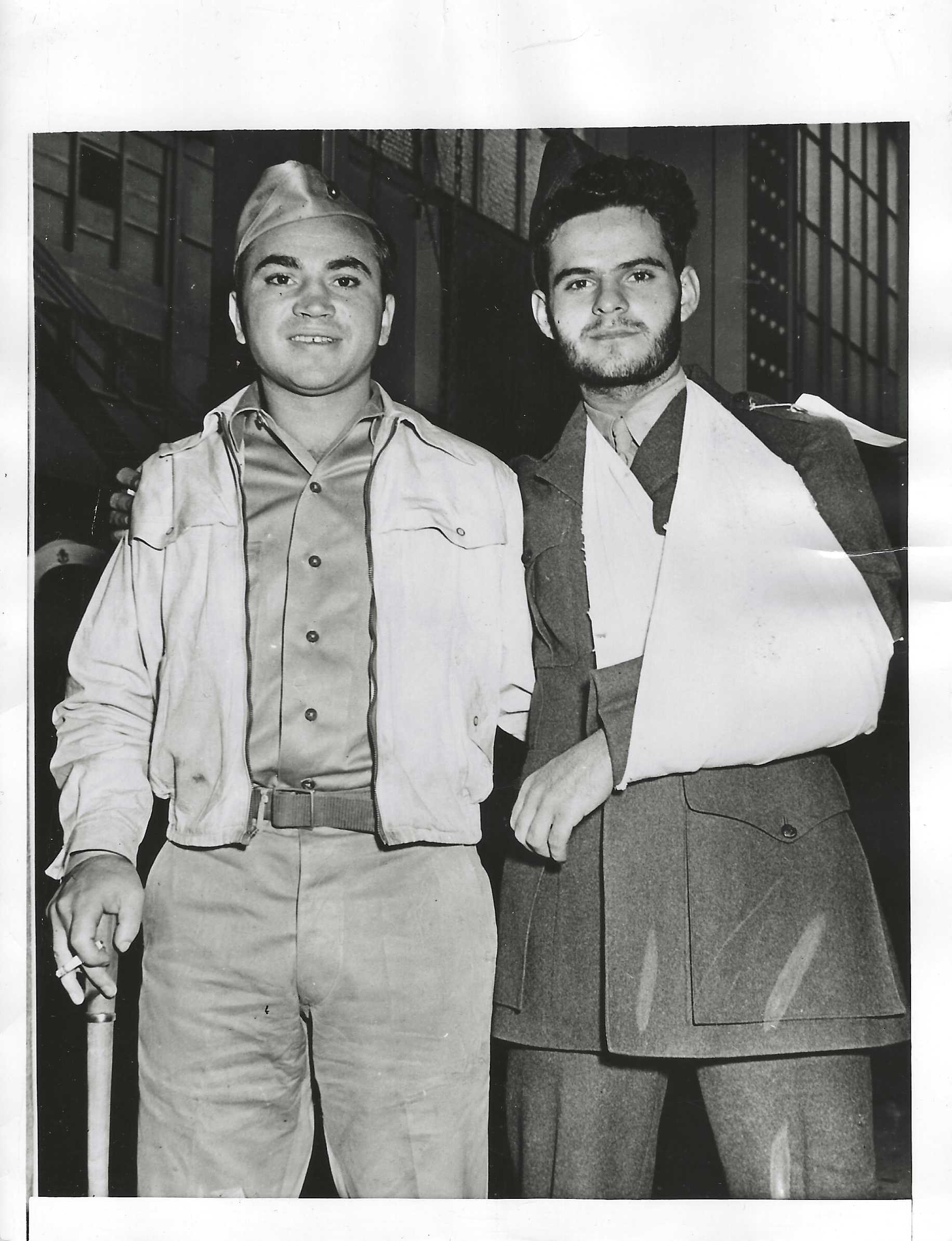
This February 27, 1943 image features Corporal Barney Ross (left) and Pfc. R. Garcia having just returned to the United States via hospital ship following their USMC service. The caption on the back notes that Ross was “the first of scores of wounded servicemen to leave the big ship when it docked at San Diego.”

A press photo of Barney Ross’s honorable discharge from the marines following his heroic actions in the Battle of Guadalcanal—and the recovery from injuries sustained there.

“Billings Hot Drops” was the company newsletter for the Billings & Spencer defense contractor. The company was founded in 1869 as the Roper Sporting Arms Co. by Charles E. Billings and Christopher Spencer. It reorganized as the Billings & Spencer Co. in 1873. The company produced drop-forged hand tools and the drop forging machines themselves—hence the name of their newsletter. This issue, published in June 1943, commemorates a visit by Sgt. Barney Ross of the US Marine Corps.

A press photo of Jewish championship boxer Barney Ross training in Loretta, Wisconsin, for his fight with Jimmy McLarnin. The caption on the back reads, “Running improves legs and wind—says Champ. Ross…The woods of Wisconsin, especially around this section, resounded lately to the early-morning patter of running feet. The feet belong to Barney Ross, world’s lightweight champion, who favors running as a method of improving legs and wind. Barney is prepping for his fight with Jimmy McLarnin, to be held in New York May 28th, for the benefit of the Free Milk Fund for Babies.” (The fight would ultimately be postponed until September, putting Barney way ahead in his training schedule.)
