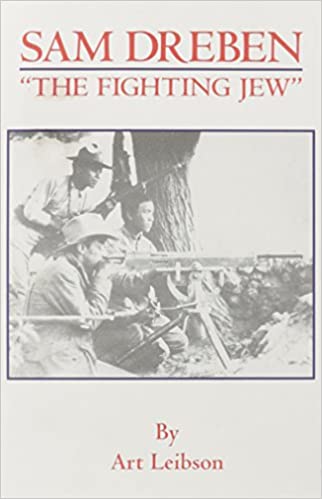
Sam Dreben: "The Fighting Jew"
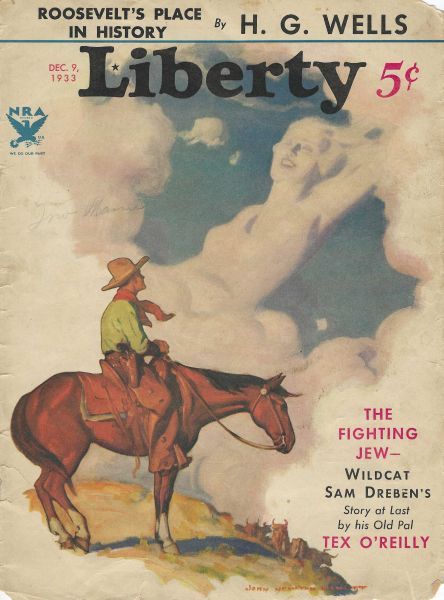
The centerpiece of this collection is a six-part serialized profile of Samuel Dreben that ran in Liberty Magazine from December 1933 into early 1934, entitled, "The Fighting Jew: Wildcat Sam Dreben's Story at Last." It's a firsthand, nonfiction account from Tex O’Reilly, who fought alongside Dreben from his very first battle, and it was published in an effort to counter the prevailing stereotype of Jewish passivity by putting Dreben's military record in front of a national readership. Original copies of the 1933–34 run are now considered collector's items.
Dreben was born in 1878 in Poltava, in the Russian Empire, where escalating anti-Jewish violence gave him little future to speak of. He fled, arriving in the United States in January 1899. Within months he'd enlisted in the US Army and was fighting in the Philippine-American War, then the Boxer Rebellion in China. It was in that first campaign, storming a bridge alone under fire, that he earned the nickname that would follow him for the rest of his life. Between stints in the regular Army, he fought as a soldier of fortune across Central America and Mexico in Nicaragua, Panama, and the Guatemalan revolution, and rode with Pancho Villa's forces in 1913 before breaking with Villa in 1916 to join General John Pershing's campaign. When the United States entered World War I, Dreben served with the 141st Infantry of the 36th Division, leading a charge that captured four German machine-gun positions. For it, he earned the Distinguished Service Cross, France's Croix de Guerre and Médaille Militaire, and the Italian War Cross, making him one of the most decorated American soldiers of the war. Pershing, who later selected him as an honor guard for the burial of the Unknown Soldier at Arlington, called him "the finest soldier and one of the bravest men I ever knew."
Dreben never separated his Jewish identity from his service; rather, he wore both without apology in an era when he had every reason not to. Journalist Damon Runyon, a friend, wrote a poem about him that made "The Fighting Jew" a household phrase. It's that record—a life spent taking up arms for whatever country he called home, again and again, across four decades and three continents—that makes Dreben's story such a direct answer to the old, false claim that Jews don't fight for their nations.
Important Moments
Highlights from the Collection
.jpg)
"The Russian immigrant was a gentleman who never betrayed a trust or weakened on a friend. And before his charmed life had ended, he'd written a legend of gallantry no fictional hero could ever hope to match."
.jpg)
A page from the Frontier West feature on Sam Dreben
.jpg)
The June 1973 issue of FRONTIER WEST featured "The Incredible Texas Saga of Sam Dreban" [sic]
.jpg)
A page from the first installment of Dreben's Liberty Magazine serial.
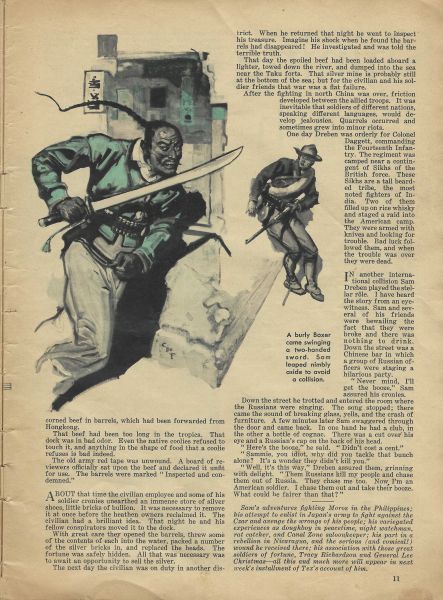
The final page from the first installment of Dreben's Liberty Magazine serial—complete with a teaser of what Sam will get up to in next week's issue.
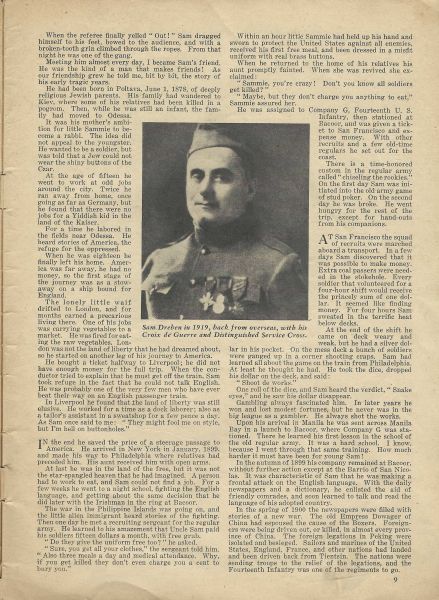
A page from the first installment of Dreben's Liberty Magazine serial.
The cover of the December 9, 1933 Liberty Magazine, featuring the first installment of the serial on Sam Dreben.
.jpg)
A page from the first installment of Dreben's Liberty Magazine serial.
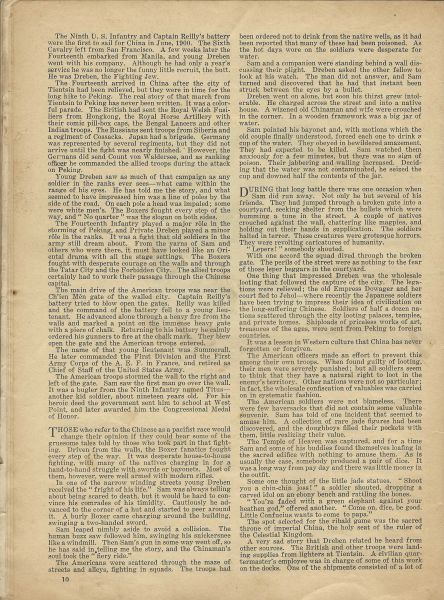
A page from the first installment of Dreben's Liberty Magazine serial.