
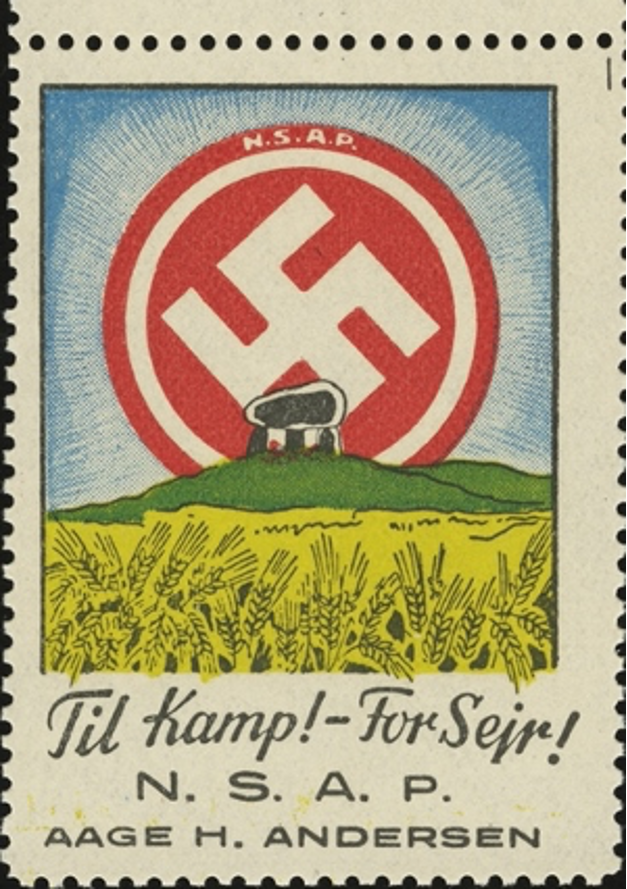
Even in Denmark, where one might suspect Jewish people would be safe, anti-Jewish sentiment led to propaganda items like these national socialist party labels.
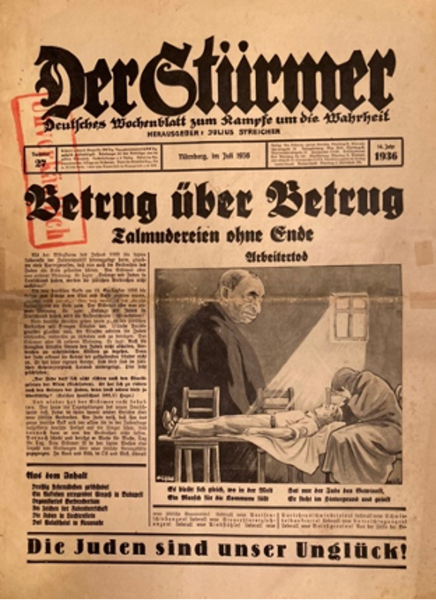
A weekly German tabloid published by Julius Streicher, a Nazi and member of the Reichstag. The paper was a significant element of German anti-Jewish propaganda and, like tabloids today, it really had nothing to do with news.
.png)
This French postcard, produced in 1898, features a grotesque representation of the Dreyfus Affair, with anti-Jewish French journalist Edouard Drumont roasting a nude, caricatured Alfred Dreyfus on a spit.
.png)
This postal label, or "Cinderella," similar to the ones produced in Germany, is from Hungary. It reads, “Not a penny for these people,” referring, of course, to the Jews portrayed in caricature on its face.
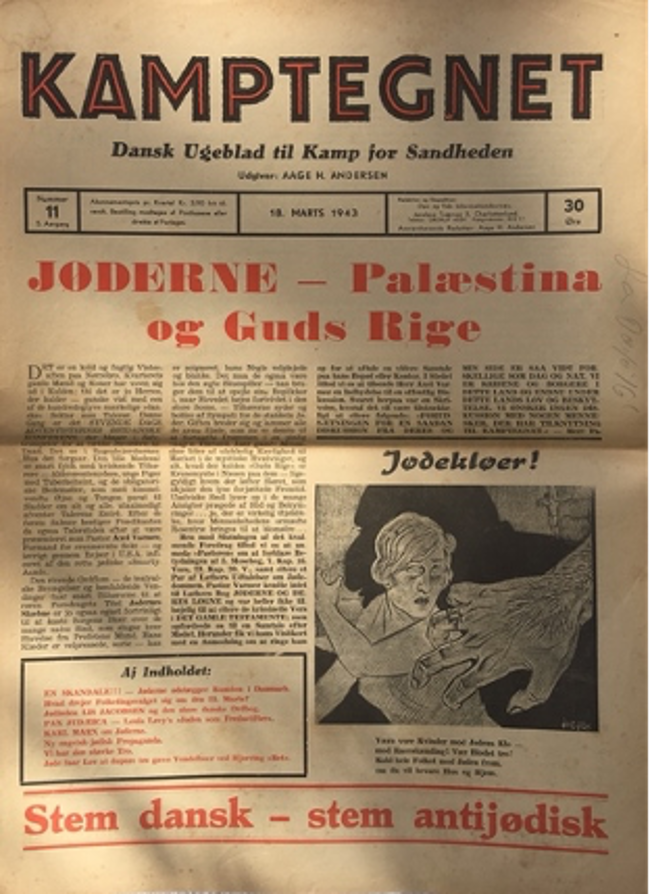
Kamptegnet (“Battle Journal”) was a Danish weekly tabloid, essentially a carbon copy of Der Stürmer from design and format down to the tagline. Many editions feature the Danish version of Der Stürmer’s tagline, which translates to “The Jews are our misfortune.” The issue pictured here is tagged, “Vote anti-Jewish,” and the publication rotated through several similarly hateful slogans. Like Der Stürmer, Kamptegnet had nothing to do with actual news — its only content was hate.
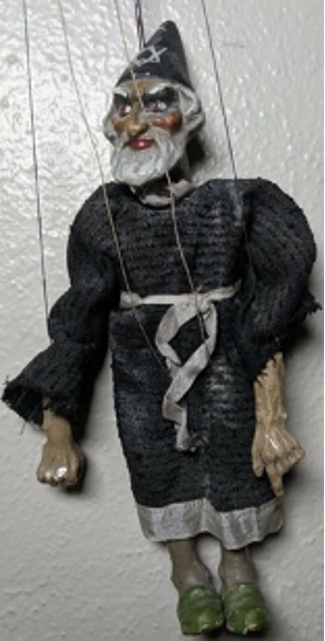
This intricately designed and carved children’s toy was produced in Czechoslovakia c. the 1930s. Czechs were known for their puppetry, and this example came from the country’s premier puppet manufacturer, highlighting the commercialization of anti-Jewish ideology.

A 1915 cartoon by Robert John Wildhack, entitled “Joshua Subdues the Hittites.” Published in the humor magazine Life, this cartoon depicts the biblical story of Joshua and the Israelites conquering the Hittites in such a way as to make light of the events. This depiction reverses the roles from the biblical story, with the Hittites as a meek, undeserving victims and Joshua (representing the Jewish people) converted to the violent, villainous giants the book of Joshua depicts the Hittites to be.

A Viennese café, once under Jewish management and called the Splendide, that was taken over by Nazis, covered in swastikas, and renamed Kaffe Deutschland when Nazis took over Vienna.

This is an original photo of a banner reading “Don’t Buy from Jewish Shops” hanging in front of a building in Germany, 1935.
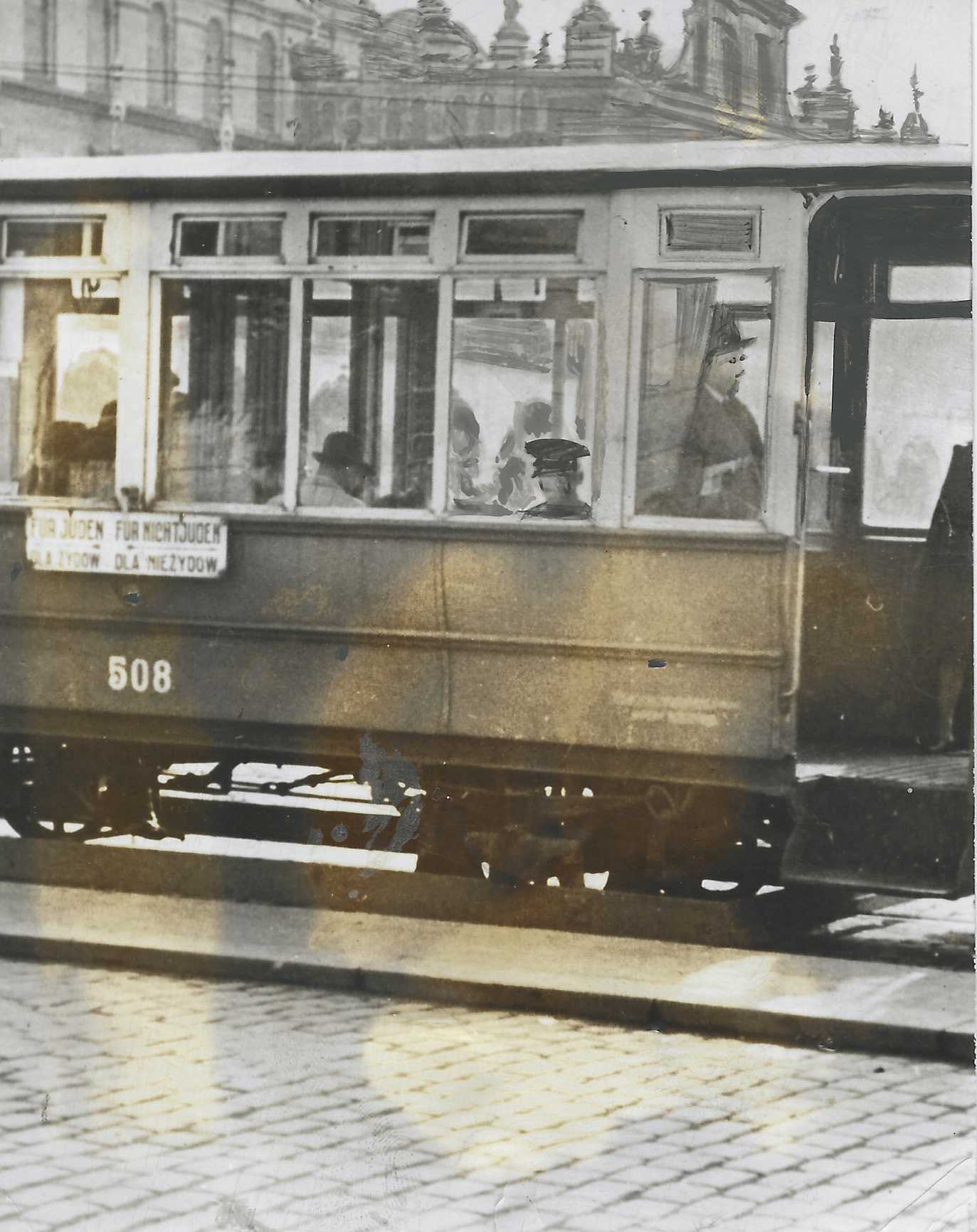
This photo from January 1941 shows Krakow’s streetcars segregated into sections for Jews and non-Jews. An AP clipping affixed to the back reads, "Poland Joins the Reich."
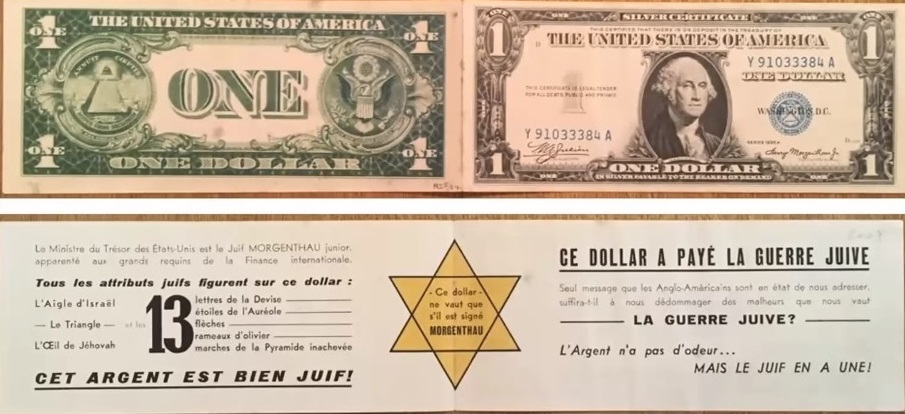
Fake US currency printed in 1943 as anti-Jewish propaganda playing into the trope that Jews were bankrolling WWII.
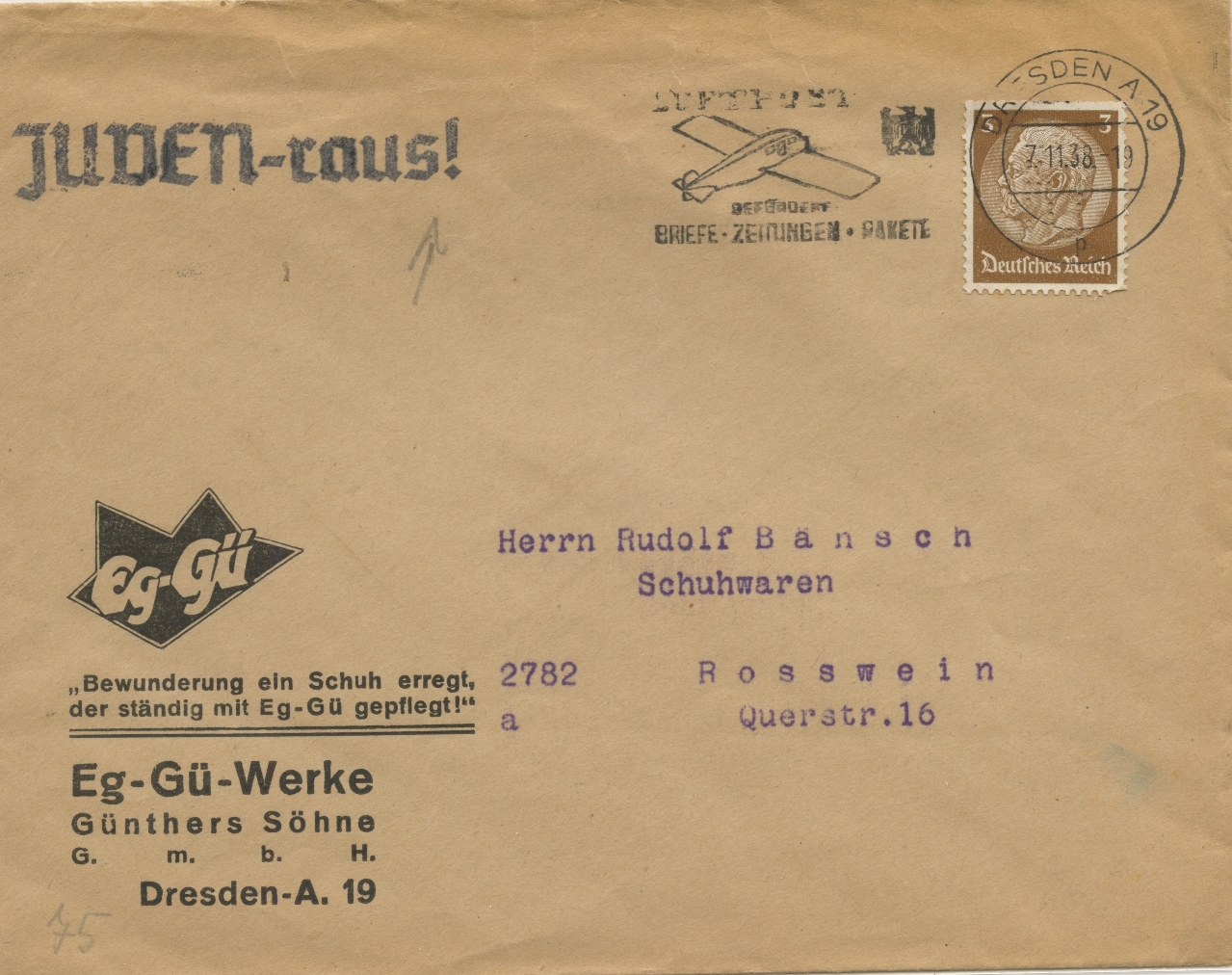
The stamp in the top right corner of this letter reads, "Juden Raus," or "Jews Out." These labels were a powerful way to spread propaganda.

The caption on this postcard featuring caricaturized Jewish men reads “Spa Guests from Galicia.”

Pork is not kosher in the Jewish faith. As such, it has often been weaponized against Jewish people, thrown against synagogues or force-fed. This 19th century Austrian platedepicts a caricatured Jewish man passing through a pig.
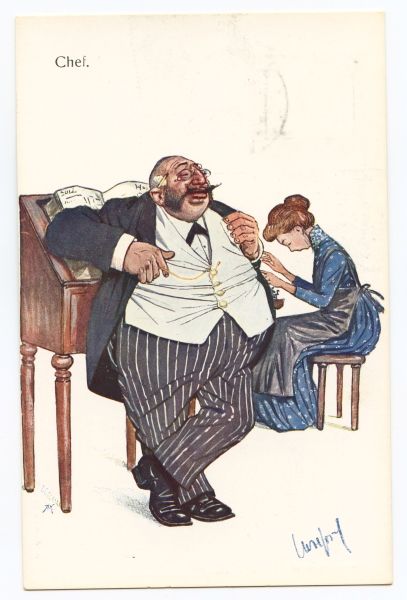
“Chef” is German for “Boss.” This postcard plays on the trope that Jewish people control the business world.

This 1902 postcard from Borkum, Germany, features an image of a Jewish family being turned away, along with the caption, “Sorry! Whoever approaches with flat feet, let him be cast out!” (Flat feet are a common anti-Jewish trope to signal that Jewish people are biologically weak.)

Another postcard making mockery of Jewish people through ugly caricatures and common tropes.

All I’ll say is that the stories in this collection really aren’t funny.

The back of this envelope (also featured in this collection) contains an anti-Jewish label. The letter was sent by a Nazi SS school leader in 1943.

An anti-Jewish label on the back of a piece of mail sent by a Nazi SS school leader in 1943.

This anti-Jewish label features a finger pointing accusatorily at a caricatured Jewish man and reads “He is to blame for the war!”