
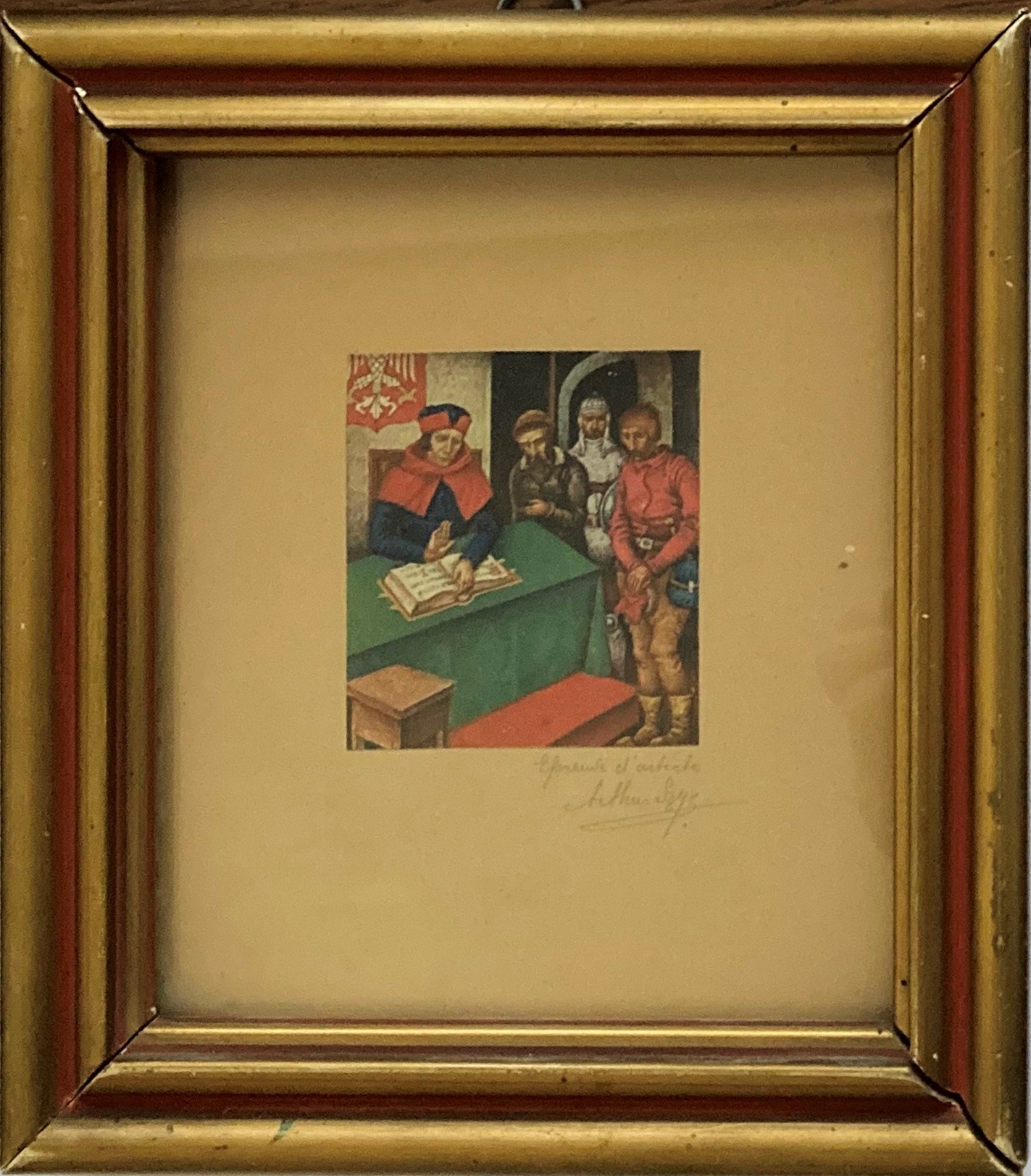
This 1920s print, still in its original frame, was one of a series of “practice” prints, done to check the color and registration of color before printing the actual edition of prints which would be signed and numbered.

This album, "Dancing on the Edge of a Volcano" features Jewish popular and political cabaret songs from 1900-1934, recorded by the New Budapest Orpheum Society. Note the Szyk artwork on the cover.
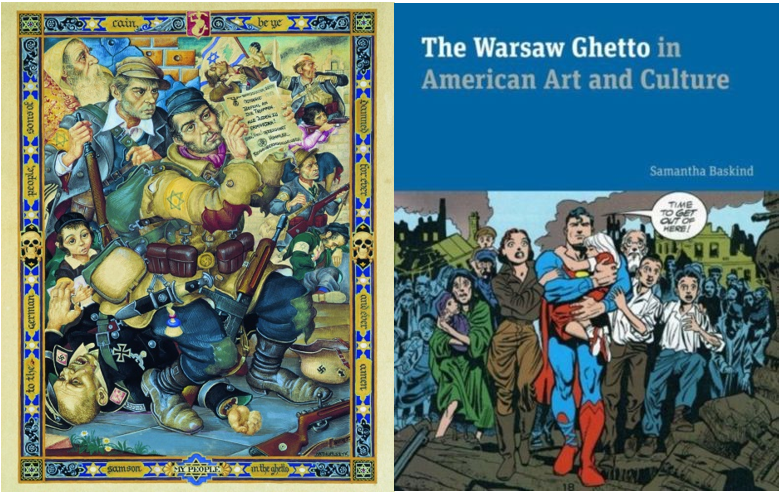
This illustrated book commemorates the 75th anniversary of the Warsaw Ghetto Uprising, which began on April 19, 1943, with the inclusion of works from artists and authors, poets and playwrights who portrayed the heroism of the fighters, the devastation of the ghetto and the suffering of the children. Among the many illustrations are Arthur Szyk’s striking "Battle of the Warsaw Ghetto."
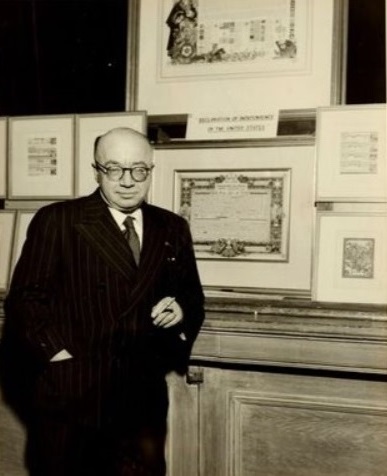
The artist himself, Arthur Szyk pictured with his own works, circa 1950.

Two WWII-era postcards drawn by Arthur Szyk in 1939, featuring Polish soldiers.

Two WWII-era postcards drawn by Arthur Szyk in 1939.

When Japanese Admiral Yamamoto (the architect of the Pearl Harbor attack) died in 1943, Time Magazine's reporting included a less-than-flattering portrait of the admiral by Arthur Szyk.
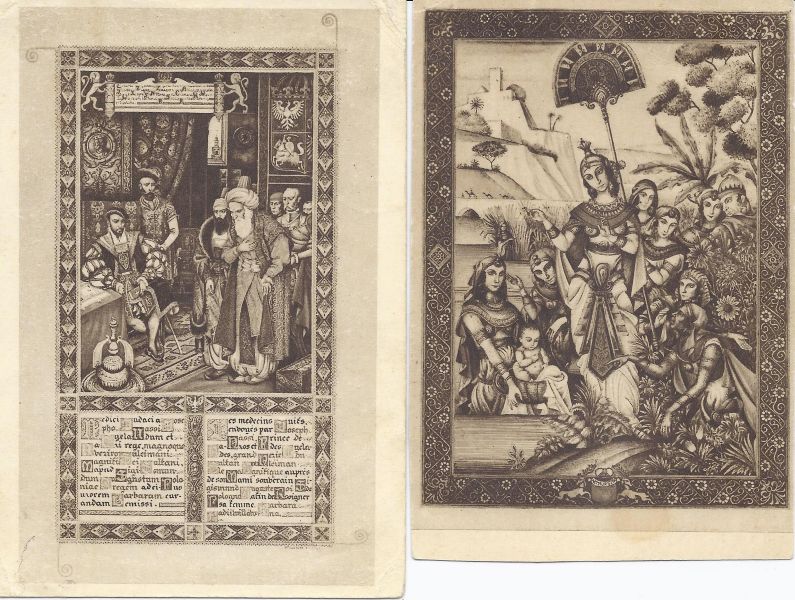
Two postcards featuring illustrations by Arthur Szyk. Both of these were mailed in the early 1930s.

A set of stained glass windows designed by Arthur Szyk in 1947. Rabbi Abba Hillel Silver, of a temple in Cleveland, commissioned them as a memorial to the 776 congregation members who served—and the 22 who gave their lives—in WWII.
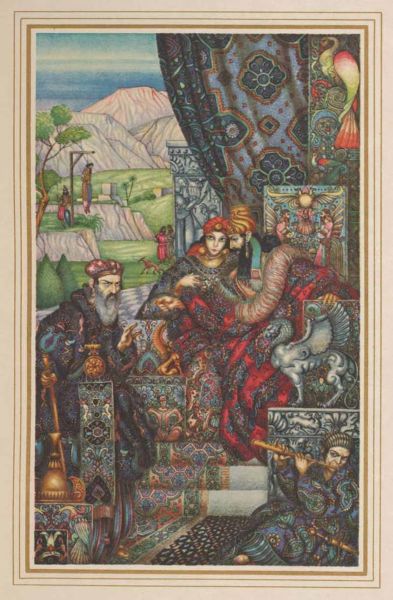
An illustration of Queen Esther, King Ahasuerus, and Mordecai created by Polish-Jewish artist Arthur Szyk.Queen Esther, King Ahasuerus, and Mordecai that Szyk created for his 1925 edition of the BOOK OF ESTHER, published in Paris.

"Haman at the Gallows," painted in 1950 as part of his second illustrated edition of the Book of Esther. Notice the Swastikas on Haman's uniform, drawing a direct comparison to Hitler.

The New Order, published in 1941, is a collection of anti-axis political cartoons drawn by Arthur Szyk.
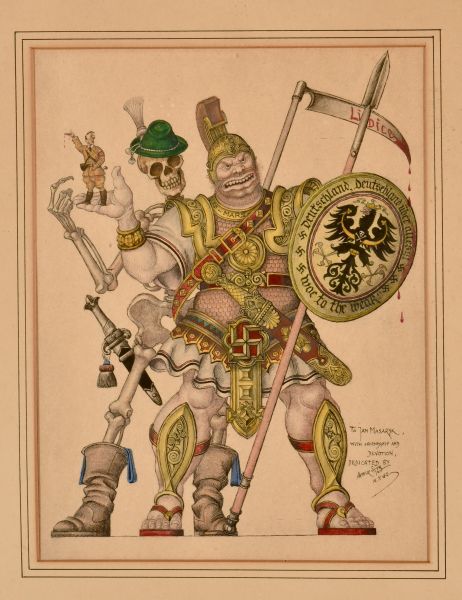
An anti-Nazi political cartoon by Arthur Szyk depicting a grotesque, swastika-clad embodiment of Mars alongside Death, holding a miniature Adolf Hitler while wielding a blood-dripping scythe that commemorates the Lidice massacre.
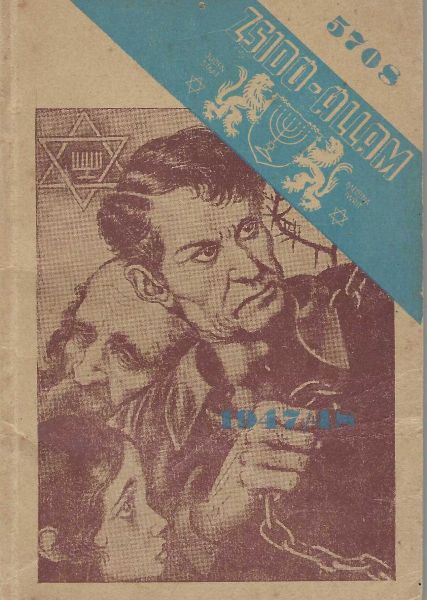
A Jewish calendar printed in 1946, with Zionist Revisionist contents and cover art by Arthur Szyk.
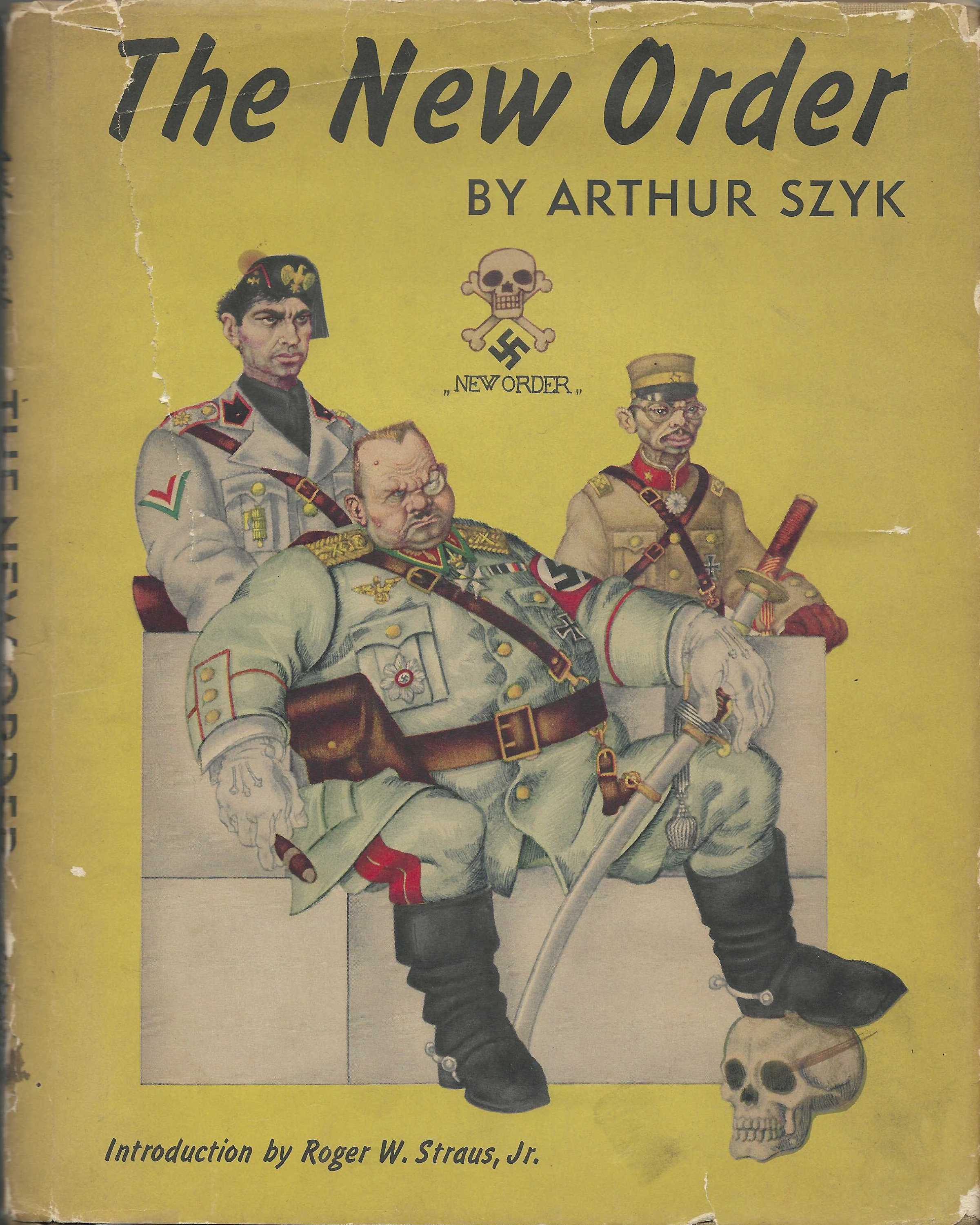
The New Order, published in 1941, collected Szyk's WWII anti-axis political cartoons.
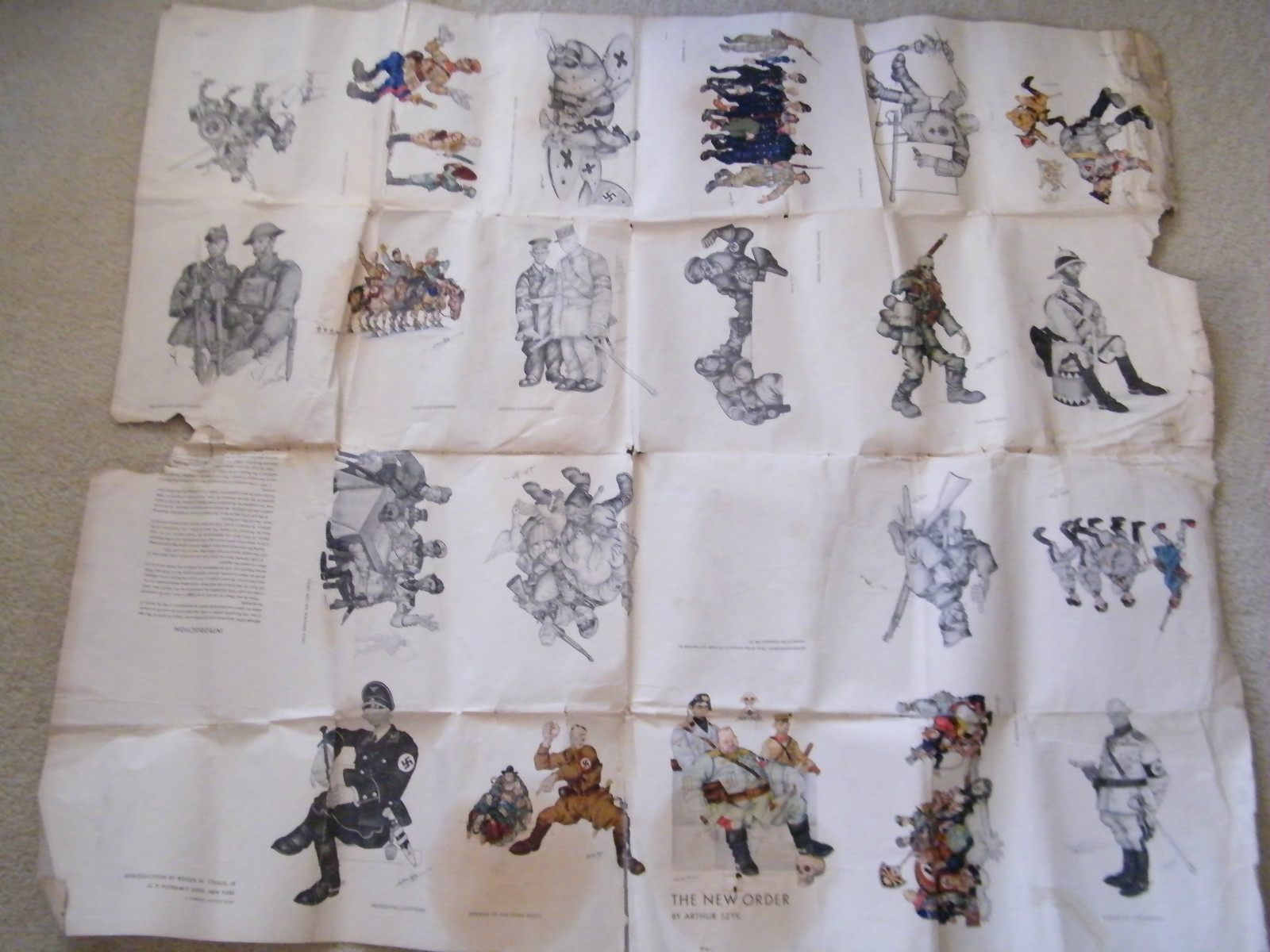
A rare printer's proof sheet of Arthur Szyk's The New Order. These pages would've been folded and cut into a small booklets called "signatures," which would then be nested into each other and bound into the full book.
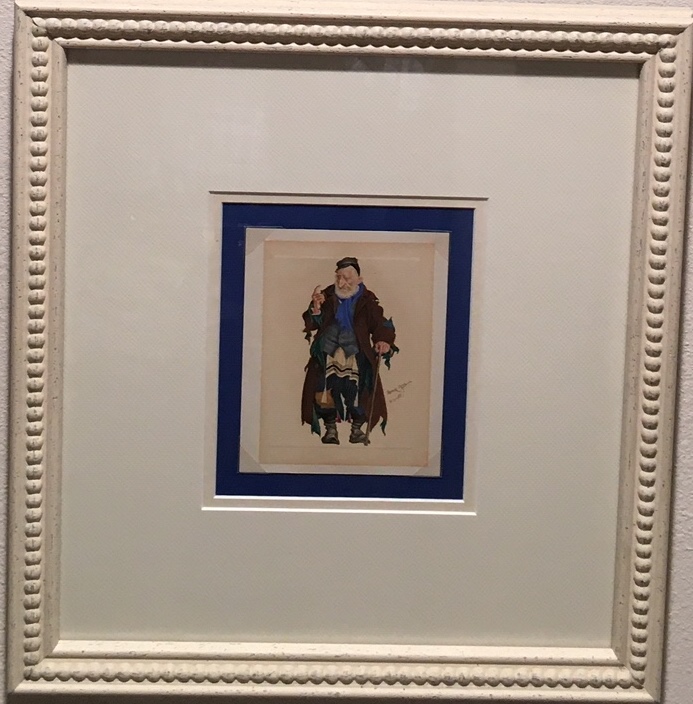
This miniature Arthur Szyk original lives on our living room wall.
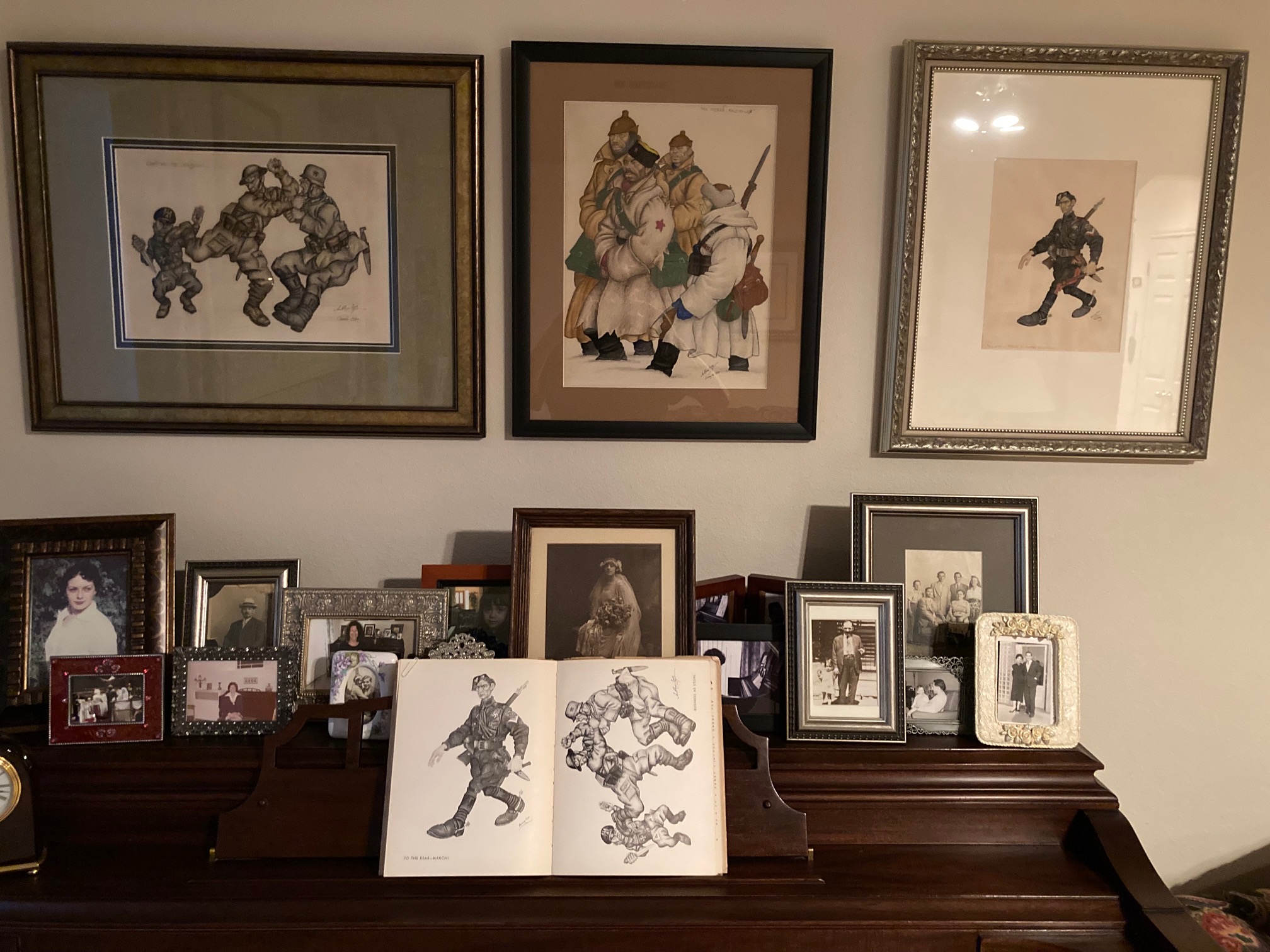
A trio of original cartoons from Szyk's The New Order, hanging above our piano and pictured with the book they're featured in.
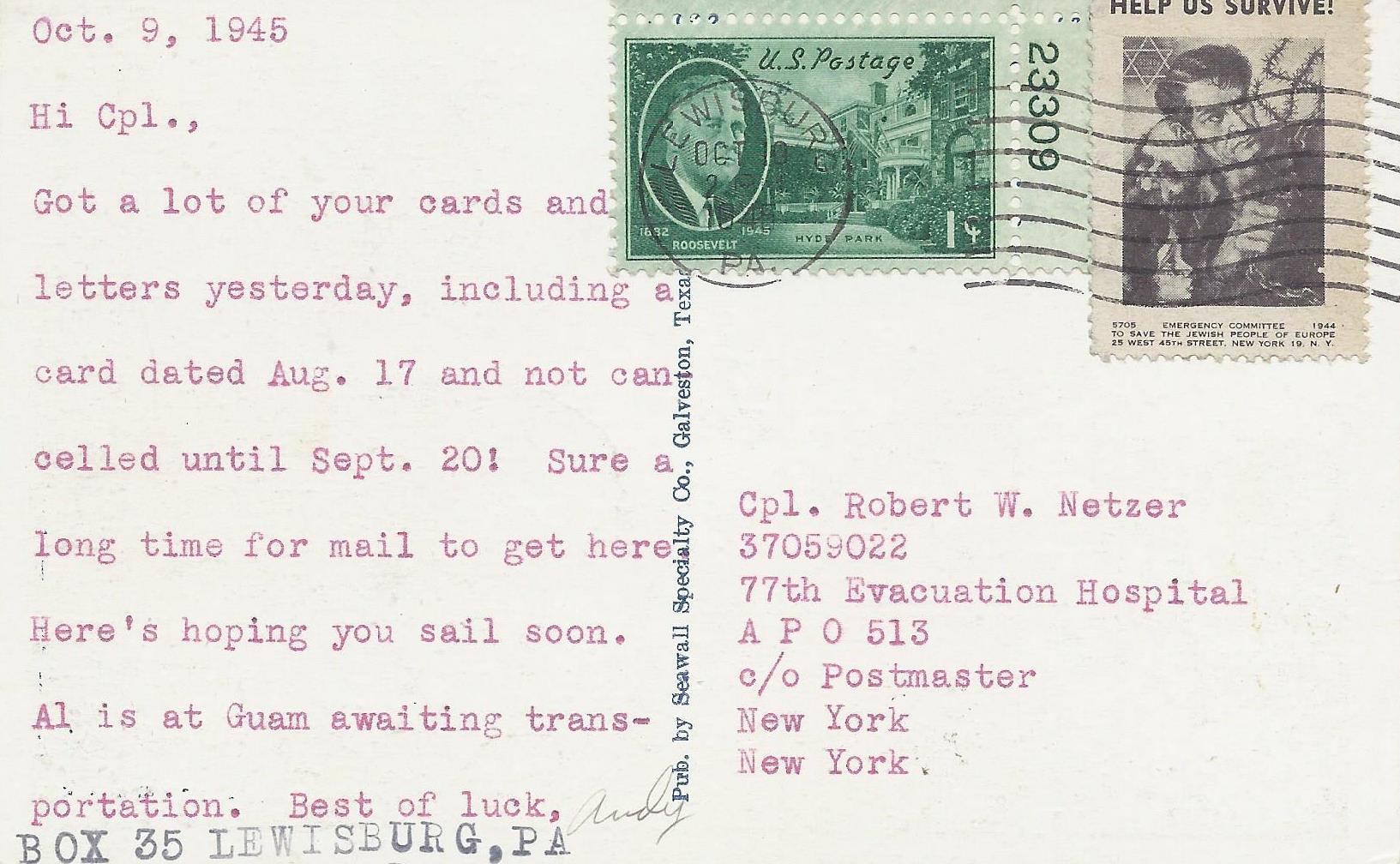
The "cinderella" (non-postal stamp) on this postcard was designed by Arthur Szyk in 1944 for the Emergency Committee to Save the Jewish People of Europe. This powerful wartime fundraising stamp depicts a suffering Jewish man behind barbed wire under the plea "Help Us Survive!"
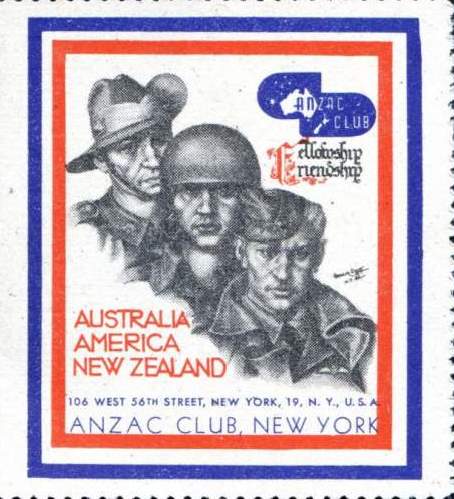
Arthur Szyk drew this cinderella label advertizing the ANZAK club in New York. The ANZAK club was established to provide "a home away from home" for military personnel from Australia and New Zealand. Consider it more or less the equivalent of the USO
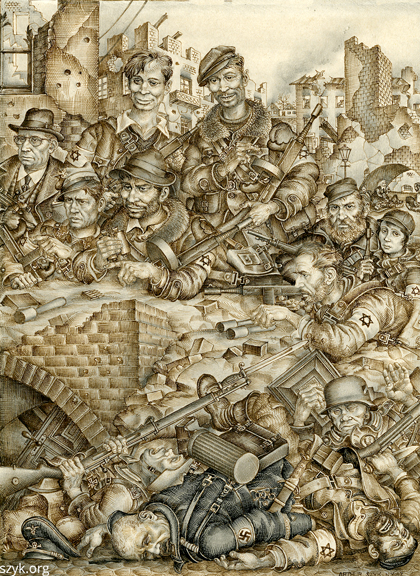
"The Repulsed Attack" is part of Szyk's series, called "The Songs of the Ghetto," depicting the Warsaw Ghetto Uprising.

"Trumpeldor's Defense of Tel Hai," painted by Arthur Szyk in 1936

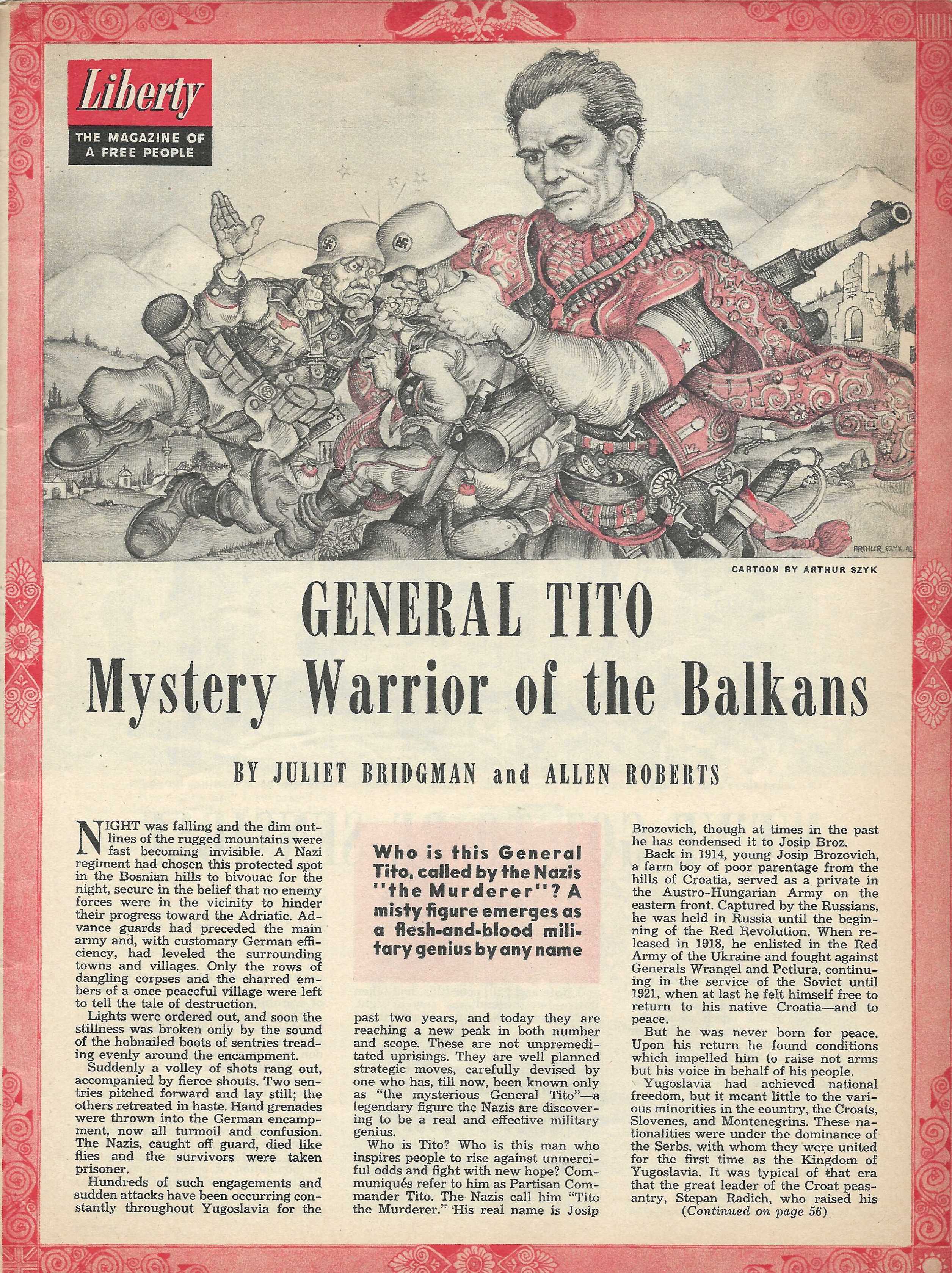
The same drawing of General Tito by Arthur Szyk appeared in a Nazi propaganda magazine called SIGNAL in 1944. The publishers had, of course, cropped out the Nazi soldiers Tito was destroying. Still I find it wildly ironic that they chose an image drawn by such a staunchly anti-Nazi artist as Arthur Szyk. They must not have known quite what they were looking at.

A 1939 satirical caricature by Arthur Szyk mocking the vanity of Nazi Luftwaffe chief Hermann Göring.
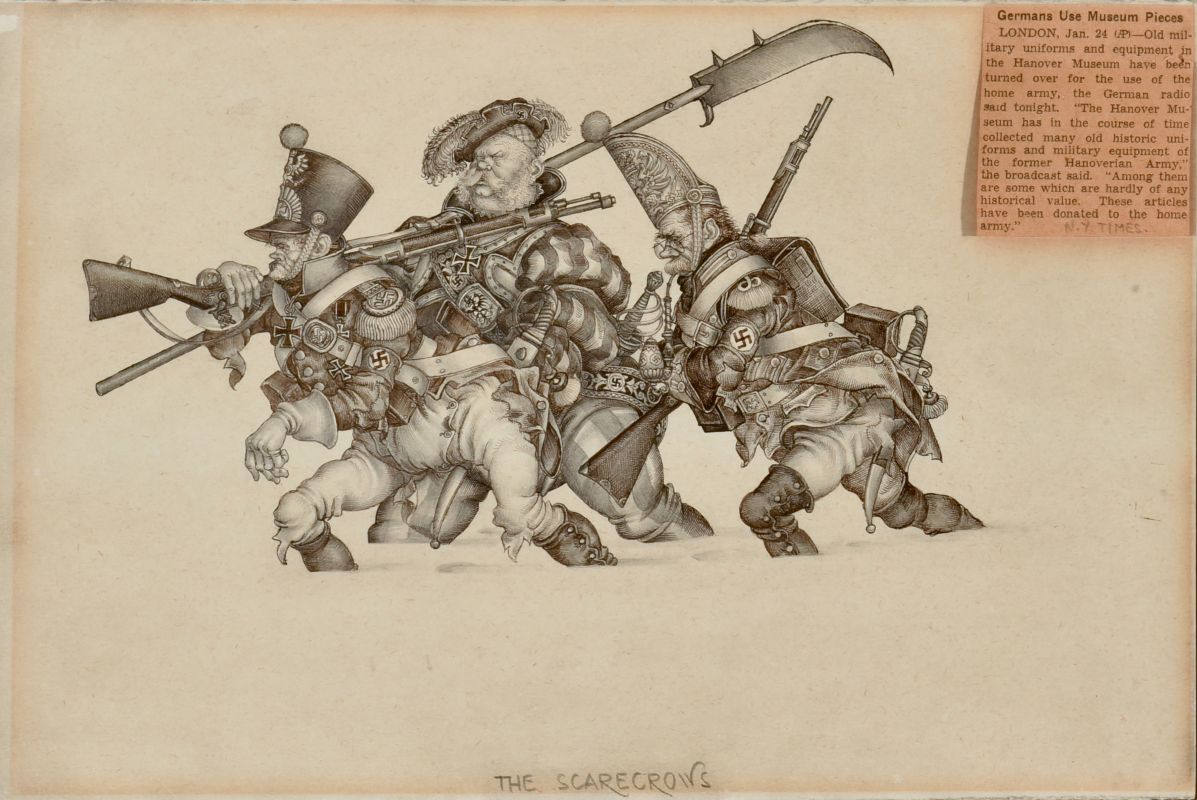
A 1945 political cartoon by Arthur Szyk titled "The Scarecrows," satirizing the desperate, late-war Nazi mobilization of the Volkssturm outfitted in mismatched museum uniforms and antique weaponry.
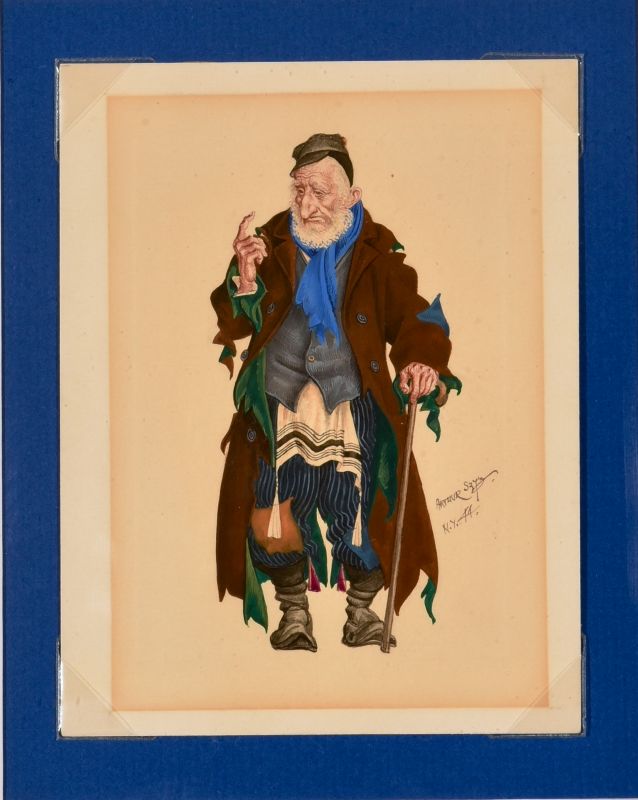
Arthur Szyk’s poignant 1944 illustration, "The Wandering Jew," created in New York to broadcast the plight, tragedy, and enduring dignity of European Jewry during the Holocaust.
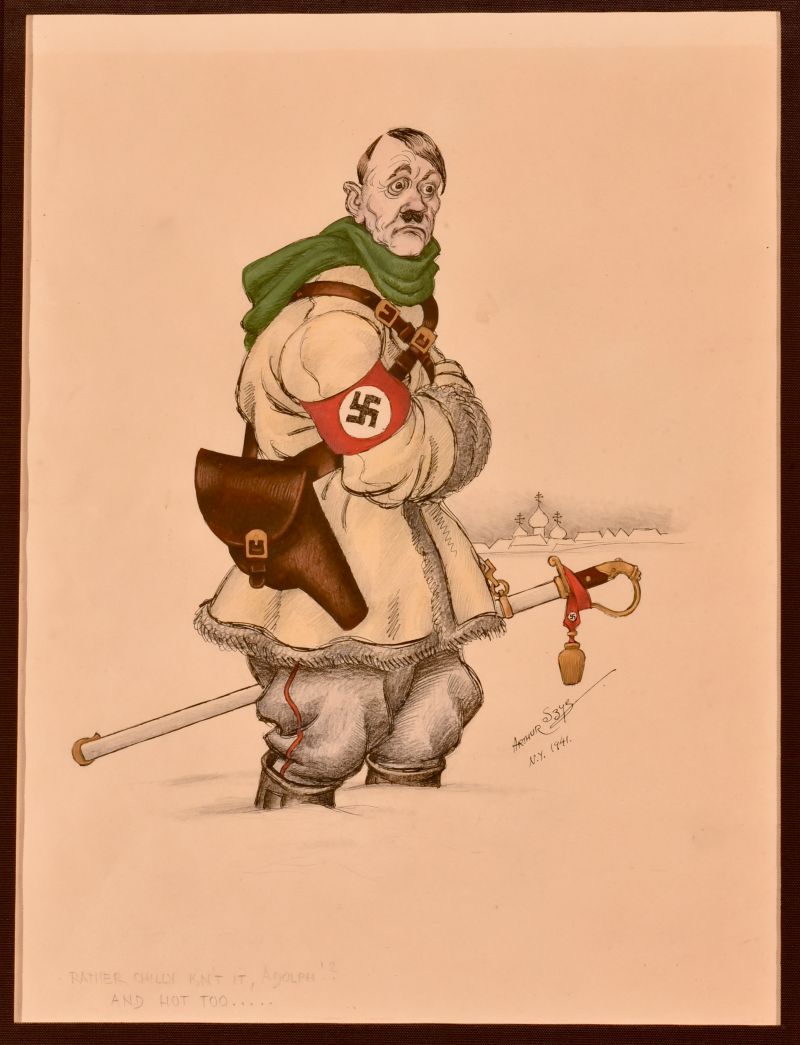
A 1941 anti-Nazi caricature by Arthur Szyk titled "Rather chilly isn't it, Adolph?", satirizing the failure of the German invasion of the Soviet Union amid the brutal Russian winter.
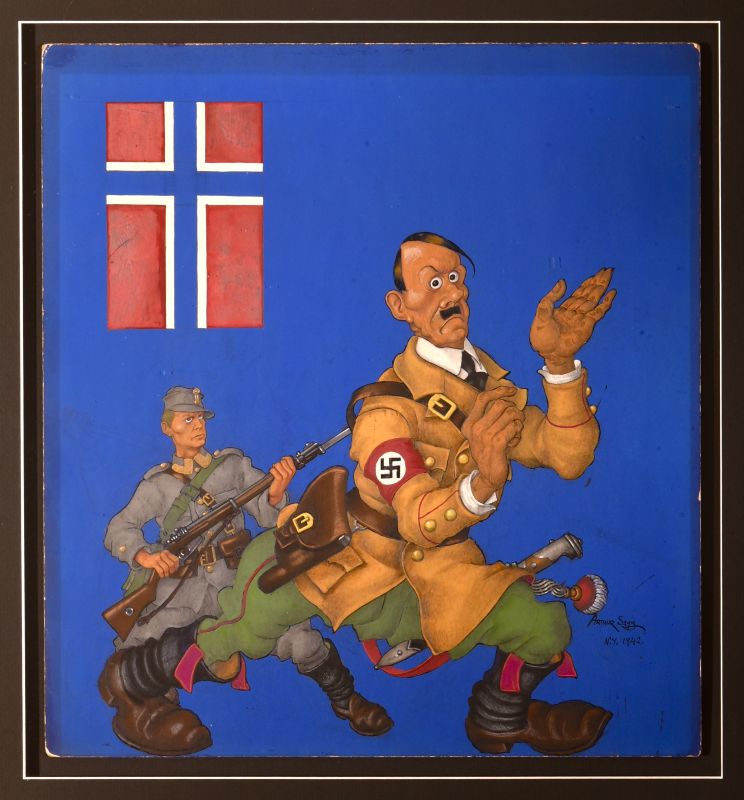
A 1942 anti-fascist caricature by Arthur Szyk depicting a startled Adolf Hitler against a Norwegian flag reimagined with gallows, symbolizing the grim brutality and fierce resistance within occupied Norway.
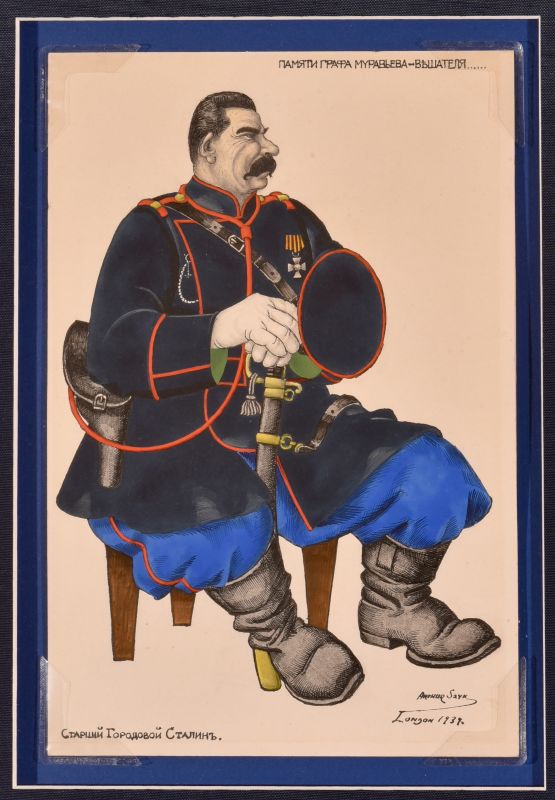
Arthur Szyk’s biting 1939 political caricature, "Senior Constable Stalin," dressing the Soviet dictator in a Tsarist police uniform to condemn his totalitarian suppression and imperialist collusion during the partition of Poland.
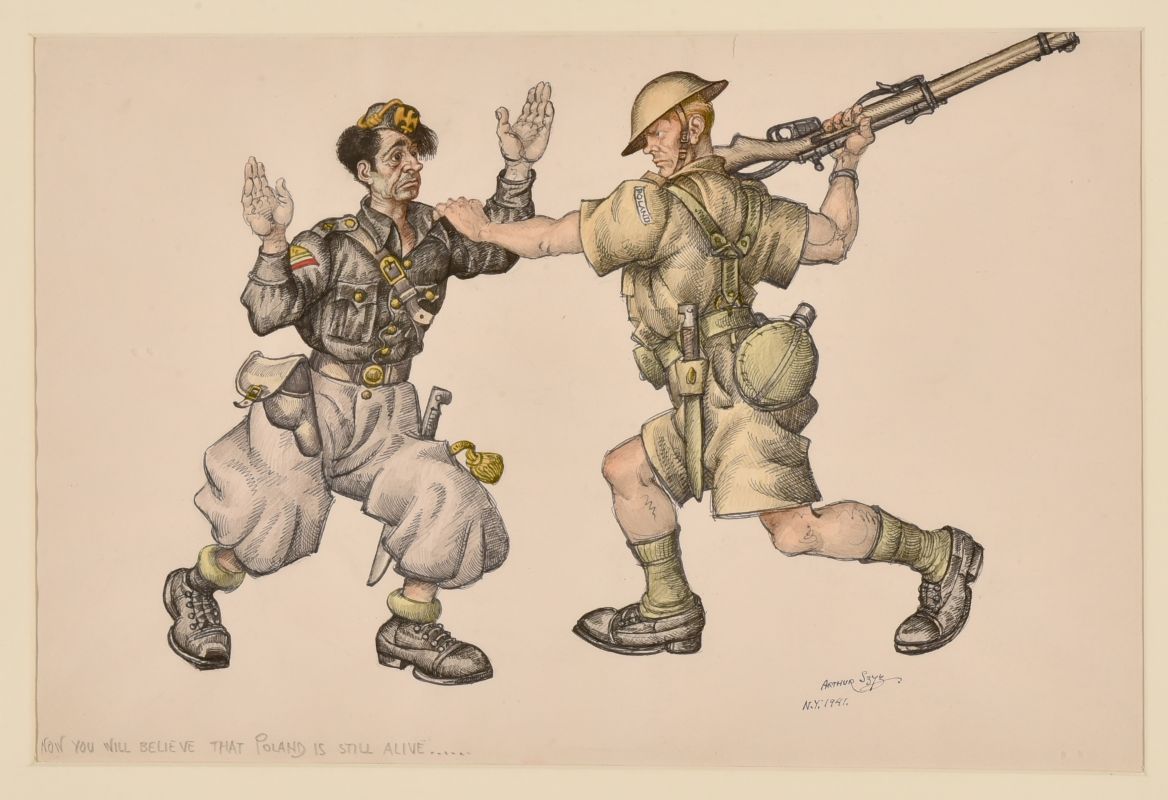
A 1942 caricature by Arthur Szyk titled "Now you will believe that Poland is still alive," depicting a Polish exile soldier overpowering an Italian officer to celebrate Poland's continued resistance in the war.
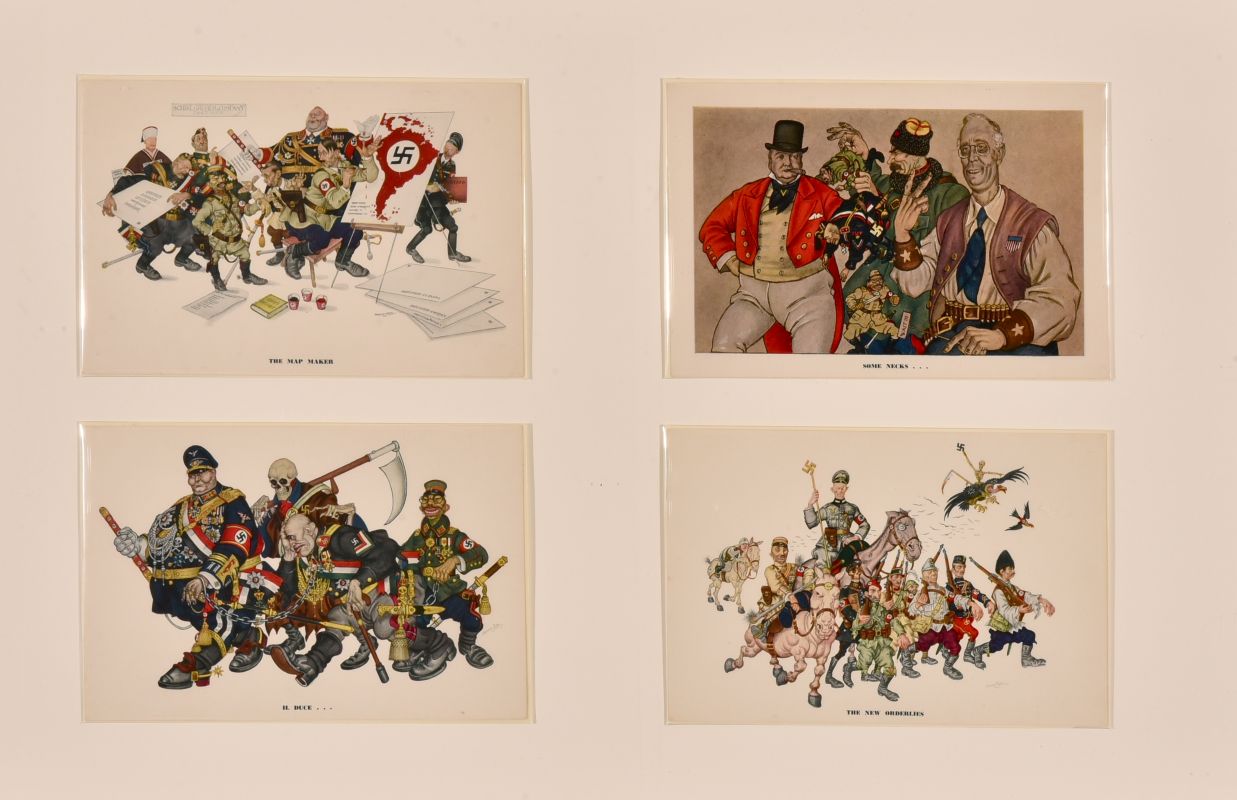
A collective set of four iconic 1942 political satires by Arthur Szyk—including "The Map Maker" and "Some Necks..."—drawn for Esquire Magazine to lampoon the inner workings, vanity, and eventual doom of the Axis alliance
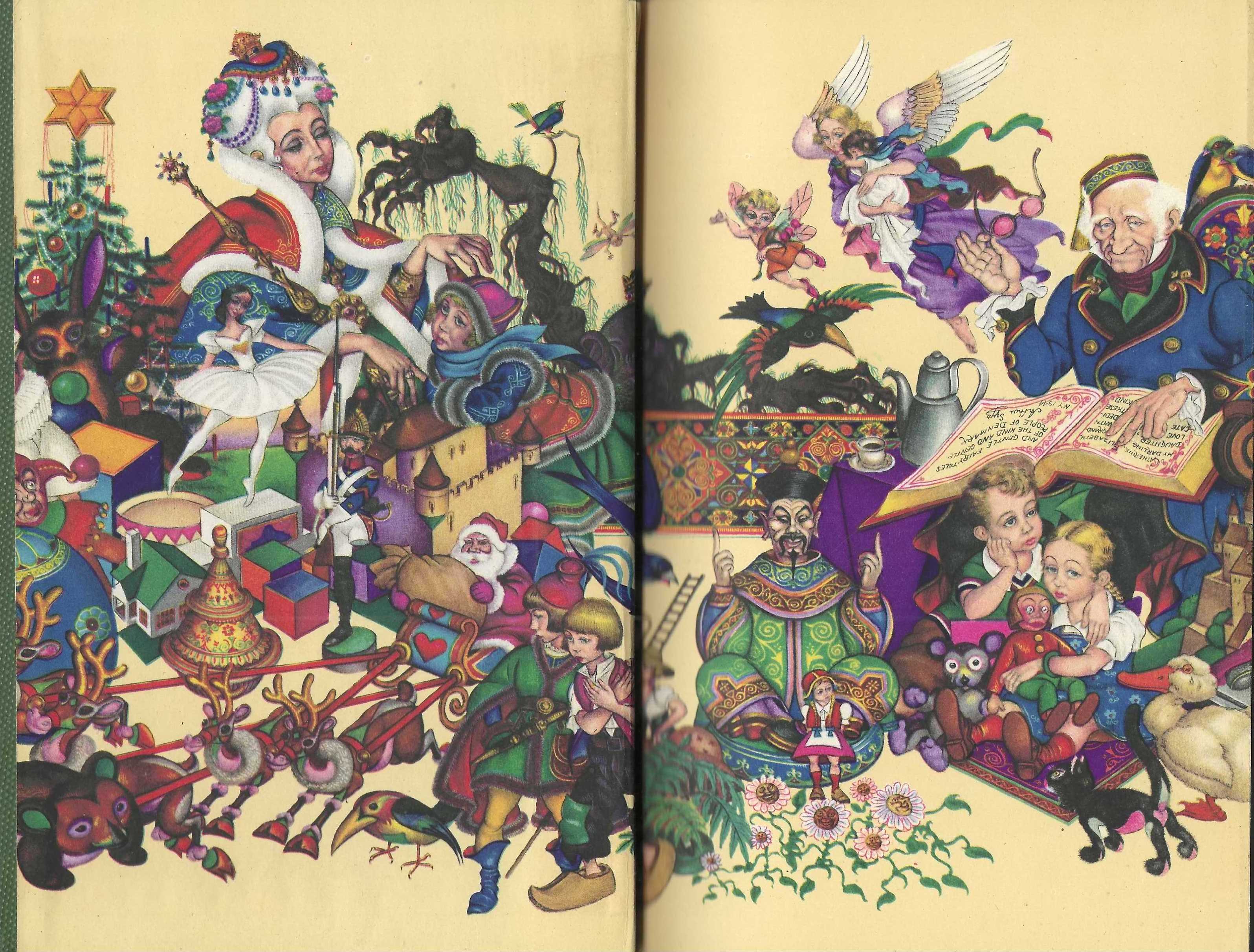
The frontispiece of Andersen's Fairy Tales, illustrated by Arthur Szyk. I spoke with Szyk’s granddaughter, Catherine, a couple of times on the phone, and she brought this illustration to my attention. It is a hidden inscription to her by Szyk. Turn the image upside down and read the old man's book. "Catherine Elizabeth, My darling granddaughter, with love I dedicate these kind and gentle fairy tales of the kind and gentle people of Denmark."