
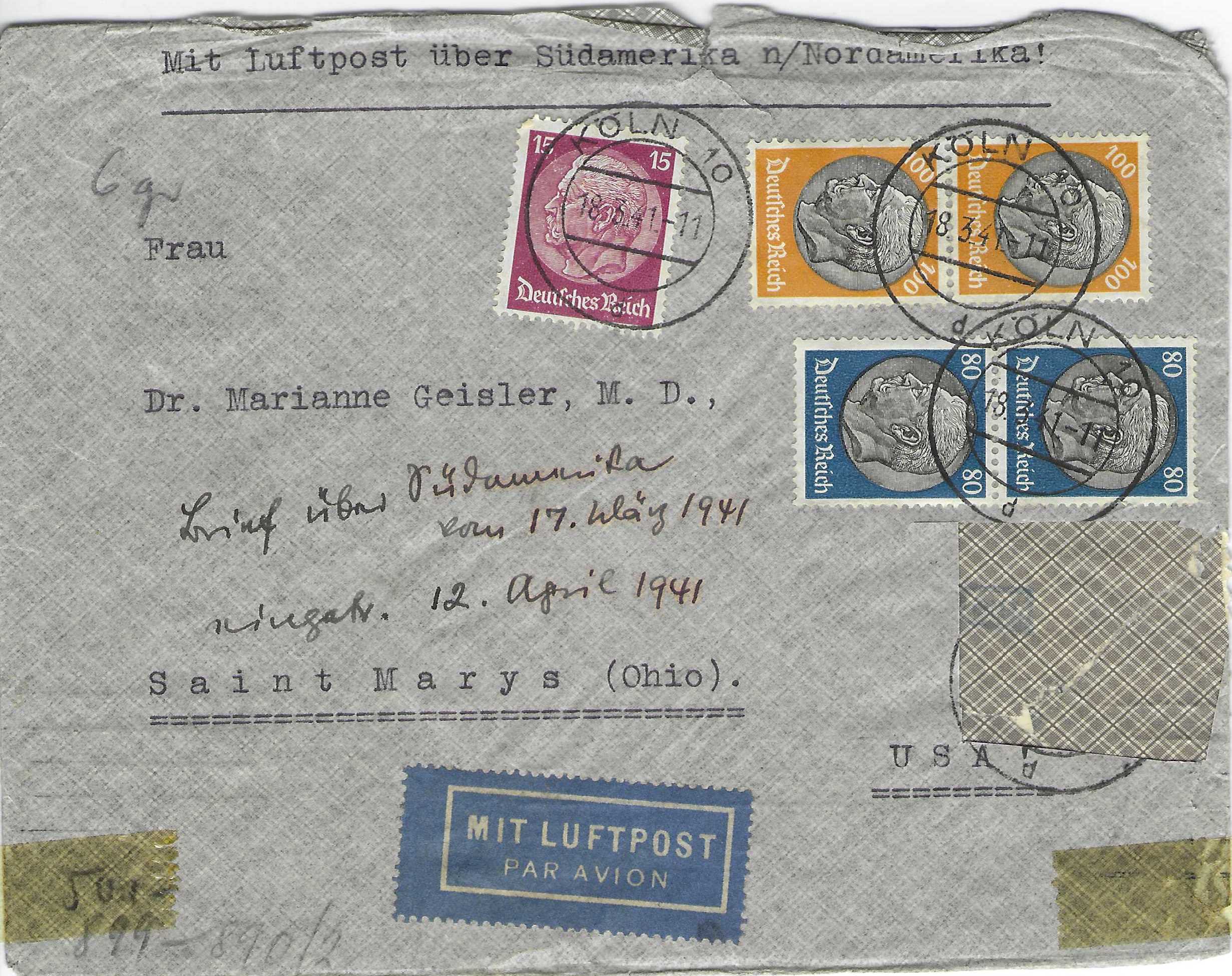
The front of an envelope containing a letter that was sent to Dr. Marianne Geisler in Ohio, from David Wilhelm in Köln, Germany.
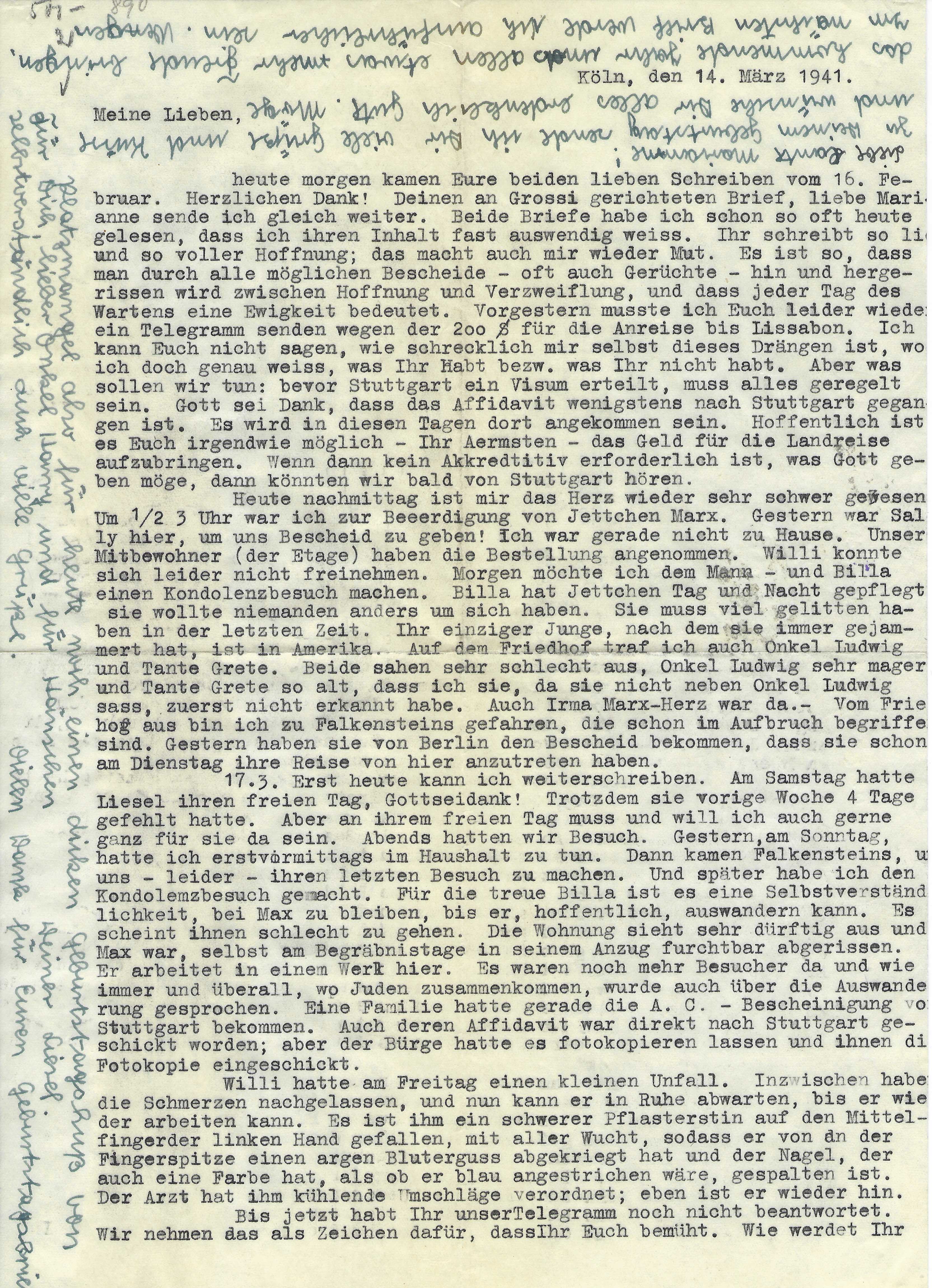
The first page of the letter sent from Wilhelm David to Dr. Marianne Geisler. ), provides a poignant window into the daily struggle for emigration, financial pressure, and community life in Jewish Cologne during the Holocaust..
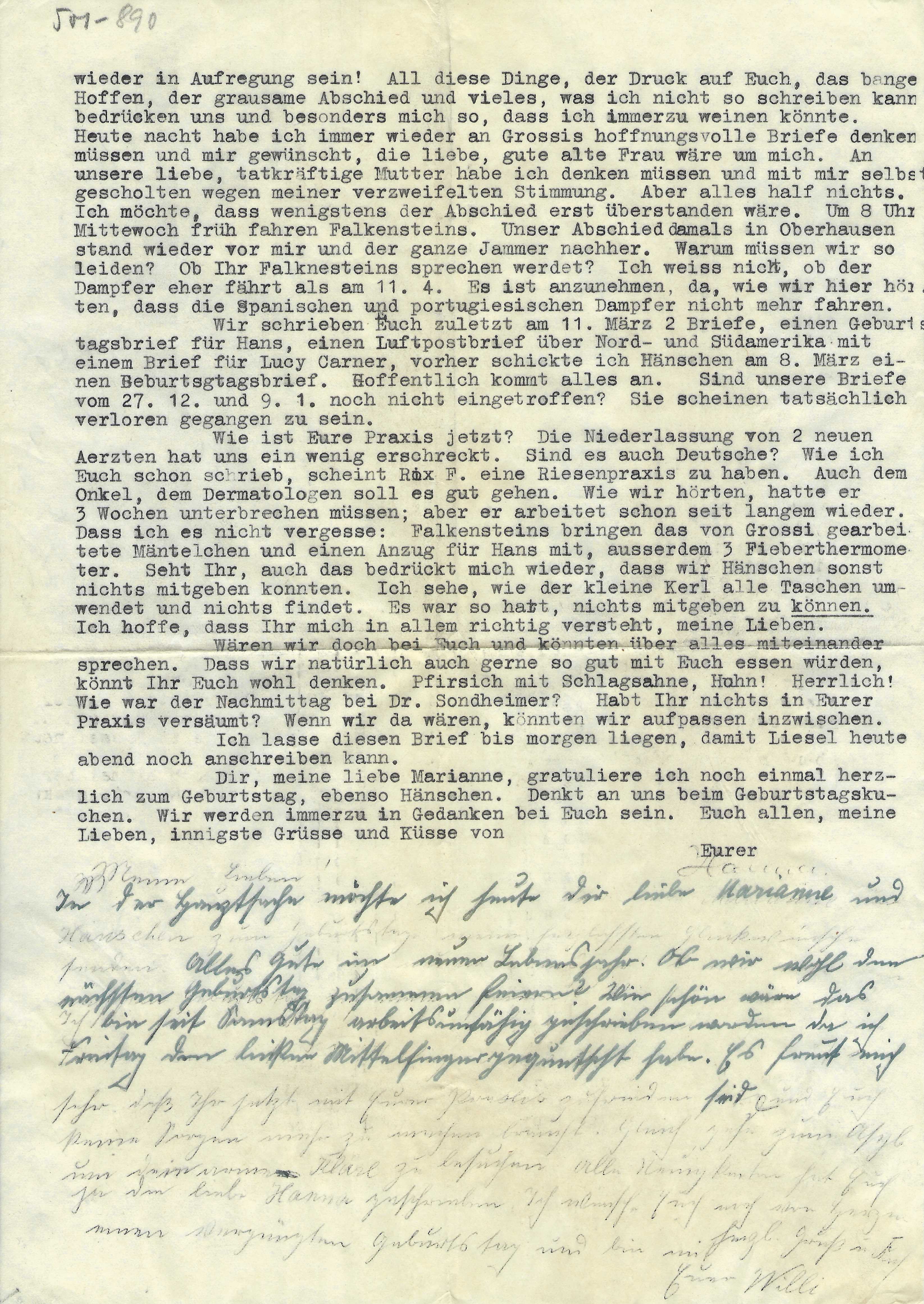
Page 2/2 of the letter from Wilhelm to Geisler. This letter mixes family greetings and birthday wishes with the very real fears German Jews were facing as they were stripped of their property and forced into designated communal housing.
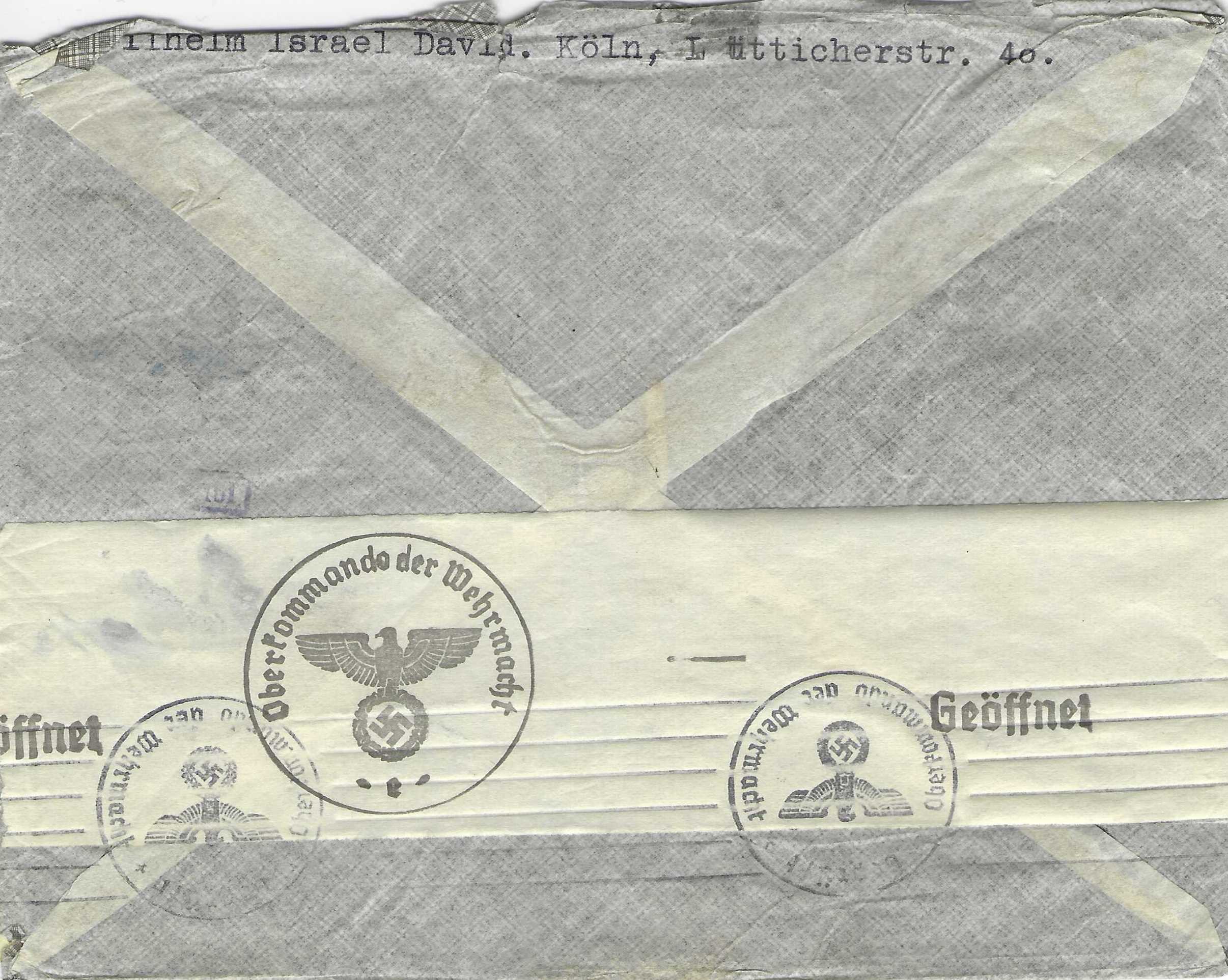
The back of the envelope containing the letter from David Wilhelm. Note that "Israel" has been added to his name. This reflects the mandatory Nazi decree of August 1938 requiring Jewish men (Israel) and women (Sarah) to adopt specific middle names on official and postal correspondence.
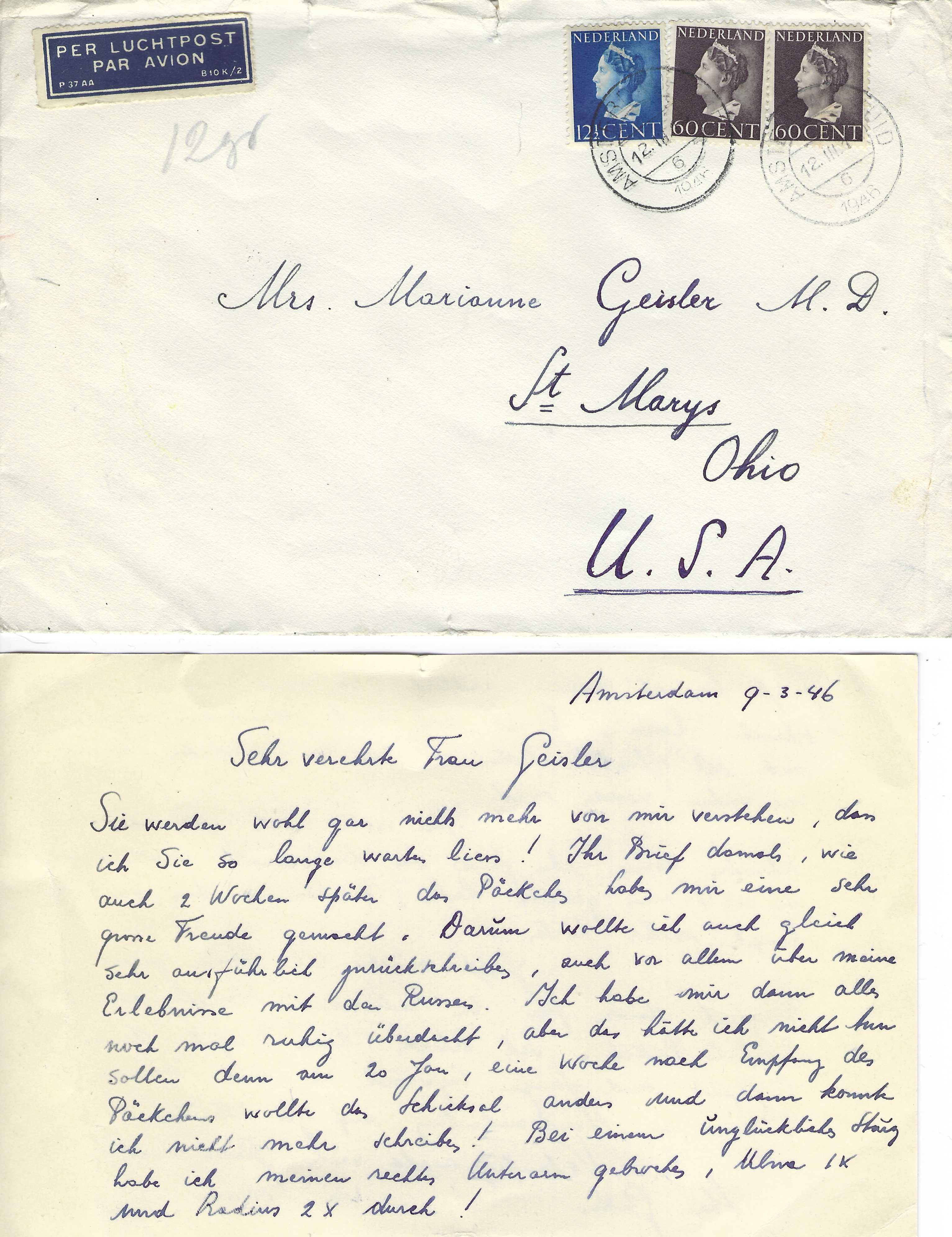
The front of both the envelope and the letter sent to Dr. Marian Geisler from an M. Stijns in Holland. The writer thanks Marianne for an parcel she had received several weeks back. At this time, aid parcels were actively being sent from the U.S. to civilians across war-torn Western Europe.
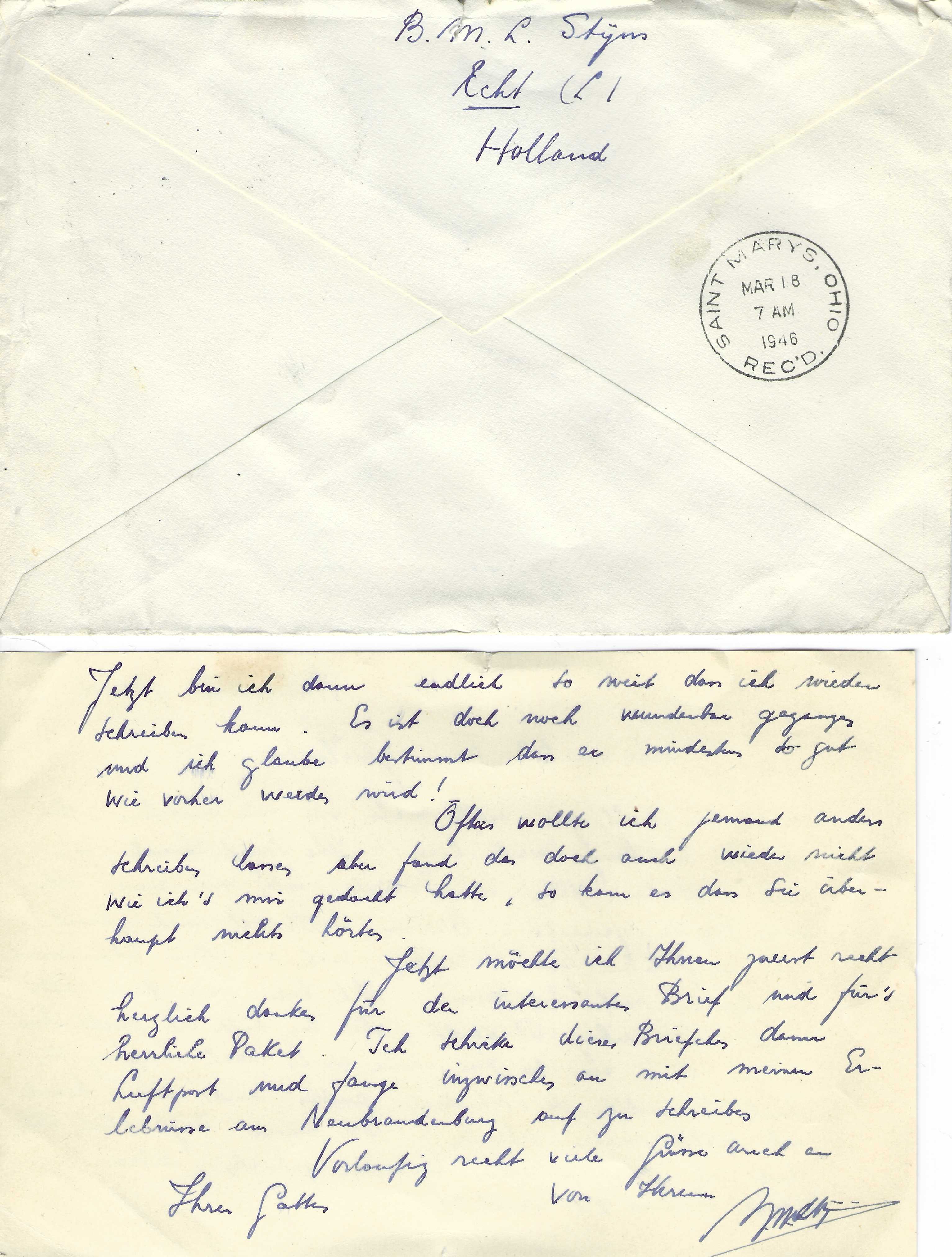
The back of both the envelope and the letter sent to Dr. Marian Geisler from an M. Stijns in Holland. The writer references upcoming accounts of their "experiences with the Russians" and "experiences from Neubrandenburg." Neubrandenburg, located in Mecklenburg-Vorpommern, was captured by the Soviet Red Army in April 1945 and became part of the Soviet Occupation Zone (SBZ), housing NKVD special camps (such as NKVD Special Camp No. 9).
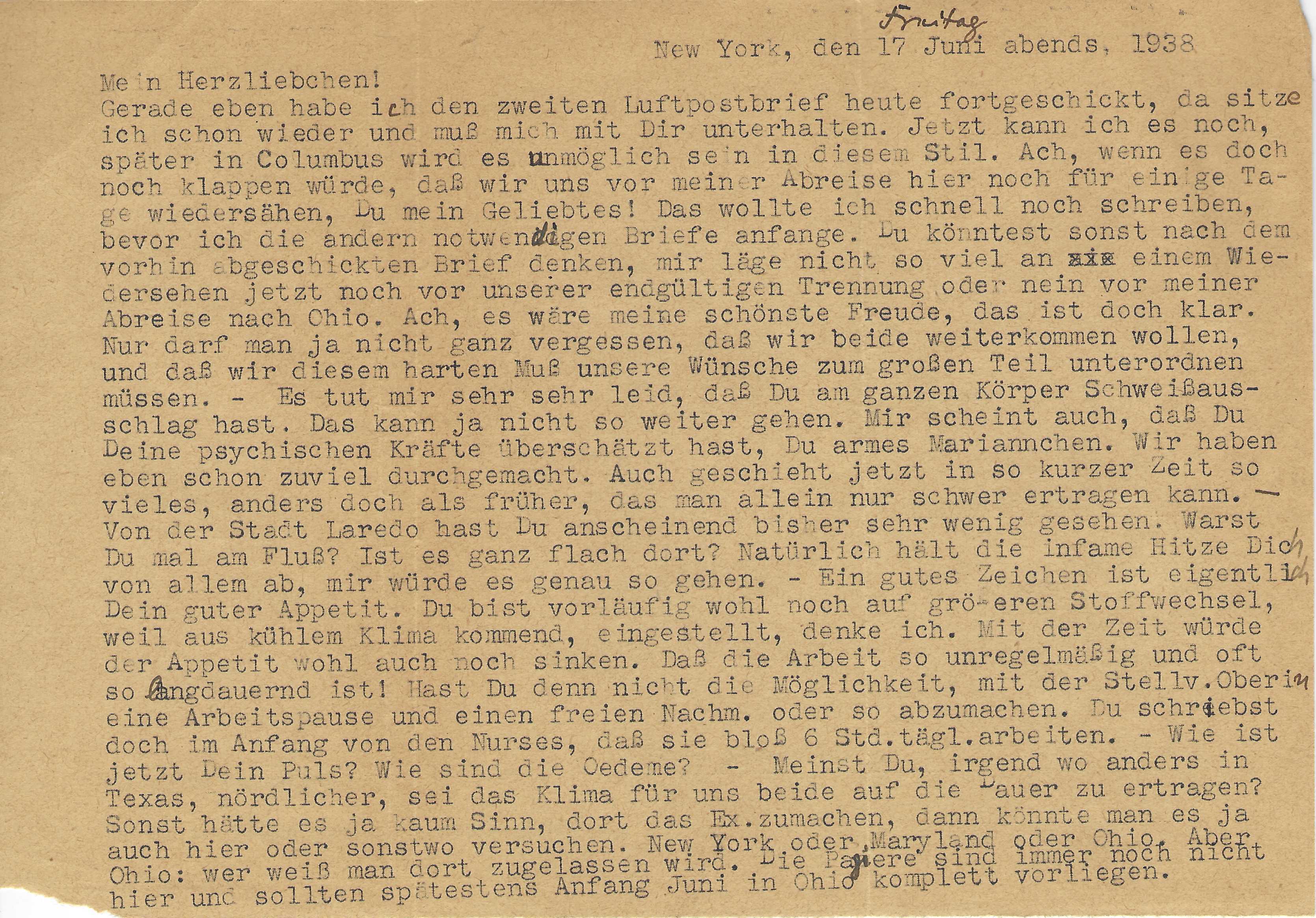
A letter written by Harry Geisler to his wife Marianne across two full pages (dated Friday, June 17, and Saturday, June 18, 1938, with handwritten margin notes).
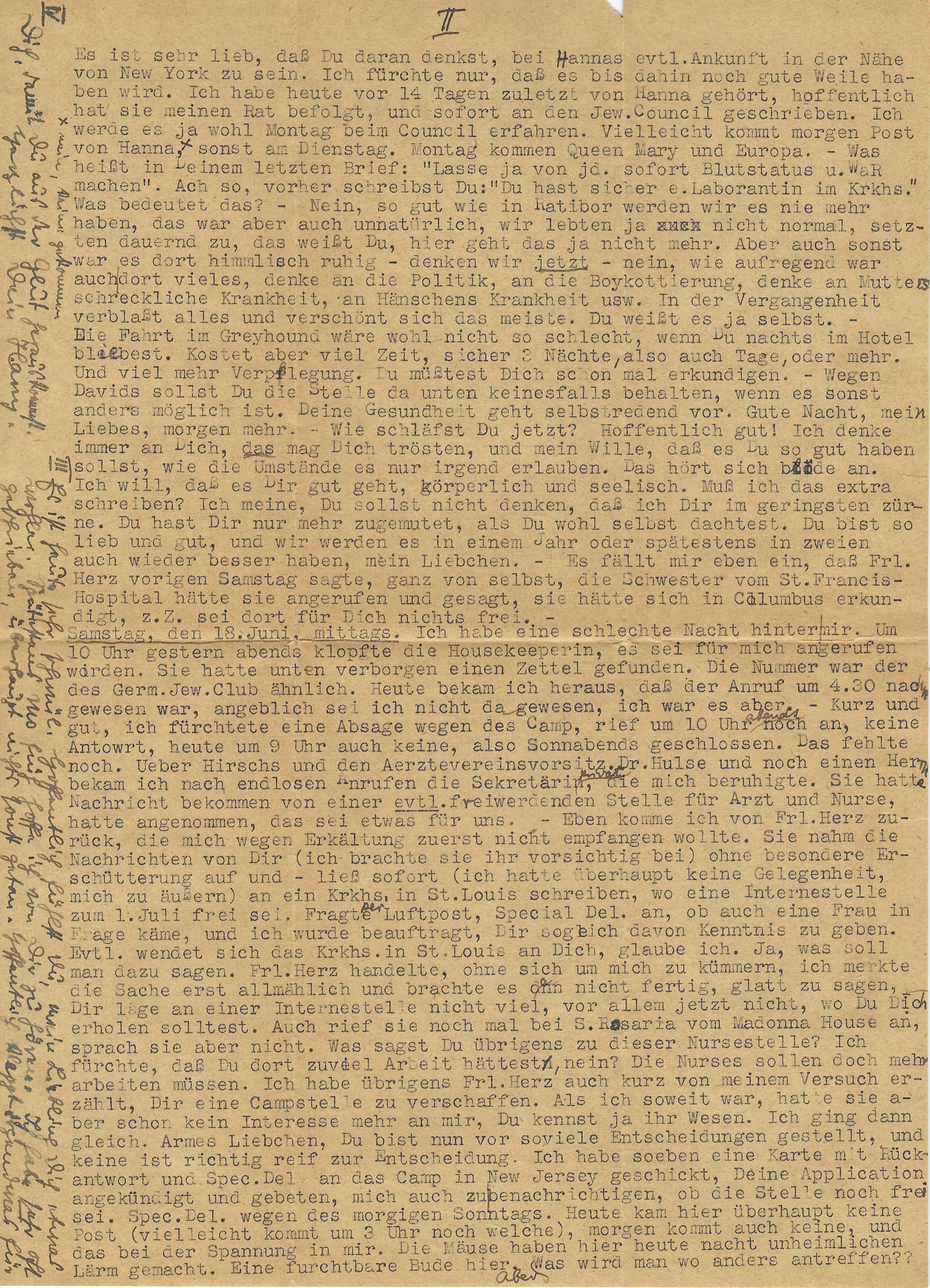
Harry's letter, written in German, notes his imminent return to Ohio, expresses concern over Marianne's health during her time spent in Laredo, TX, and mentions coordinating with the National Council of Jewish Women and the German Jewish Club in NYC to track family members arriving on ocean liners like the Queen Mary and Europa.
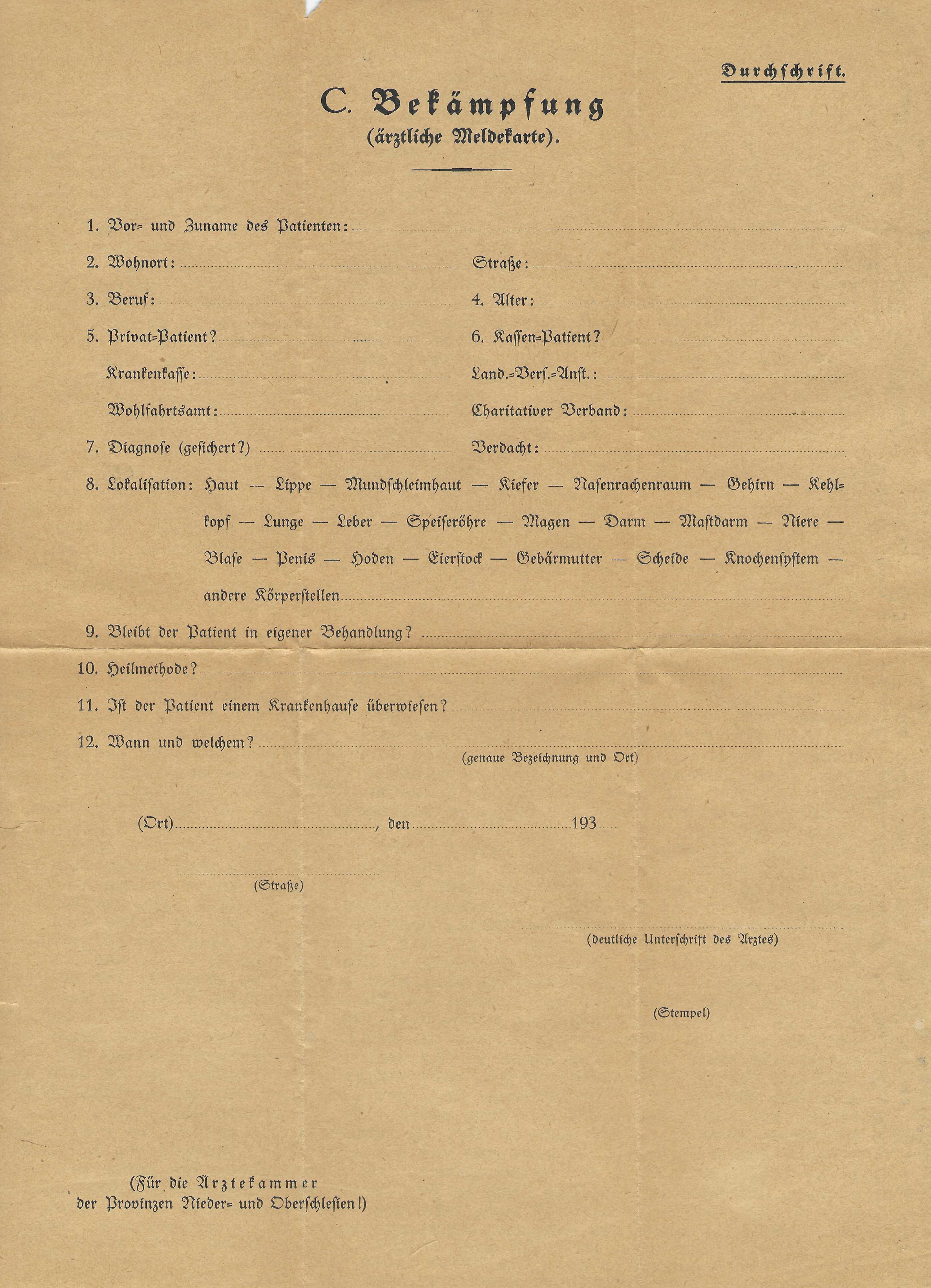
A blank, official German medical reporting form included with Harry's letter to Marianne.
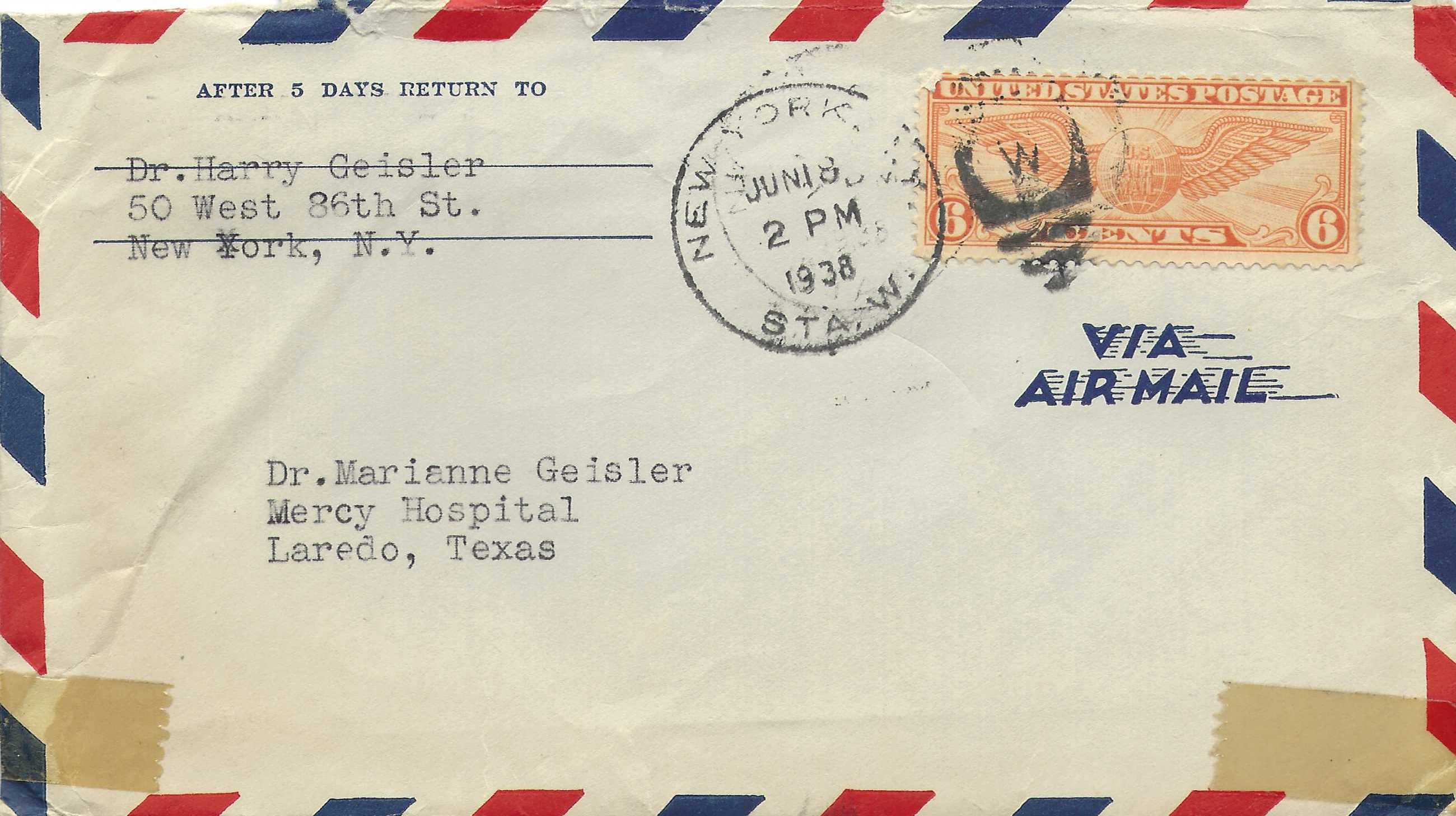
The cover of the letter sent from Harry Geisler to his wife, Marianne, who was working at Mercy Hospital in Laredo, TX, at the time. From the envelope and its contents, we can glean that both Harry and Marianne were German-Jewish refugee doctors attempting to re-establish their medical careers in the United States while navigating professional licensure, displacement, and personal health issues.
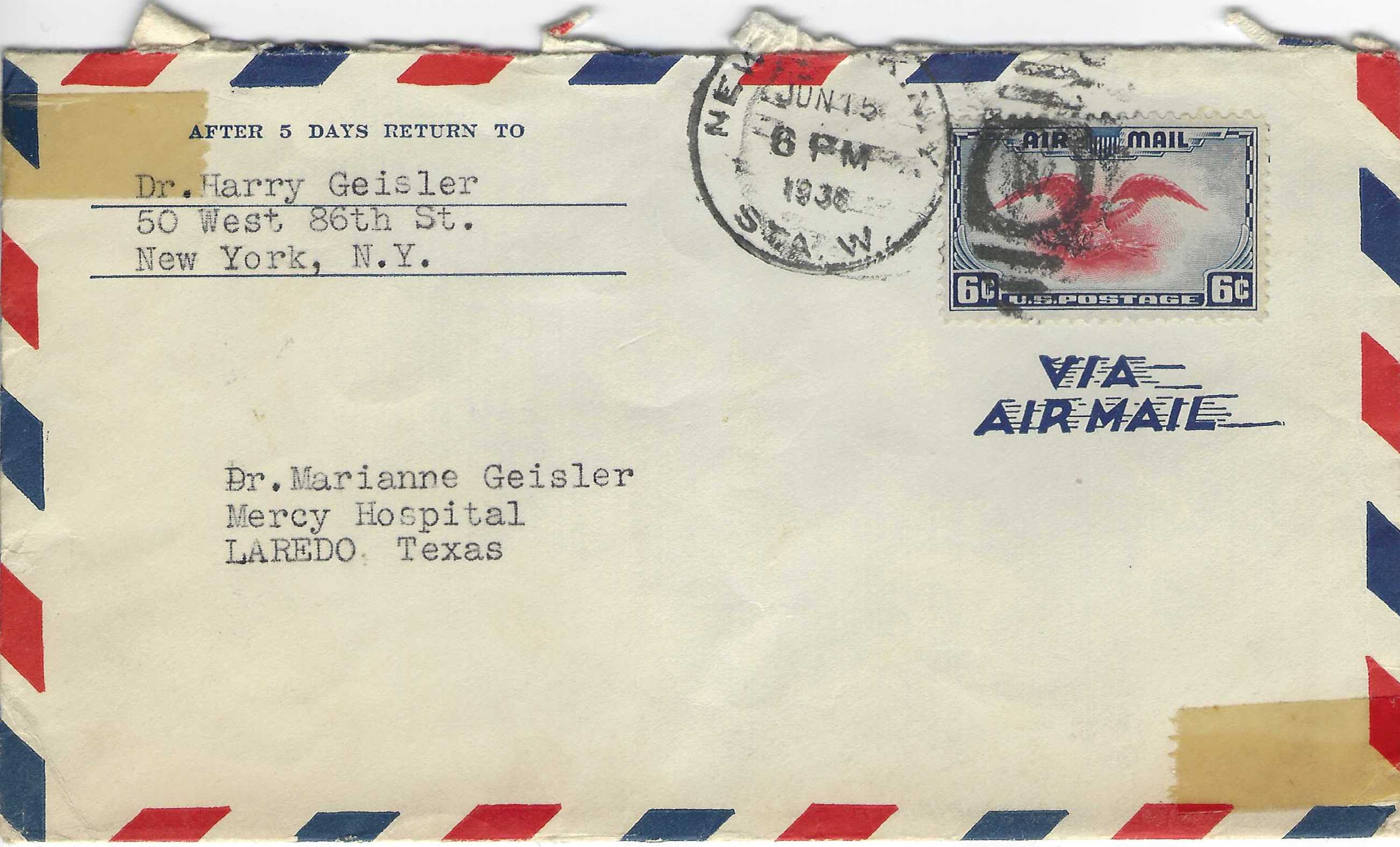
Another letter sent from Harry Geisler (New York) to his wife, Marianne (Laredo, TX).
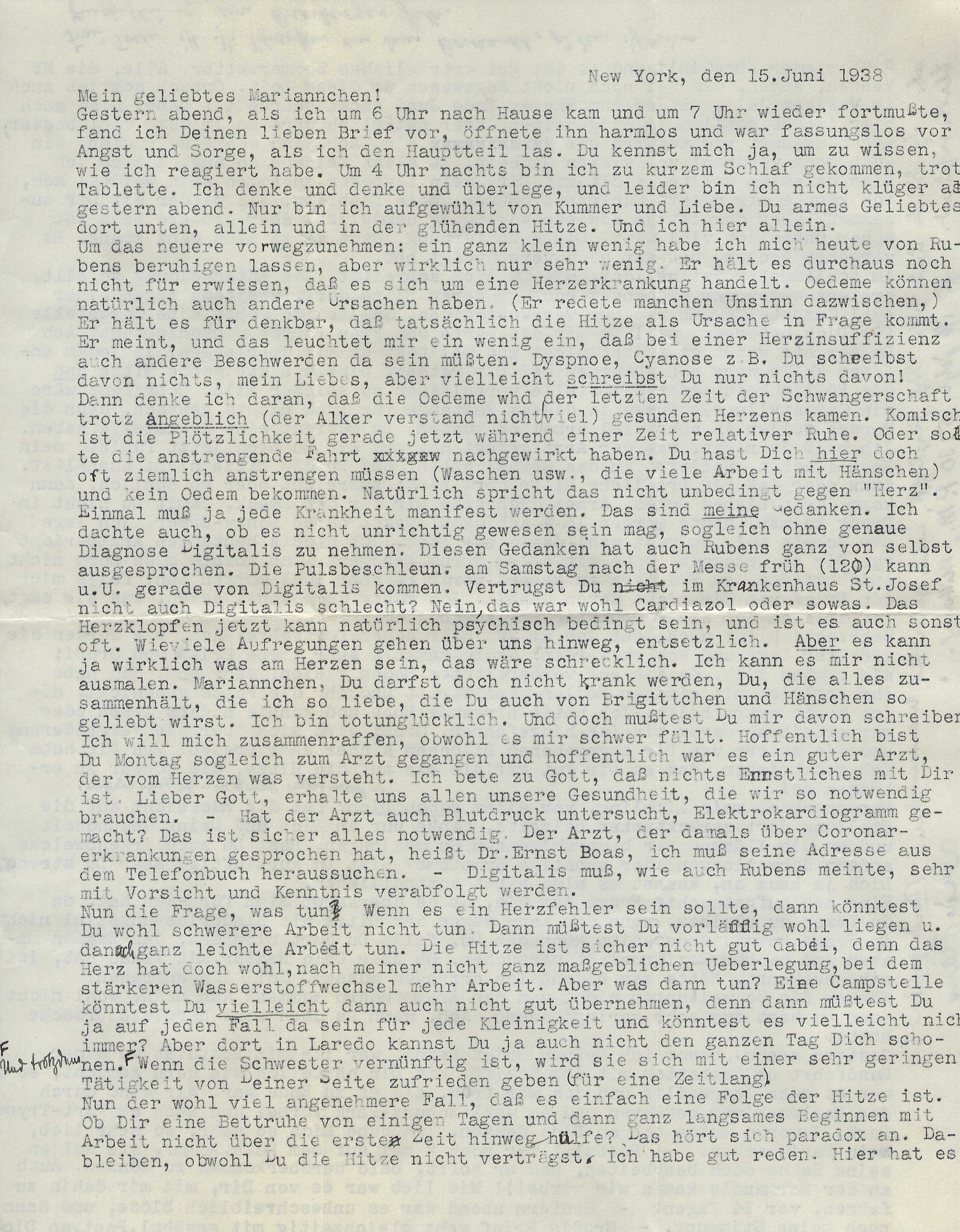
The letter, typed in German on two pages with extensive handwritten marginal notes, details Harry's intense anxiety over Marianne's health and medical qualifications while they navigate setting up their lives in the United States.
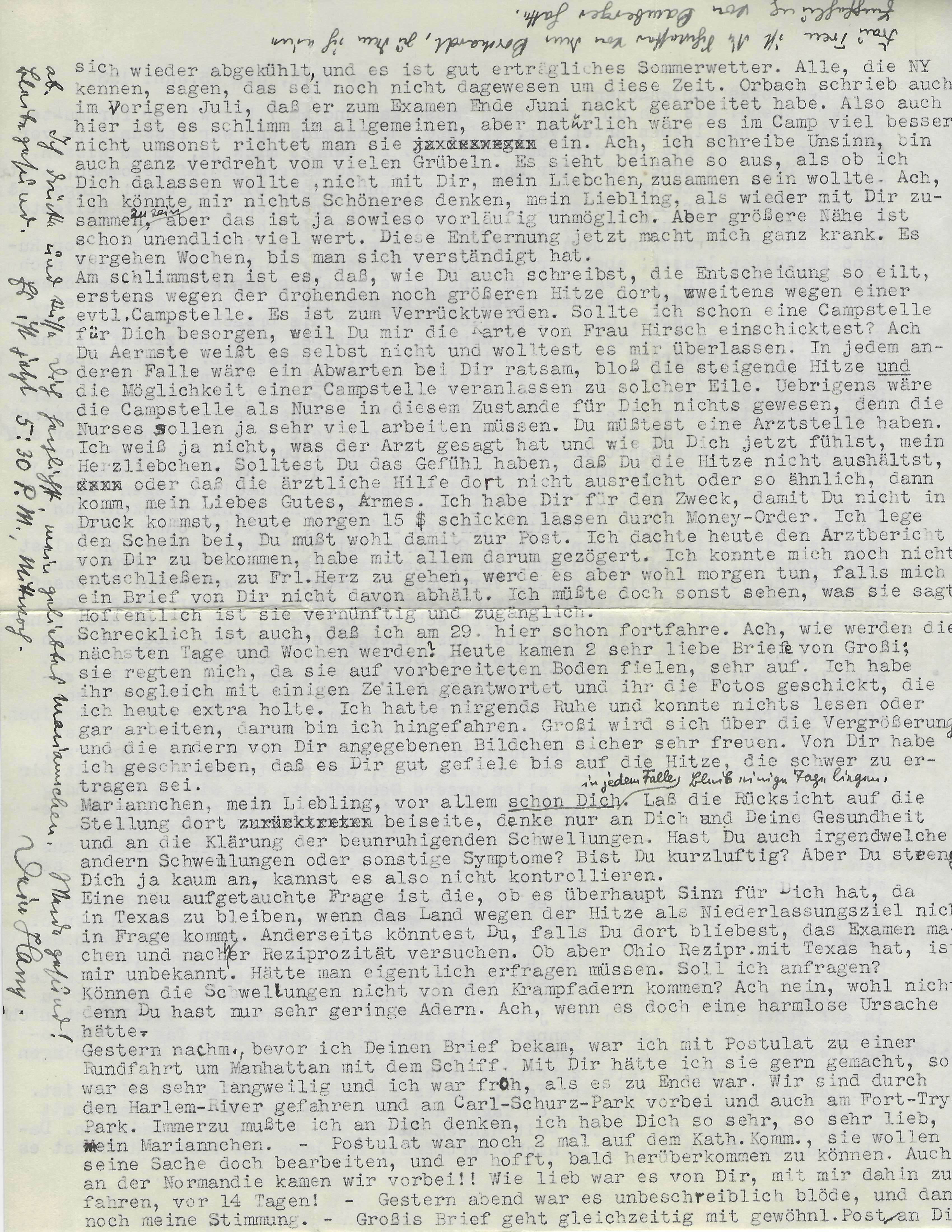
The letter appears to be in response to one from Marianne detailing symptoms like edema (swelling) that she is experiencing in the Laredo, TX, heat. As a physician and worried husband, he systematically evaluates potential causes—considering heart disease vs. heat exhaustion from the severe Texas heat, dyspnea, cyanosis, digitalis treatment, and varicose veins.
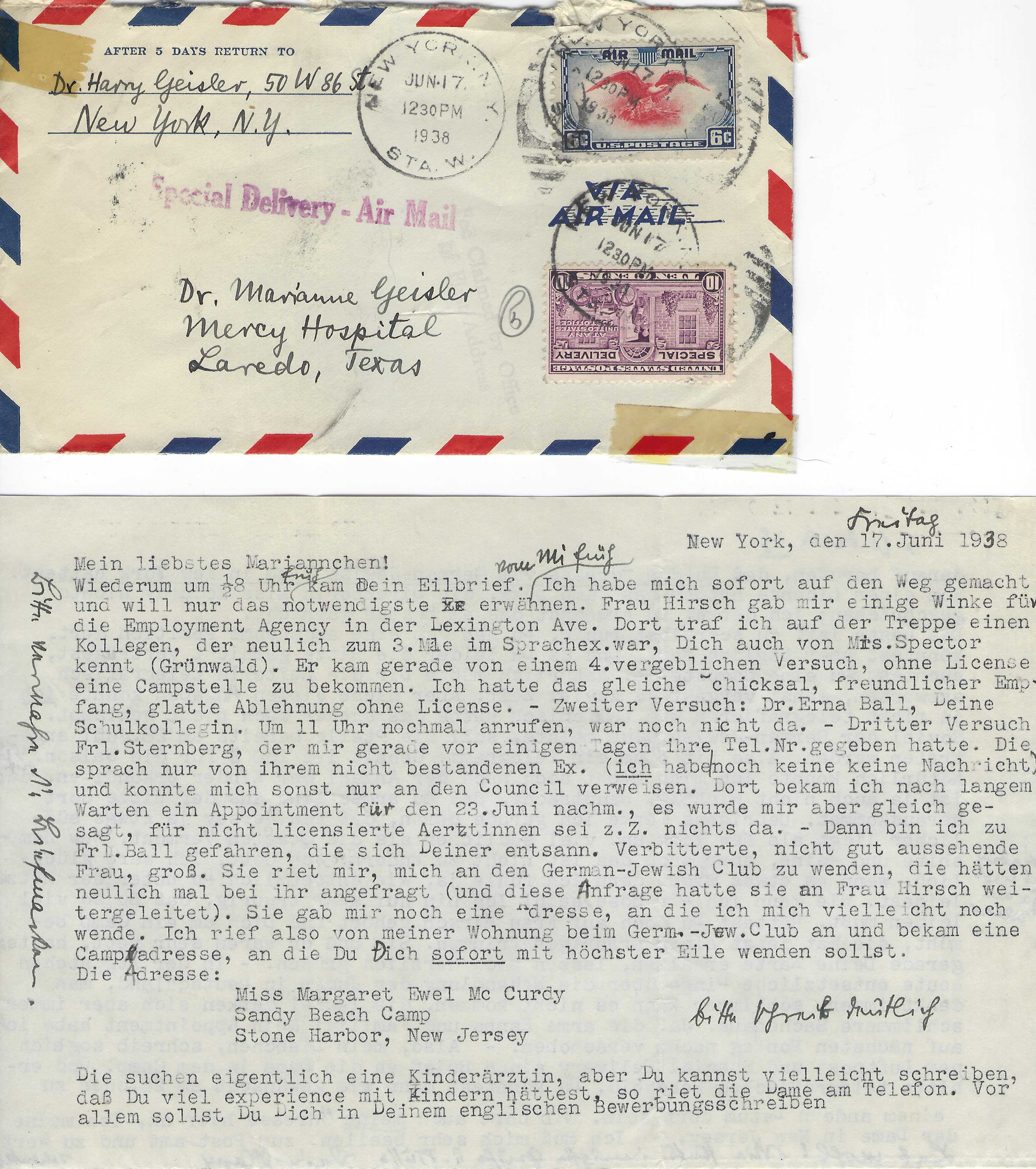
This "special delivery" letter from Harry Geisler to his wife, Marianne Geisler, with advice for finding a new position—far from the Texas heat. He also mentions conditions back home, noting chillingly that "- In the newspaper today there are terrible things about the treatment of Jews in Germany; one always thinks it cannot get any worse, but those devils keep inventing even worse things." This is 1938.
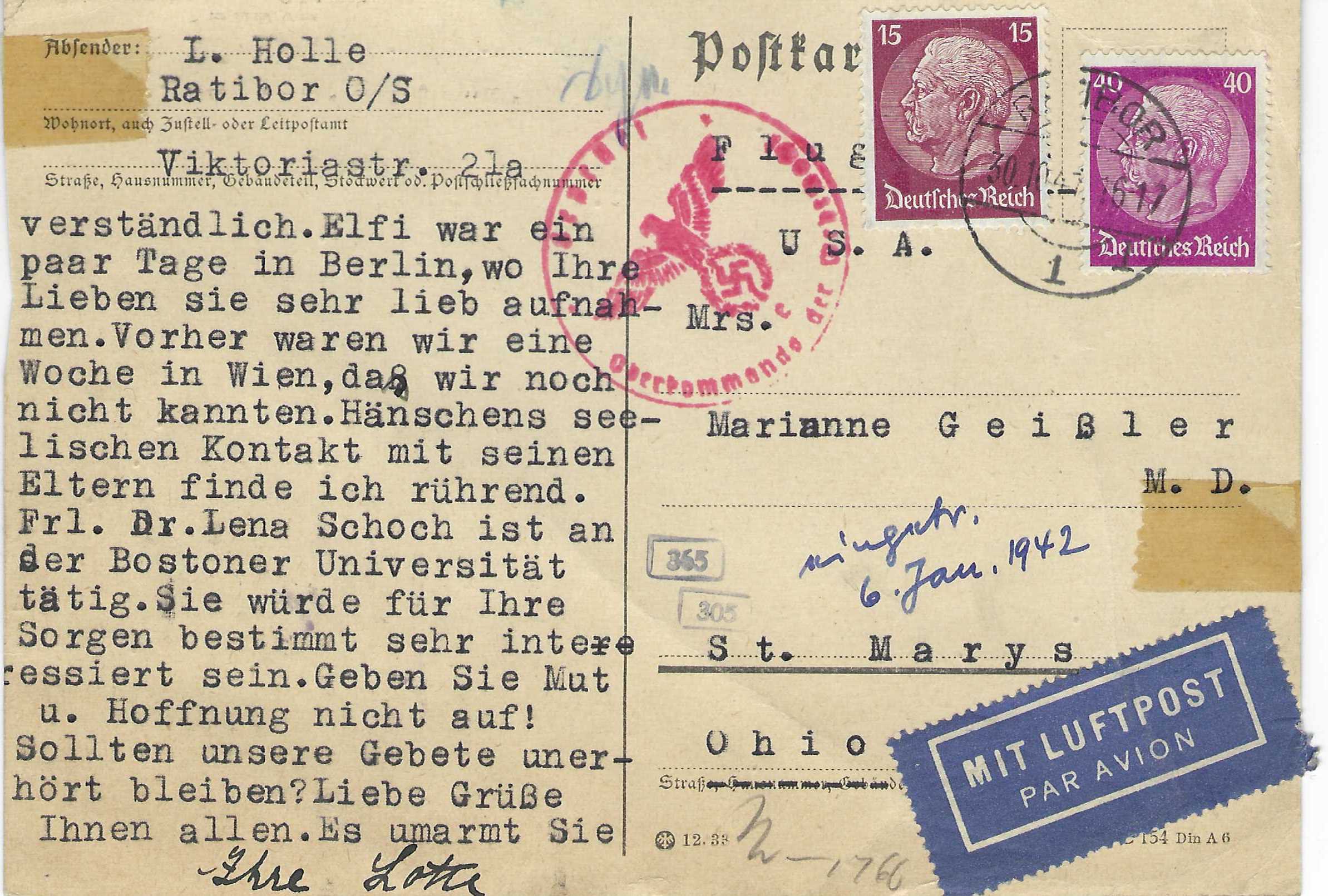
Sent by L. Holle in Ratibor, Upper Silesia (now Racibórz, Poland) on October 29, 1941, addressed to Mrs. Marianne Geisler, M.D. in St. Marys, Ohio. Note the Red circular Oberkommando der Wehrmacht (OKW) censorship stamp (Oberkommando der Wehrmacht / Abwehr) applied in Frankfurt am Main (indicated by the letter "e").
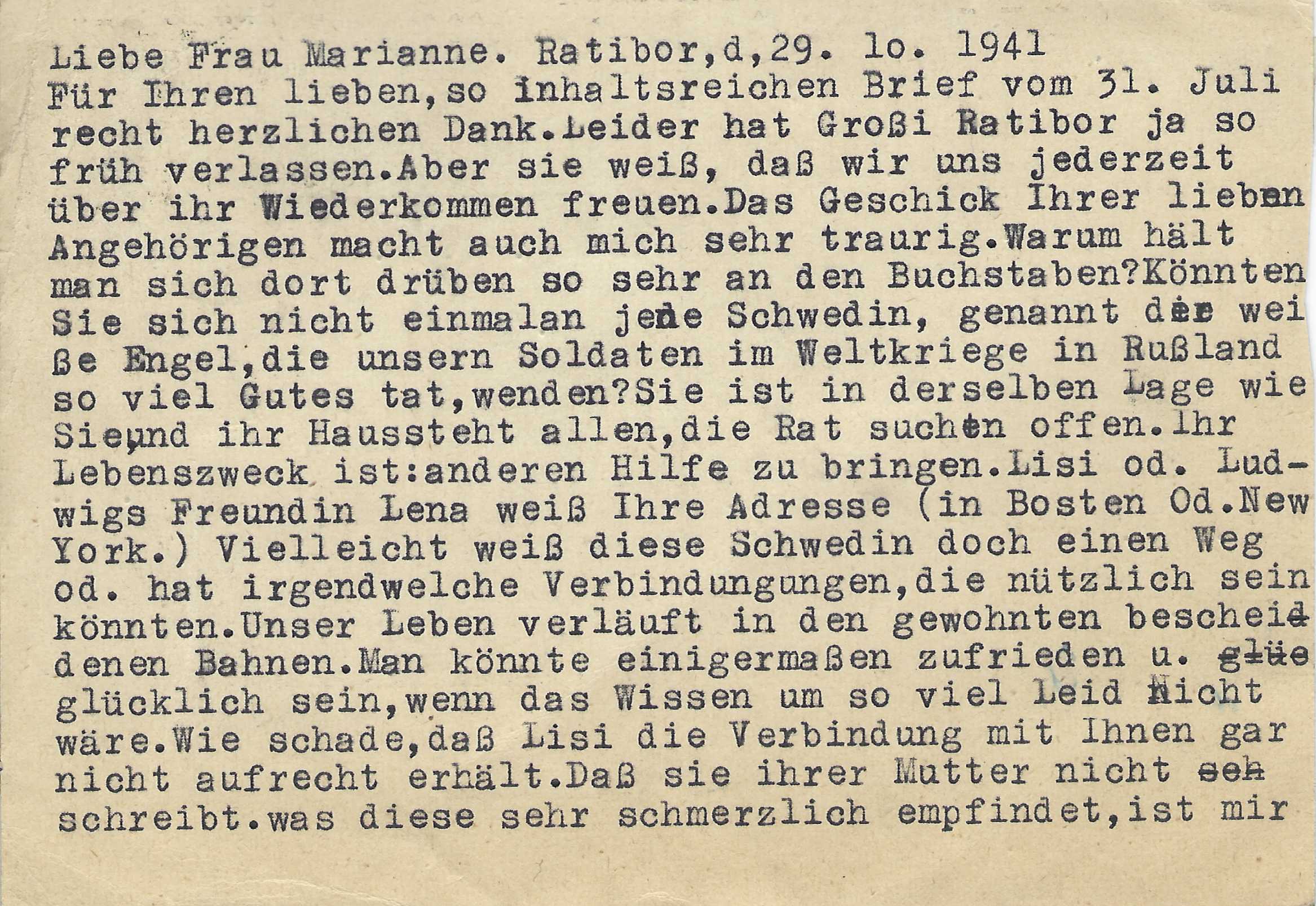
The postcard expresses frustration with strict US Immigration protocols, the quota system, and the difficulty of getting a visa. Just months before this postcard was written, the U.S. State Department had issued a directive denying visas to any applicant who still had close relatives remaining in Axis-controlled territory, citing fears that Nazi authorities could blackmail immigrants into spying. This policy trapped tens of thousands of applicants’ mid-process.
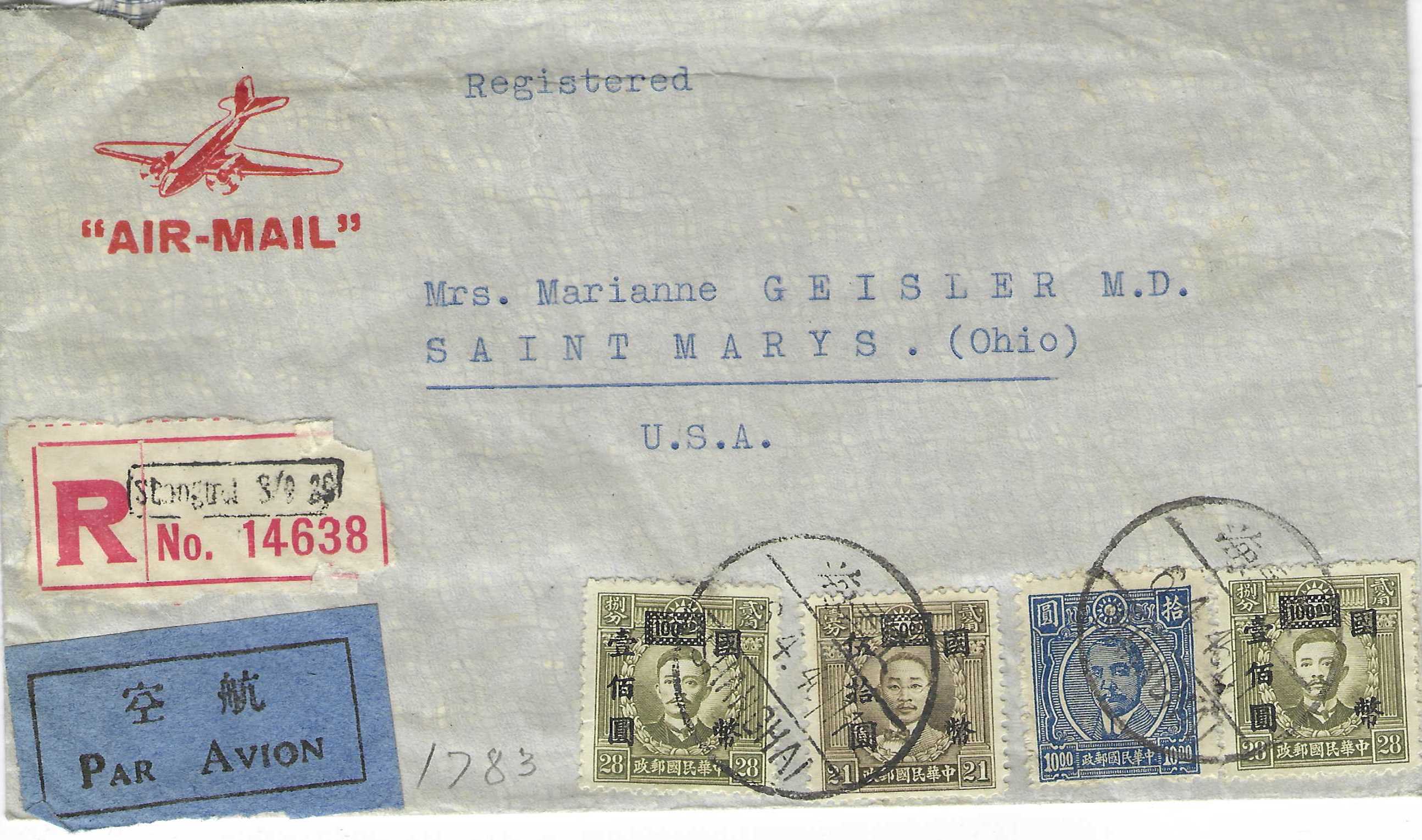
The cover of a letter sent from Gertrud Loewenthal in Shanghai to Dr. Marianne Geisler in Ohio.
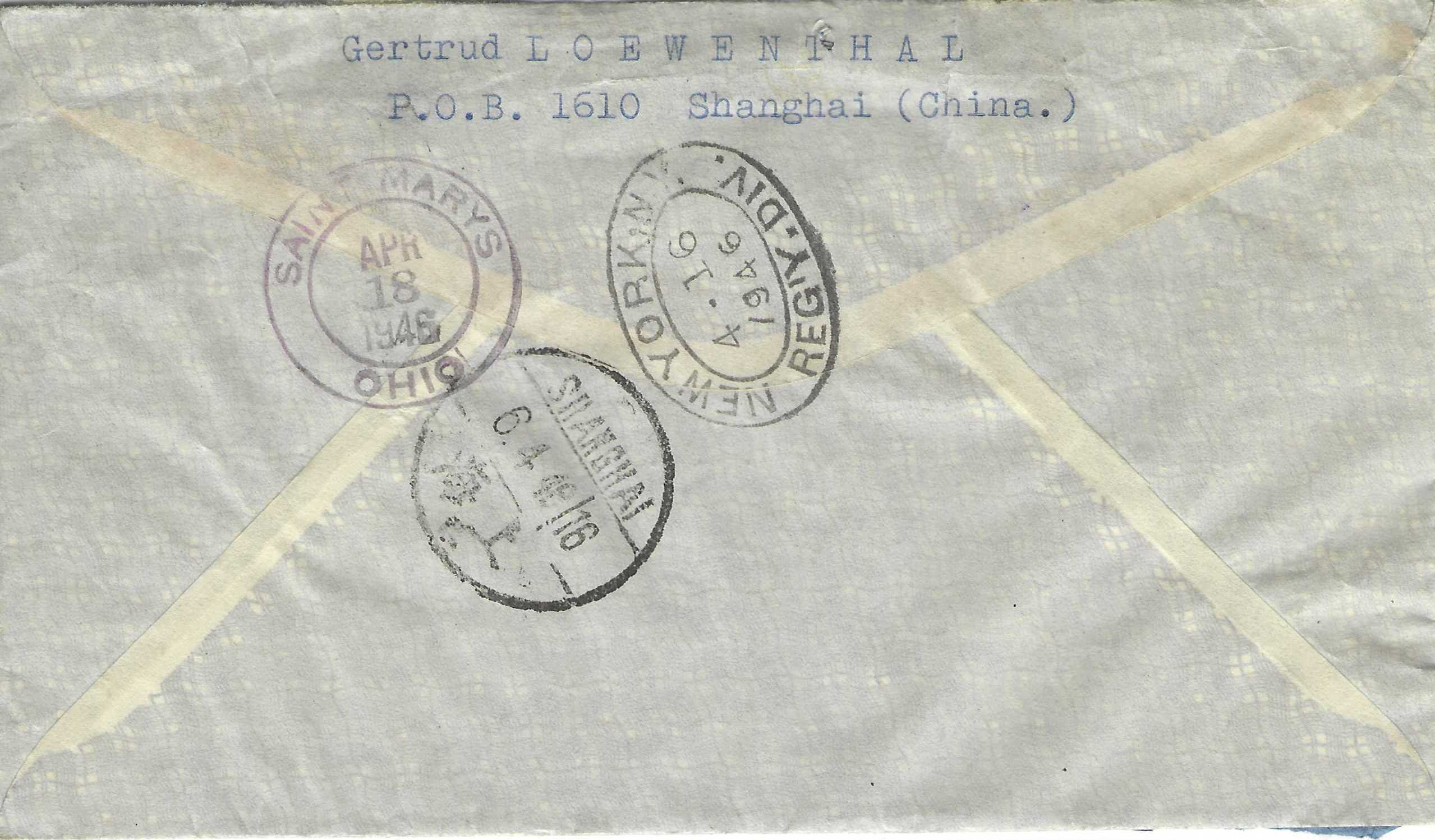
This 1946 registered airmail cover highlights post-WWII Shanghai postal history, specifically connected to Jewish refugees who fled Holocaust-era Europe to the Shanghai Ghetto and established contact with family in the U.S. following the end of the war.
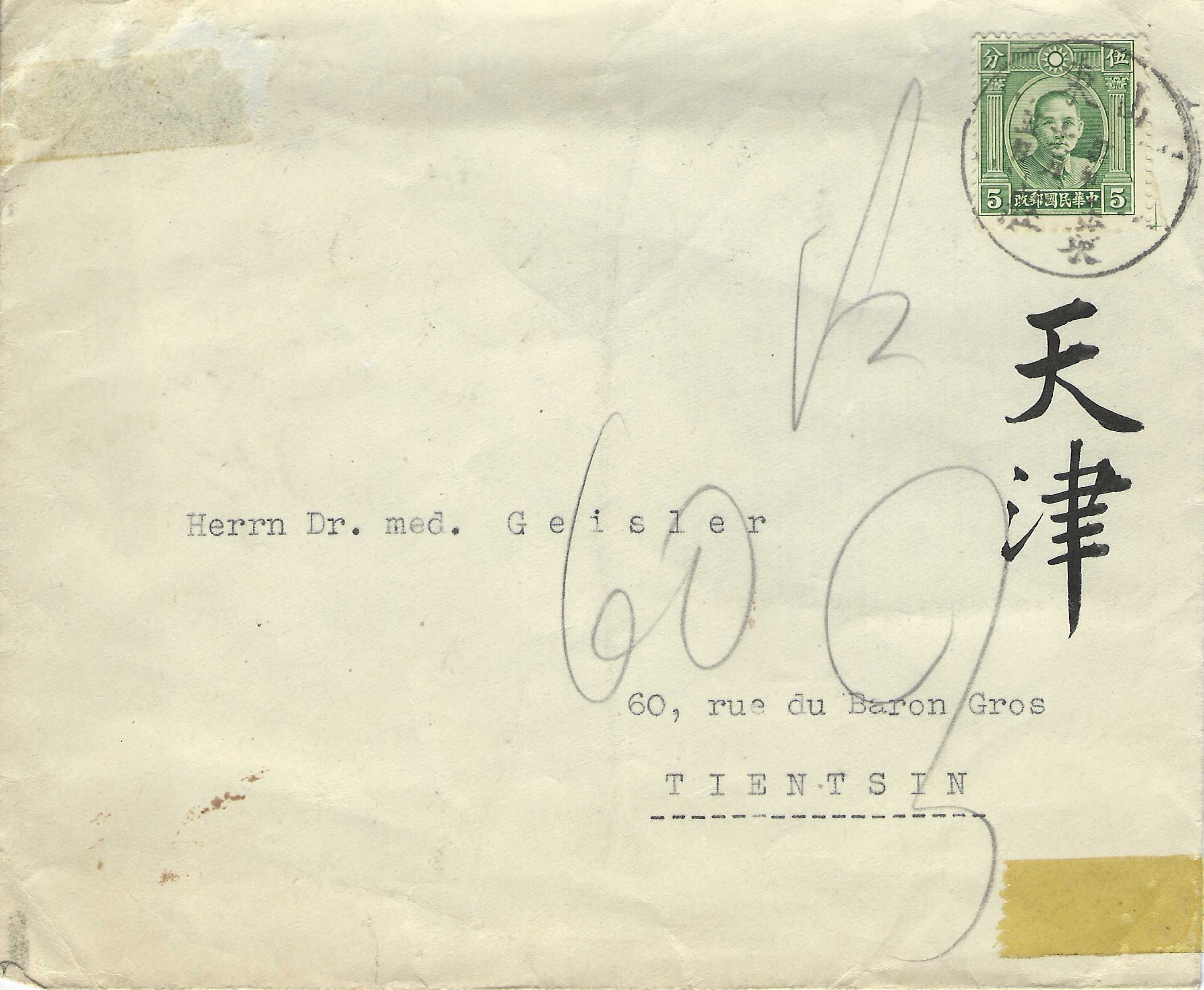
The cover of a letter sent in 1934 by Fr. Klicker from the Chung Hsing Coal Mining Company in Zaozhuang (Tsaochuang), to Dr. Geisler at 60, rue du Baron Gros in the French Concession of Tientsin (Tianjin).
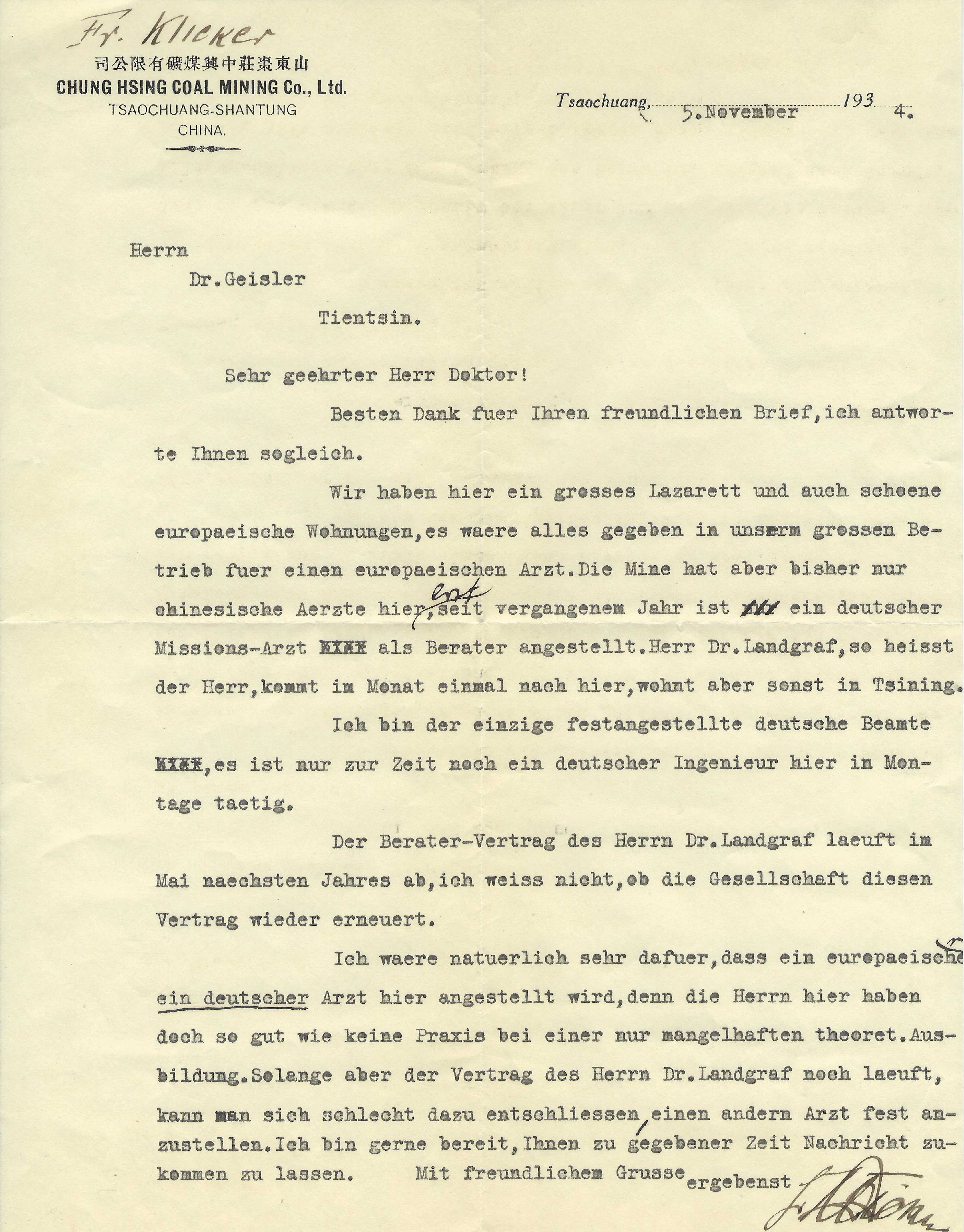
This letter appears to be a response to an inquiry by Dr. Marianne Geisler about a physician position with the Chung Hsing Coal Mining Company. The author, Fr. Klicker, expresses her desire to hire a well trained German doctor such as Geisler but says their current physician is still under contract and she cannot bring on another.
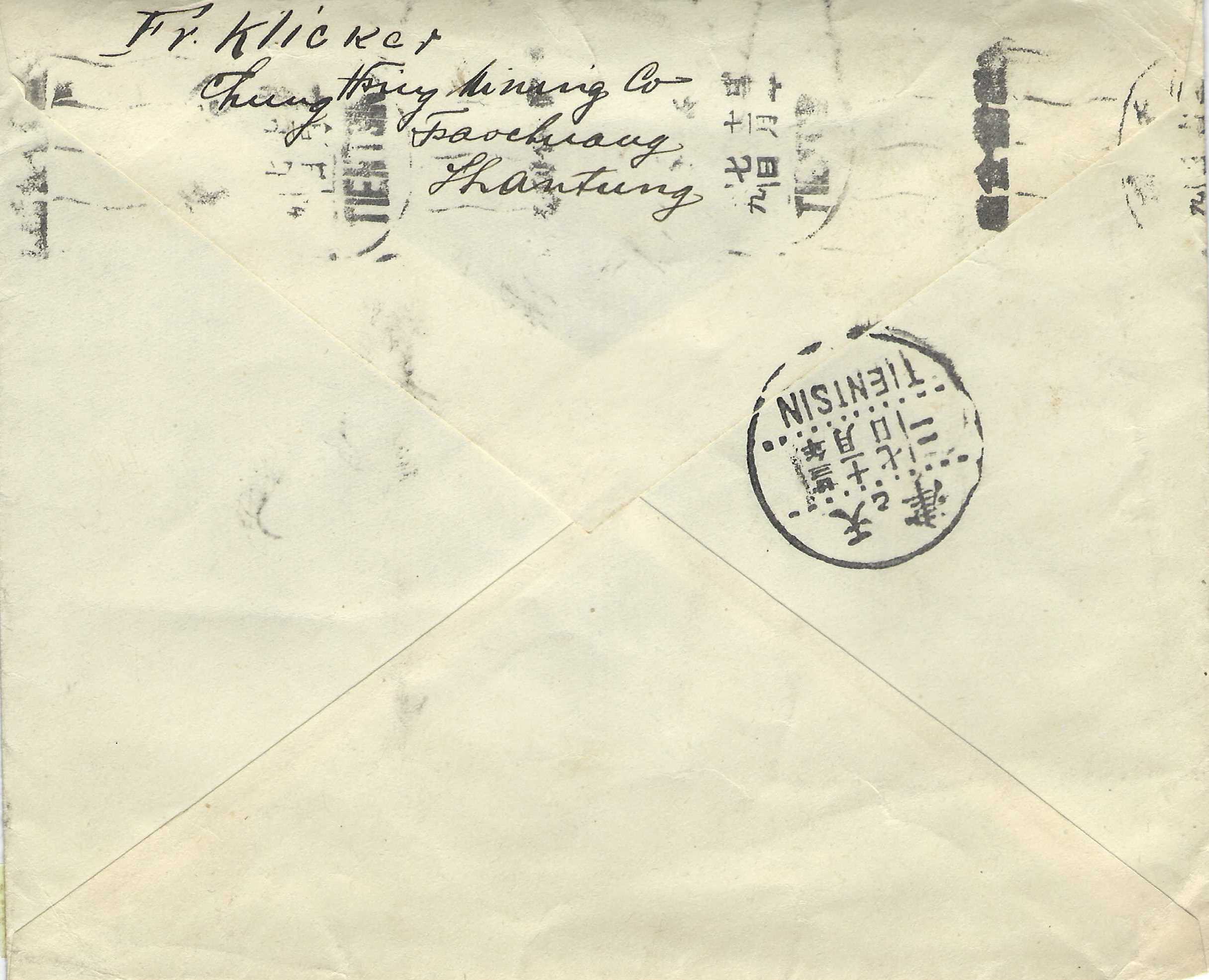
The back of the envelope containing the letter about the position at the coal plant. The letter offers a rare glimpse into European professional networks and expatriate employment dynamics in 1930s industrial China, highlighting how western medical professionals sought private contracts with major Chinese mining and infrastructure firms. As political pressures intensified in Europe through the mid-to-late 1930s, northern China—particularly Tientsin and Shanghai—saw an influx of European-trained Jewish physicians and professionals seeking refuge and employment opportunities with foreign concessions, Chinese provincial authorities, and regional industrial operations like Chung Hsing.
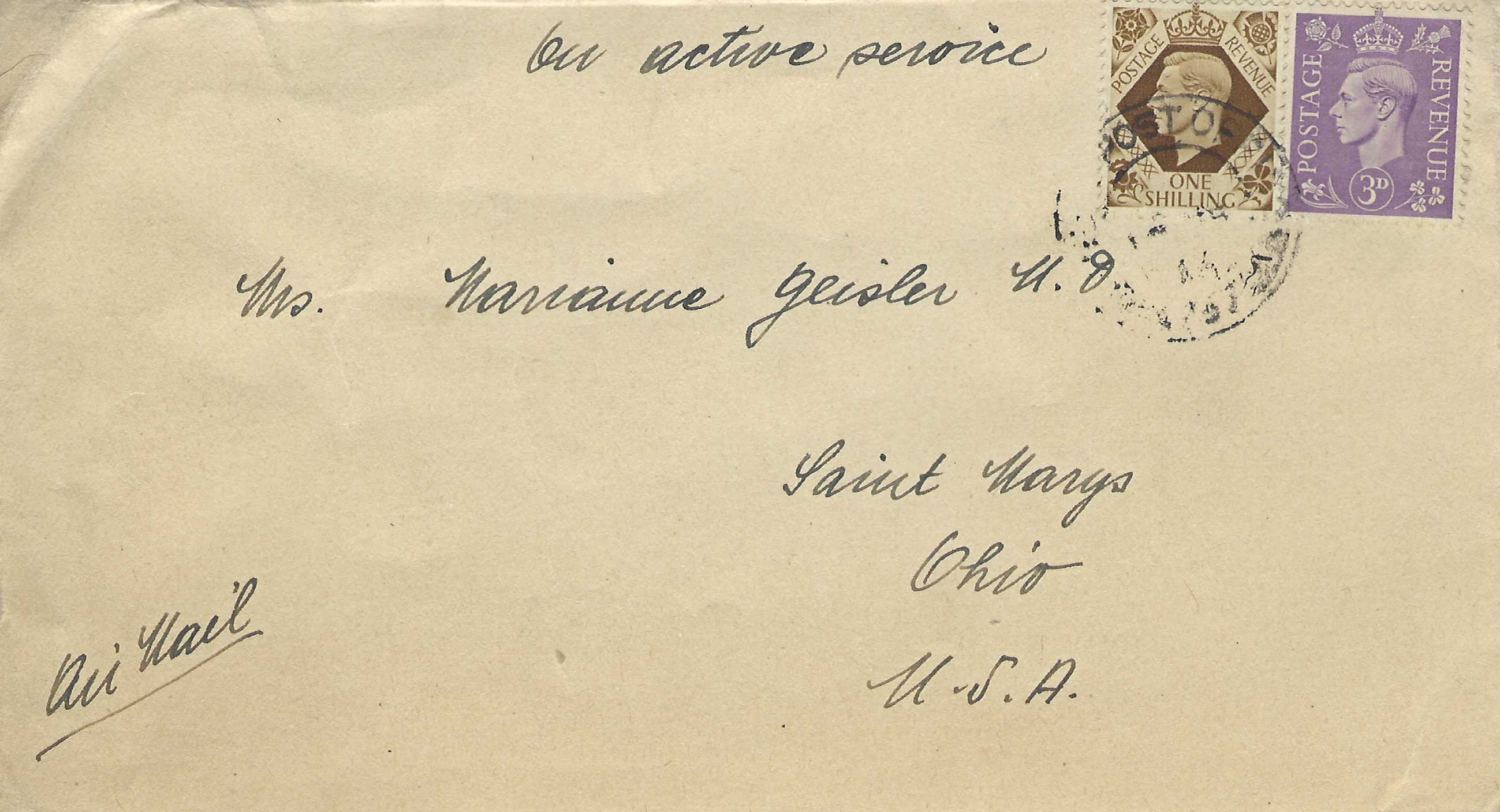
The cover of a letter sent to Dr. Geisler in 1946, from a sergeant in the British Army of the Rhine. Unfortunately, this one did not contain the original letter; however, my friend Alan in the UK was able to solve this piece of the puzzle and share a bit of history about the Jewish sender. (See the back of the letter in the next photo.)
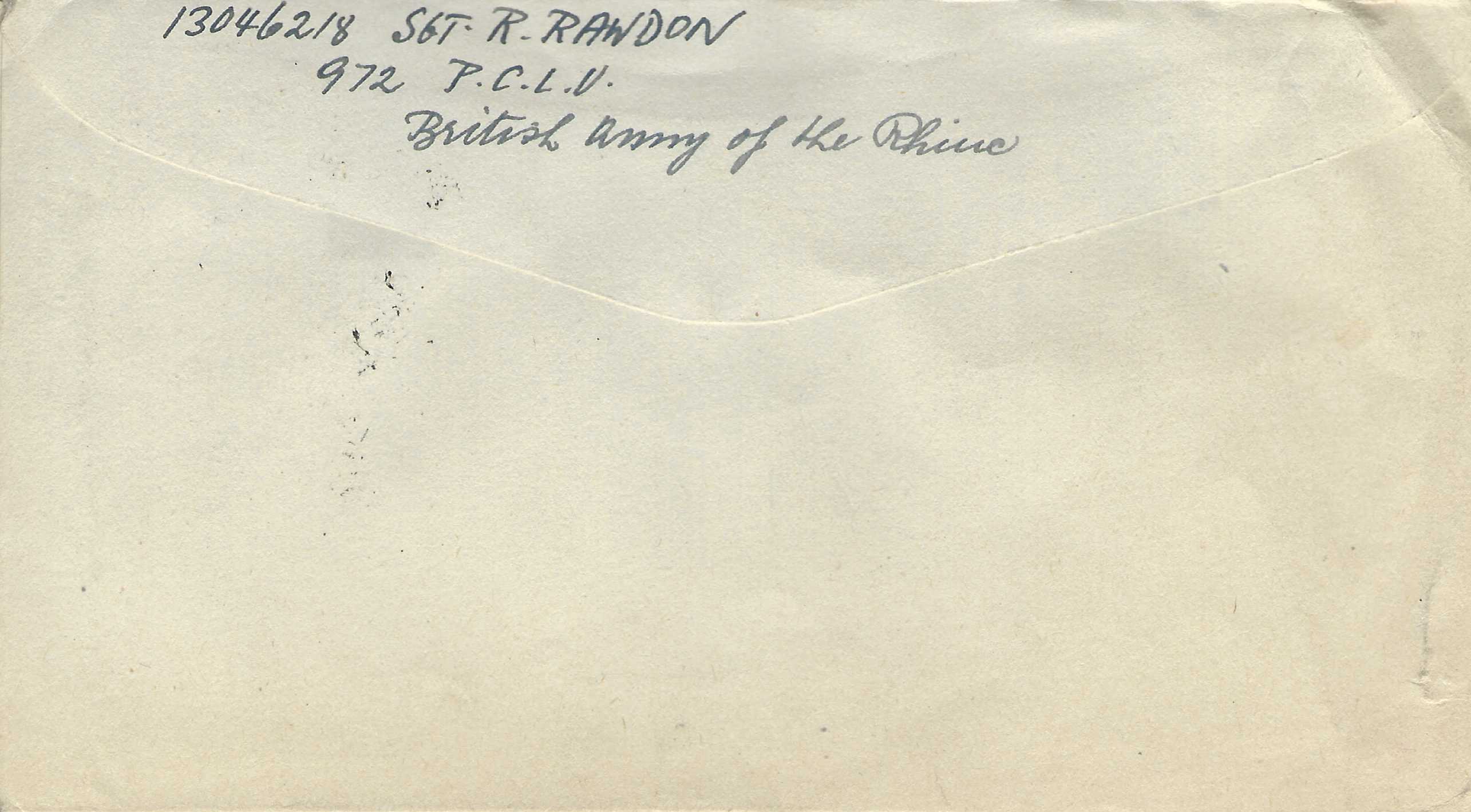
The sender, Sergeant Raymond Rawdon, was a Chauffeur in the Pioneer Corps. When he arrived in England with his wife, Maria, they registered under their original name: Rudolf & Maria Raudnitz. Both were Austrian Jews born in Vienna. While they both registered as Domestics at South Ash Manor in Kent, Rudolf volunteered to join the Pioneer Corps on 7th February 1940 as many Jewish refugees took this option rather than continue in internment. A very high percentage anglicized their name(s). Rudolf became Raymond, and Raudnitz became Rawdon.
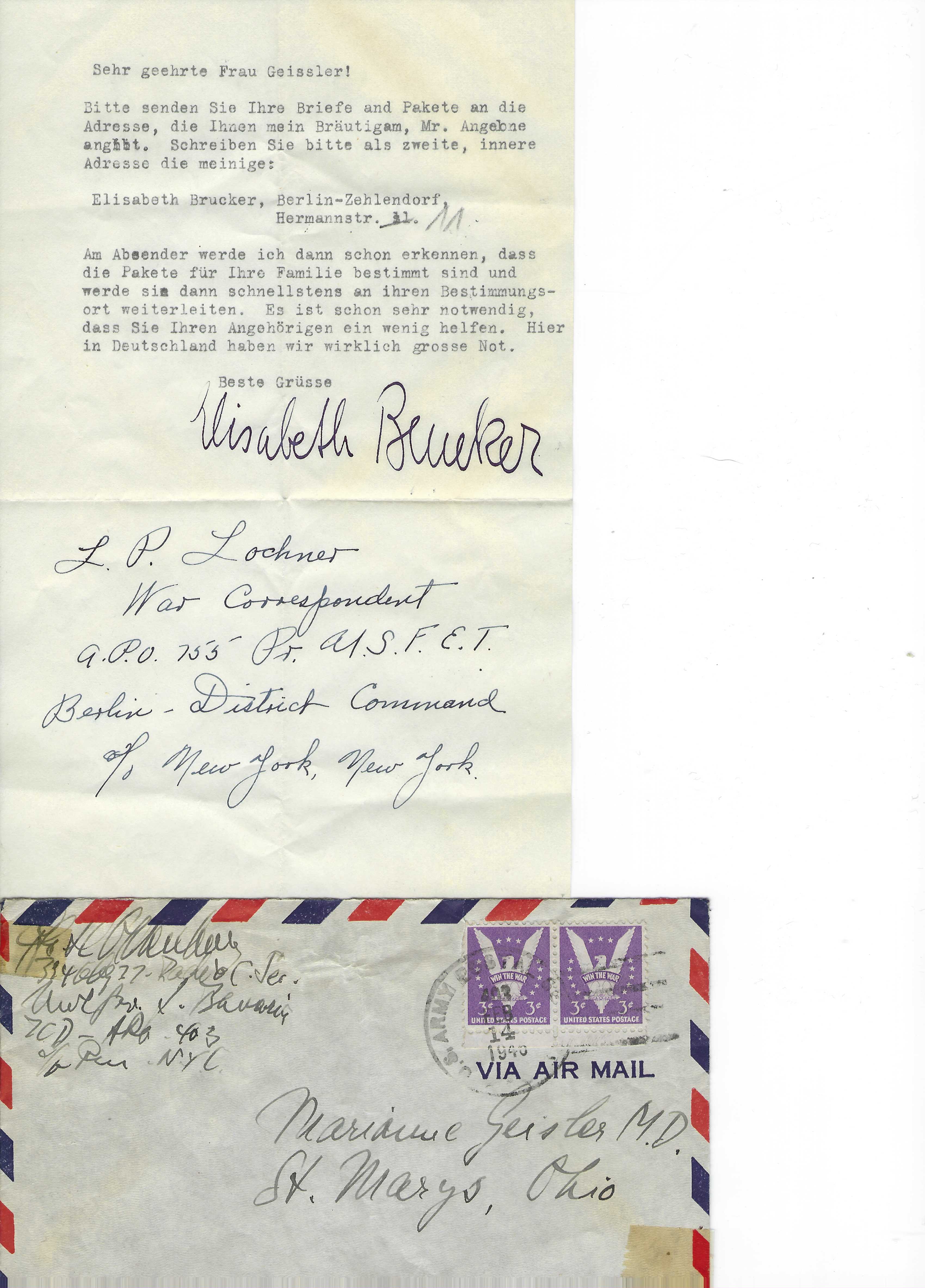
This document and airmail cover illustrate a post-WWII care package routing mechanism used to send aid into occupied Germany by leveraging the U.S. military postal system. The note provides an intermediary mailing contact to bypass international civilian postal restrictions using the U.S. Army Postal Service.