
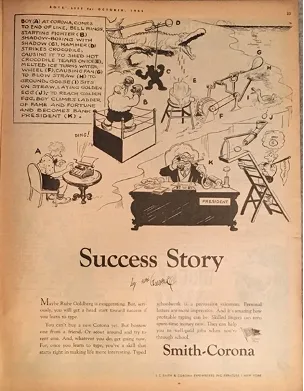
An ad for Smith-Corona typewriters, featuring one of "Professor Lucifer Butts'" machines, created by Rube Goldberg.
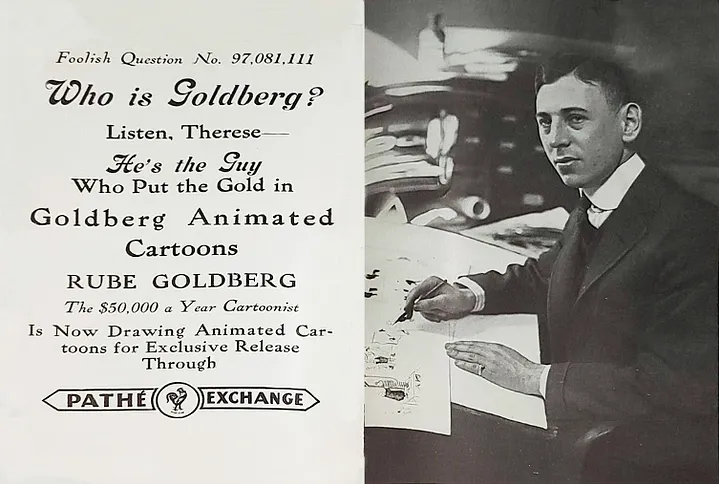
$50,000 in the 1920s is the equivalent of roughly $800,000 in 2025 money. Not too shabby for a guy who disappointed his parents by giving up a promising engineering career to focus on his art.
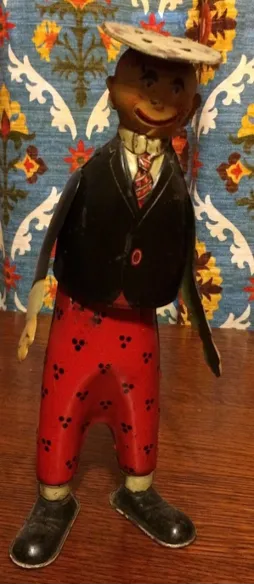
A tin toy version of Rube Goldberg's cartoon strip character "Boob McNutt." This toy cost $12.75 per dozen in the 1920s (see newspaper ad, also illustrated in this collection).).
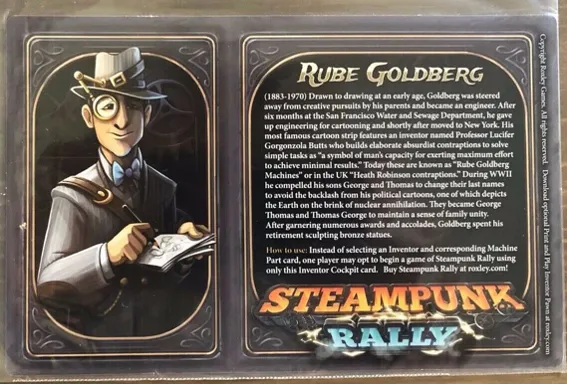
Rube Goldberg appears in a 2015 board game called “Steampunk Rally,” as one of history’s greatest inventors.
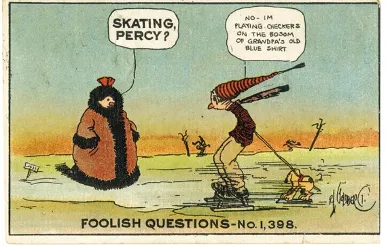
Perhaps Goldberg’s best-known series, behind the inventions, is his “Foolish Questions.” His sketches of people asking obvious questions and getting ridiculous answers made their way to postcards, magazines, and even card games.

Goldberg's satirical cartoon "Indoctrination" uses his iconic machinery to poke fun at the complexity of military training.
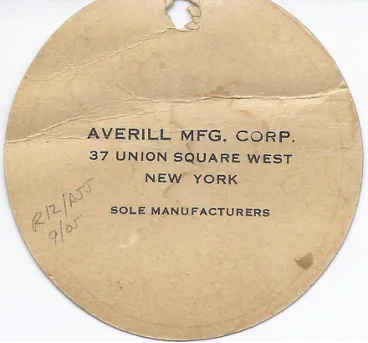
I found this round tag stuffed into the pants of a cloth Rube Goldberg toy. The back, pictured here, features production information, and the front (also pictured in this collection) includes a cartoon highlighting poor Boob’s empty head.

A set of eight drinking glasses, each featuring a different Rube Goldberg invention, along with an advertisement promising that each glass will solve a tricky problem for the guest using it.
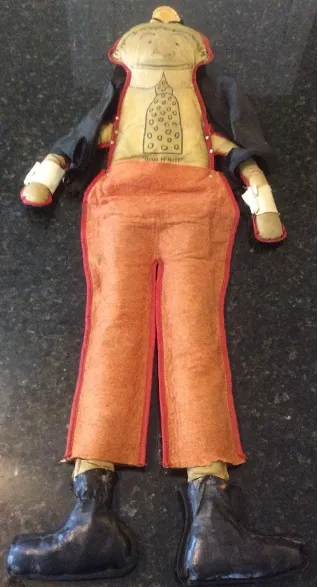
A cloth doll of Rube Goldberg's iconic "Boob McNutt" character.

Rube Goldberg's work featured in Pathe Magazine
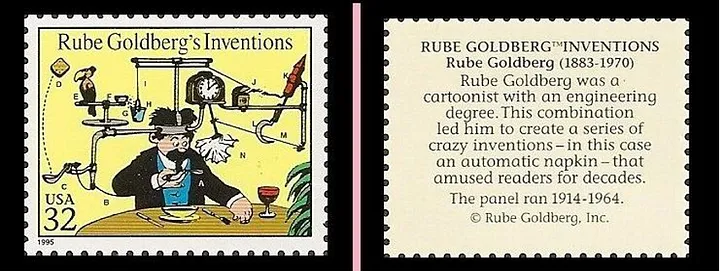
Rube Goldberg's stamp in the USPS's 1995 "Comic Strip Classics" series.

Rube Goldberg on the cover of Pathé in the nineteen-teens. Pathé was a silent film company that also produced publications around the film and entertainment industry.
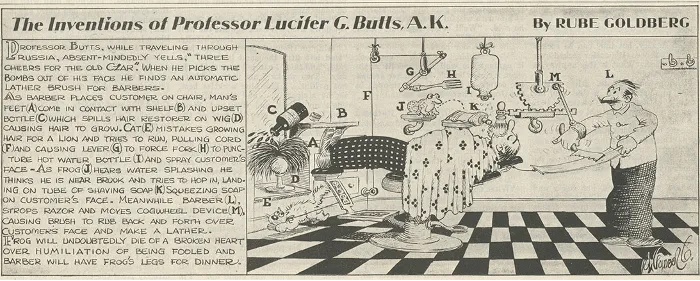
Most of Goldberg’s legacy is defined by his humor — most prevalently the complex machines he designed to do such simple tasks as brushing teeth or taking photos. Those machines were featured in a Sunday Funnies comic strip that ran from 1914 to 1964, in which Professor Lucifer Butts presents and explains his inventions.
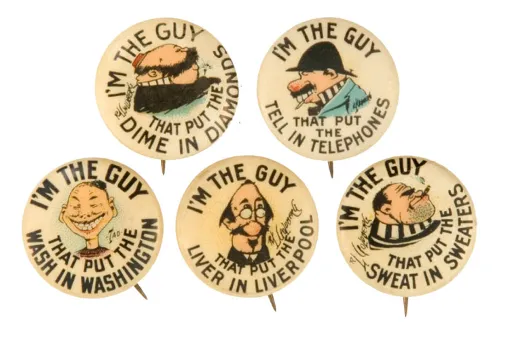
You’ve heard the formula: He’s the guy who put the [blank] in [blank]. Well, Goldberg capitalized on that formula, with punny variations that he published in comic strips and put on merch like these cigarette carton buttons. Not pictured: “I’m the guy that put the con in Congress.”
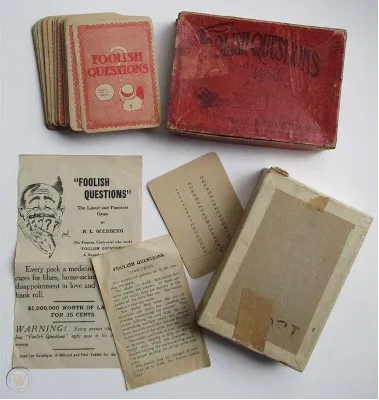
The "Foolish Questions" card game provides “A million dollars worth of laughs for thirty-five cents,” as the game insert pictured here puts it.
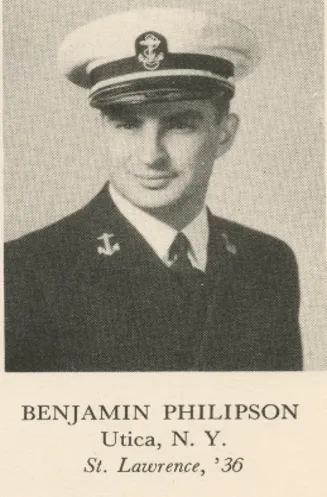
My cousin Benjamin Philipson featured in the Capstan yearbook next to work by Rube Goldberg and other famous cartoonists.

This newspaper ad provides the specs for the tin Boob McNutt toy pictured in this collection. Note the price per dozen!
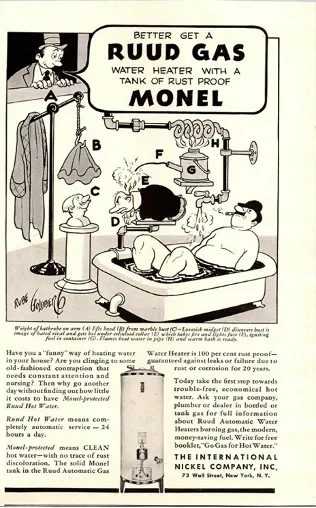
An ad for The International Nickel Company featuring the inventions of "Professor Lucifer Butts," created by Rube Goldberg.
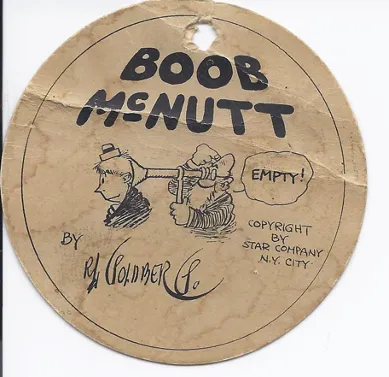
I found this tag stuffed into the pants of a Rube Goldberg cloth toy. This is the front, featuring a cartoon highlighting poor Boob’s empty head.

Rube Goldberg featured in Pathe Magazine.
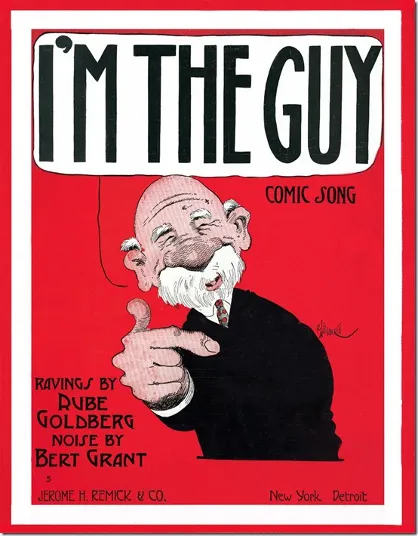
Rube Goldberg's success with the "I'm the guy who___" formula even expanded into a comic song with "ravings" (lyrics) by Rube himself and "noise" (music) by Bert Grant.

An original "Boob McNutt" pen and ink drawing by Rube Goldberg in 2-inch format, presumably for a newspaper submission.

Few people associate Goldberg with serious work, but Goldberg’s political cartoons raised the standards for his craft, and in 1948 he won the Pulitzer Prize in editorial cartooning for his “Peace Today” panel, which illustrated the fear around rising Cold War tensions and the potential for the atomic bomb to bring us all to the brink of disaster.

The contents of a swag bag given to participants at a Rube Goldberg machine competition — one of many, for kids and adults alike, taking place across the country each year. There are also books upon books for kids featuring Rube Goldberg-like characters and machines, encouraging STEM enthusiasm from a young age.
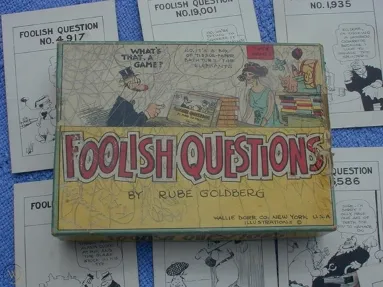
The board game iteration of Goldberg's famouse "Foolish Questions."

Dodge (yes, the car company) featured Rube Goldberg’s sculpture in their corporate magazine in 1970, the year he died.

Rube Goldberg was featured in the USPS 1995 "Comic Strip Classics" stamp series.
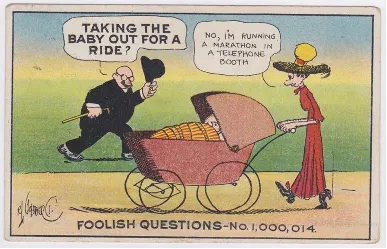
Perhaps Goldberg’s best-known series, behind the inventions, is his “Foolish Questions.” His sketches of people asking obvious questions and getting ridiculous answers made their way to postcards, magazines, and even card games.
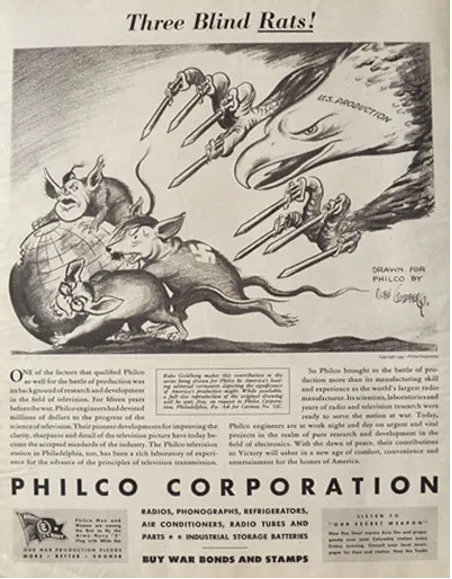
"Three Blind Rats," an ad drawn by Rube Goldberg for the Philco Corporation, positions Hitler, Mussolini, and Hideki Tojo as rats.

“Rube Goldberg’s Latest War Machine,” an ad drawn by Rube Goldberg for the Philco Corporation, features Hitler, Mussolini, and Hideki Tojo being shot out of a cannon.

More than 50 years after his death, Goldberg is still very much a part of our culture. Toys allowing kids to create their own Rube Goldberg machines appeared as early as the 1970s—and still appear today.
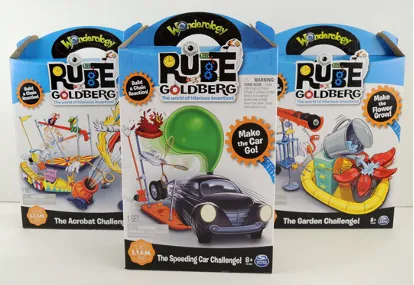
The prevalence of modern-day Rube Goldberg toys is testament to his lasting legacy.
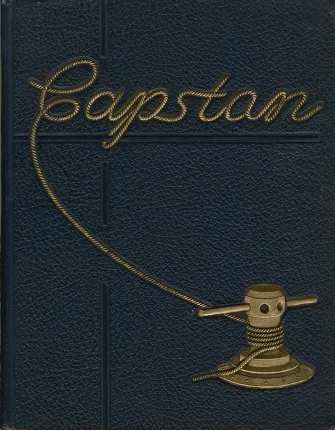
A yearbook for Capstan, a WWII program of classes for naval offers who were being brought back in and retrained for active duty. Inside (also pictured in this collection) my cousin, Benjamin Philipson, participated in this program and is featured in this yearbook right alongside work by Rube Goldberg (as well as Dr. Seuss and others).
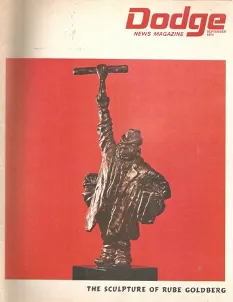
Dodge (yes, the car company) featured Rube Goldberg’s sculpture in their corporate magazine in 1970, the year he died.

A United States Steel add featuring the inventions of "Professor Lucifer Butts," created by Rube Goldberg.

In his later years, Goldberg turned to sculpting, once again proving he was a man of many talents as he crated likenesses of countless public figures. This is one of two Goldberg sculptures are in my collection, and I consider myself lucky to have them.
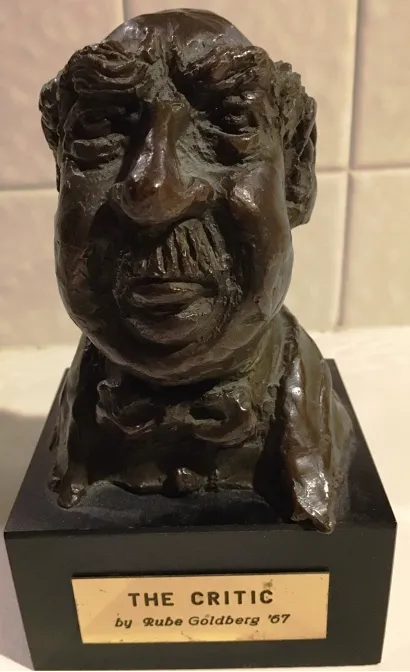
In his later years, Goldberg turned to sculpting, once again proving he was a man of many talents as he crated likenesses of countless public figures. This is one of two Goldberg sculptures in my collection, and I consider myself lucky to have them.

Goldberg featured in American Magazine, 1922.