
In late October 1939, a German lieutenant named Hans Schönkarl surprised his family in Nuremberg with a visit home, on leave from the invasion of Poland. In his diary, he writes about it the way anyone might write about coming home:
“On October 20th, shortly after 4 o'clock, I arrived in Nuremberg. Naturally, the joy over my arrival—which came as a complete surprise—was enormous. There was so terribly much to tell and to ask. And in the garden, there was a lot to do and harvest. Time flew by very, very quickly.”
He goes on to complain about young men back home who seem to be dodging service while men his age are fighting. He says he’s relieved to learn his old swimming club is still going, and he remembers some delicious pastries.
It’s all so mundane, so domestic, and so human
Then, on another page, that same handwriting proudly describes standing amid the smoking ruins of a synagogue, watching brass chandeliers melted into slag, plaster peeling from collapsed columns, and iron dome fragments hanging from the walls. Then forcing a terrified Jewish man to pose for a photo as a souvenir.
"…the iron parts of the collapsed dome hung down from the walls or lay dented and twisted on the ground. Plaster was peeling off the four large pillars. Every now and then a piece fell to the earth. The heavy brass chandeliers had melted; their remains were found between rubble and ash. A keepsake. Greed and thievish lust. As I left the Jewish temple, I saw a Jewish boy whom, despite his neglected clothing and misaligned gaze, I forced in front of my camera. "He did not want to do so voluntarily, but a quick look at the whip taught him better and he allowed himself to be photographed."
How both of these vignettes can come from the same person is almost impossible to wrap my mind around.
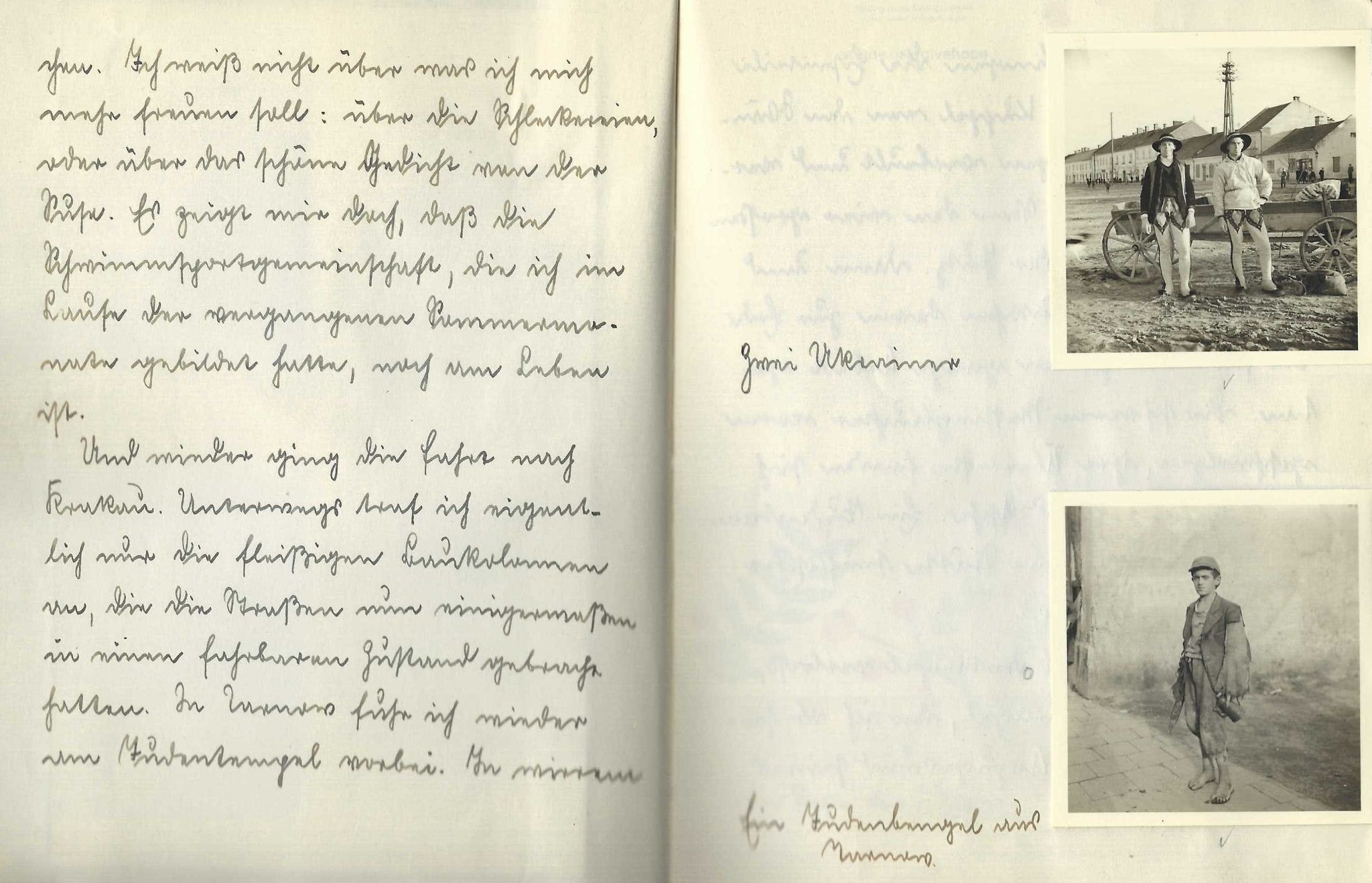
The Diary
This diary came from Leon Lebowitz, a late University of Texas law professor (originally from Waco, TX) and Jewish war veteran who served in the US Army 3rd Infantry Division in WWII and earned the Silver Star for valor. His collection of war artifacts included German Lieutenant Hans Schönkarl's wartime diary. The notebook, labeled part 1, covers August 25, 1939 to February 18, 1940, and was written while Schönkarl served on the staff of the German 231st Infantry Division during the invasion of Poland. The pages are illustrated throughout with doodles and leaflet clippings as well as photographs Schönkarl seems to have taken himself—Ukrainian farmers loading potatoes, a wooden Orthodox church, a blown-up bridge over the Vistula—and, in the Będzin and Tarutino pages, the burning and gutted interior of the town's Great Synagogue.
It's a strange document to hold, because it resists the shape we want history to have. We want the perpetrators of atrocity to be immediately recognizable as monsters, and to be monstrous in every moment. Schönkarl is not. He is, for much of the diary, boring in the most human way possible: homesick, proud of his garden, and gossipy about neighbors. And yet, he is also a man photographing—and clearly approving of—the destruction of a synagogue mid-service, and treating a terrified stranger as a prop for his personal album.
The Będzin Synagogue Burning
Schönkarl's account lines up grimly with the historical record. Będzin is a historic city in southern Poland's Silesian Voivodeship, in the Zagłębie Dąbrowskie industrial region, sitting along the Czarna Przemsza River near Katowice and Sosnowiec. Before the war it was home to a large, vibrant Jewish community, and its Great Synagogue—a landmark of the town—had anchored Jewish life there for generations.
German forces occupied Będzin in early September 1939, within days of the invasion of Poland. On the night of September 8–9, 1939, German troops, including, apparently, Schönkarl, set fire to the Great Synagogue. During services, with a crowd of worshippers still inside.
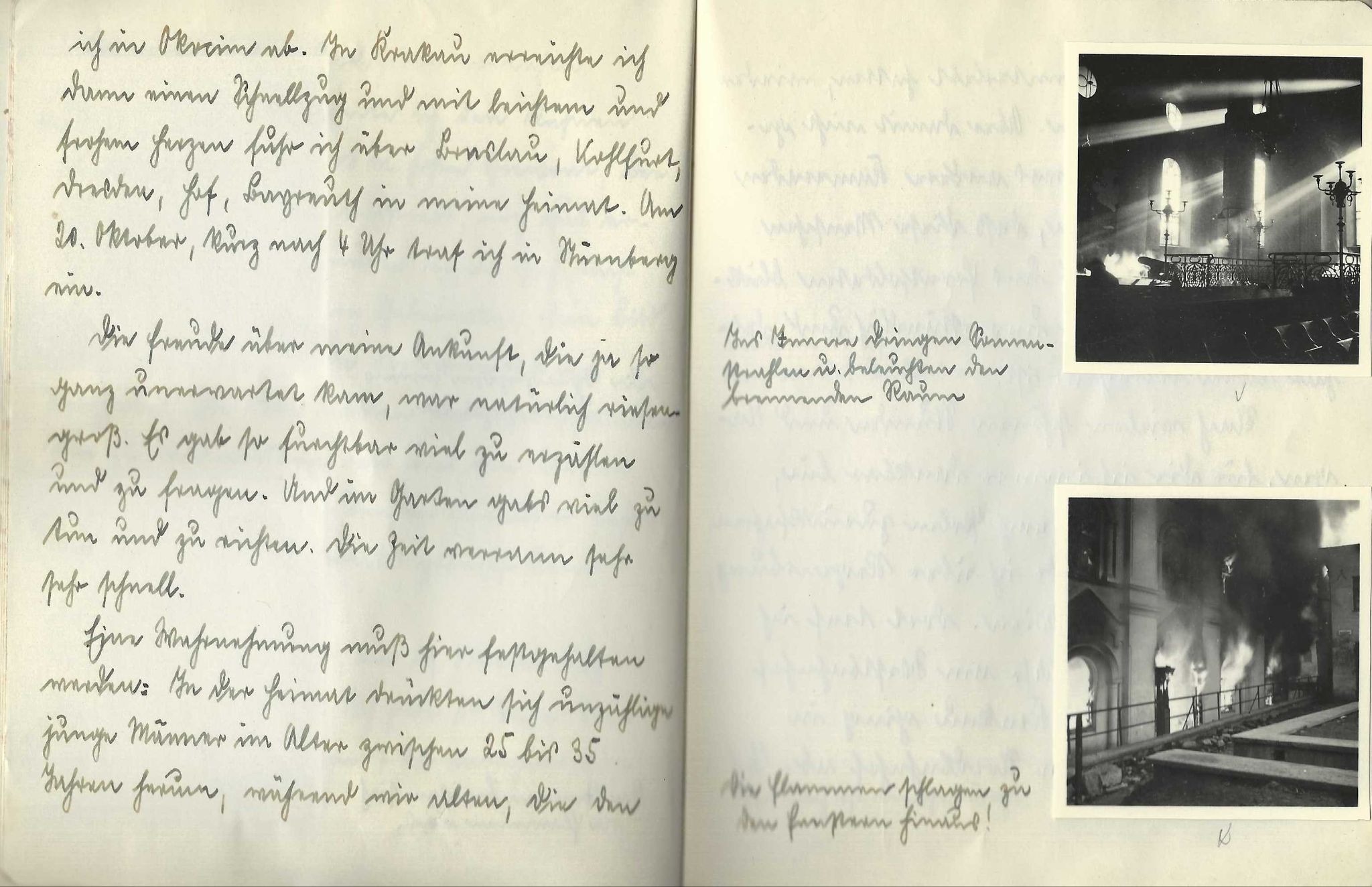
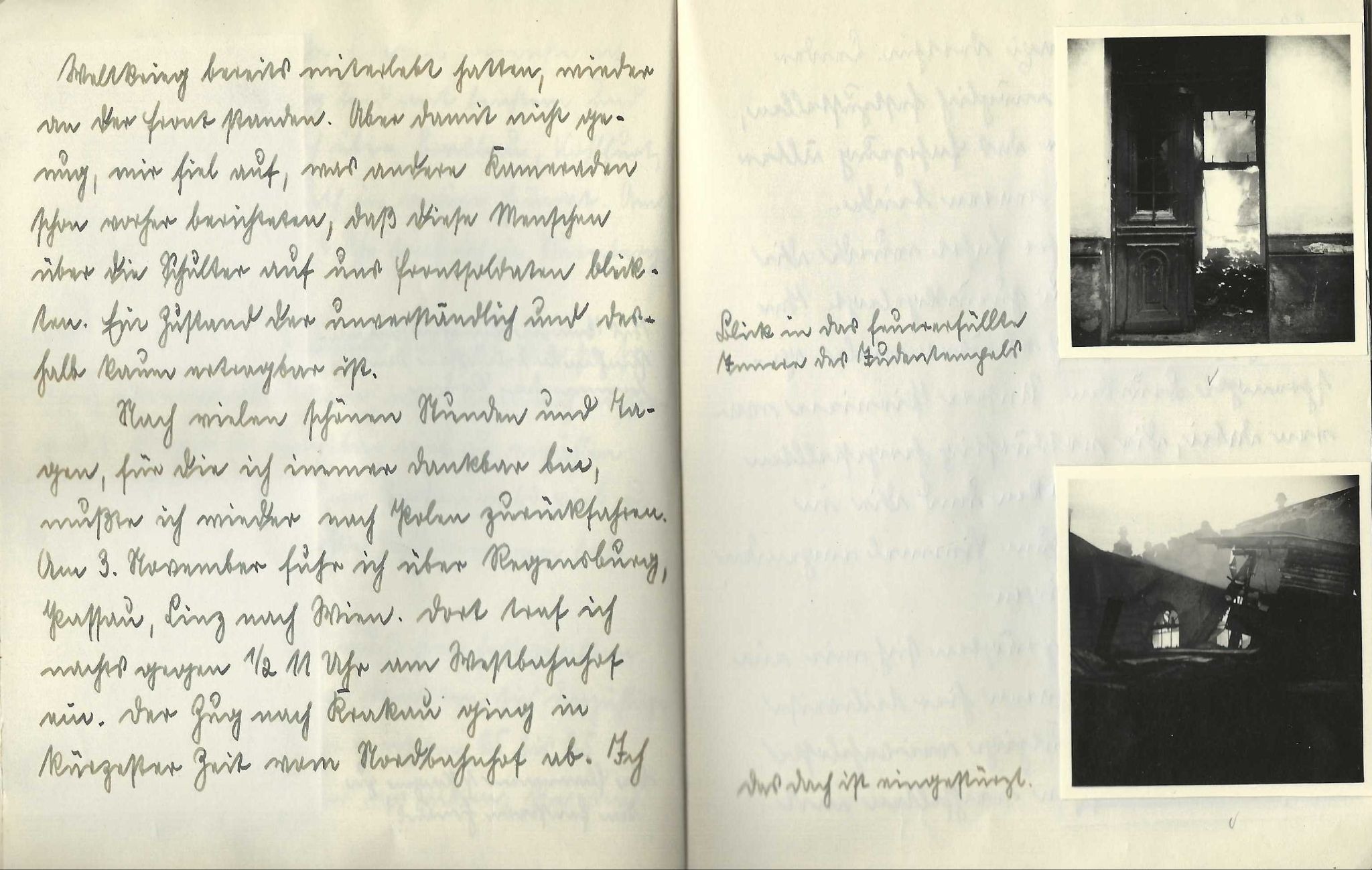
Those who ran from the flames were shot or driven back into the fire; some were reportedly forced into barrels of tar that were then set alight. The blaze also consumed roughly fifty surrounding Jewish-owned homes. Estimates of the dead that night range from several dozen to well over a hundred people, and the wide-ranging accounts are a sobering reflection of how chaotic the killing was even by the perpetrators' own records. On the night of the massacre, a Catholic priest, Father Mieczysław Zawadzki, opened his church on Góra Zamkowa to Jews fleeing the fire; he was later recognized as Righteous Among the Nations for it.
This was not incidental wartime damage. It was deliberate, targeted destruction of a Jewish community's most sacred space, carried out with people still praying inside, and unfortunately this wasn’t an isolated incident. Będzin was among the most brutal of the synagogue burnings in occupied Poland, but it was still just one of dozens. It was also a preview of what was coming: Within a few years, Będzin's Jewish community—which had numbered over 20,000 before the war— would be forced into a ghetto and then almost entirely murdered at Auschwitz.
(View our Polish Ghetto collection here.)
The horror of reading this particular account is that Schönkarl isn’t a news reporter or a shocked bystander. He's a perpetrator, lingering with satisfaction in the destruction of a community that within a few years would be almost entirely wiped out.
A Similar Scene in Tarutino
Będzin isn't the only community whose destruction Schönkarl's participated in. Tarutino,a town founded in 1814 as a German colonial settlement in Bessarabia (in present-day Ukraine), had its own long Jewish history: By the turn of the twentieth century, Jews made up over a third of the town's population, working as merchants, craftsmen, and traders. The synagogue, which had stood at the center of civic and religious life alongside several smaller prayer houses, had survived Russian Imperial residency restrictions, the First World War, and the geopolitical upheavals that followed—only to be destroyed by German forces in 1941.
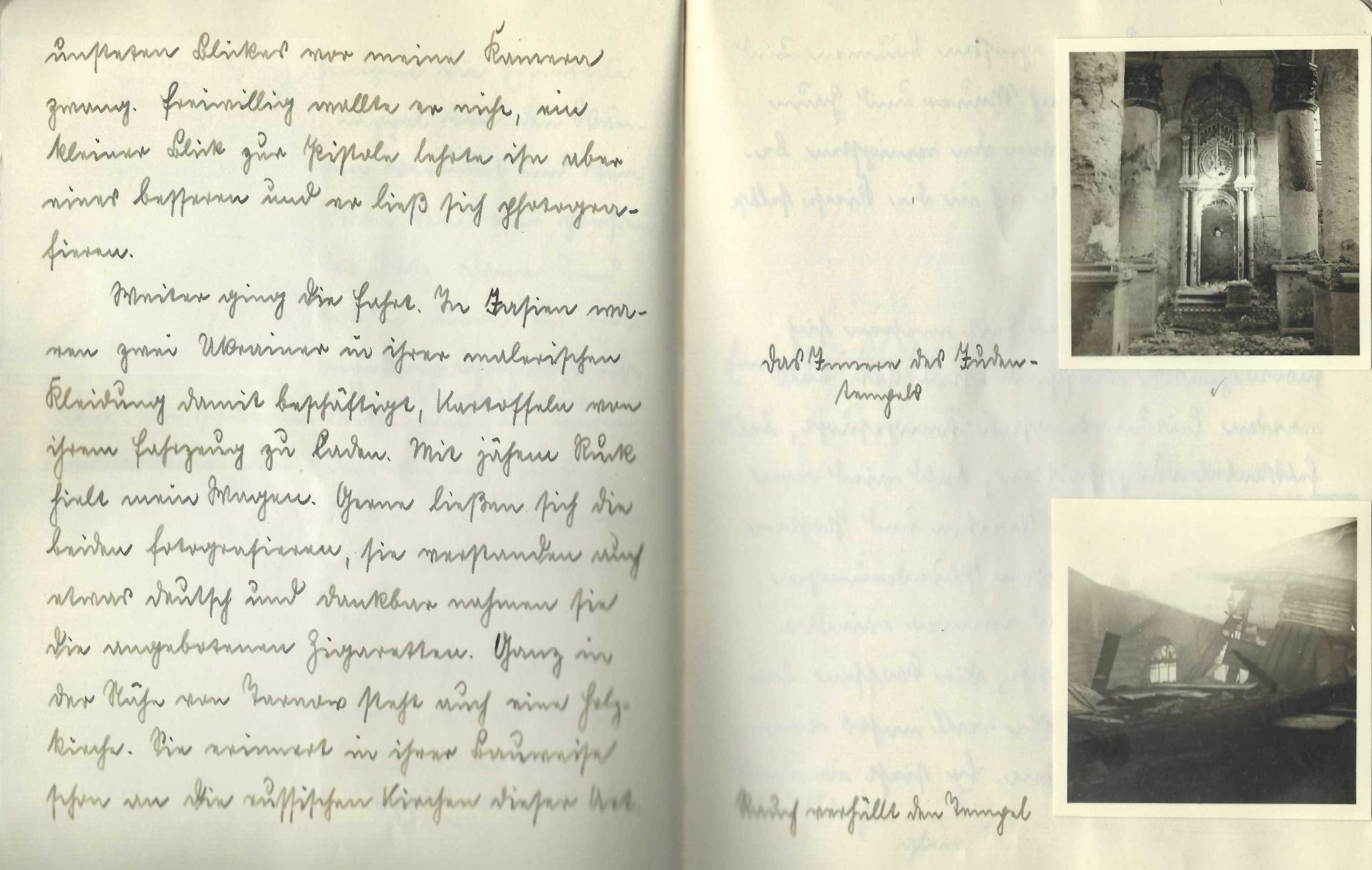
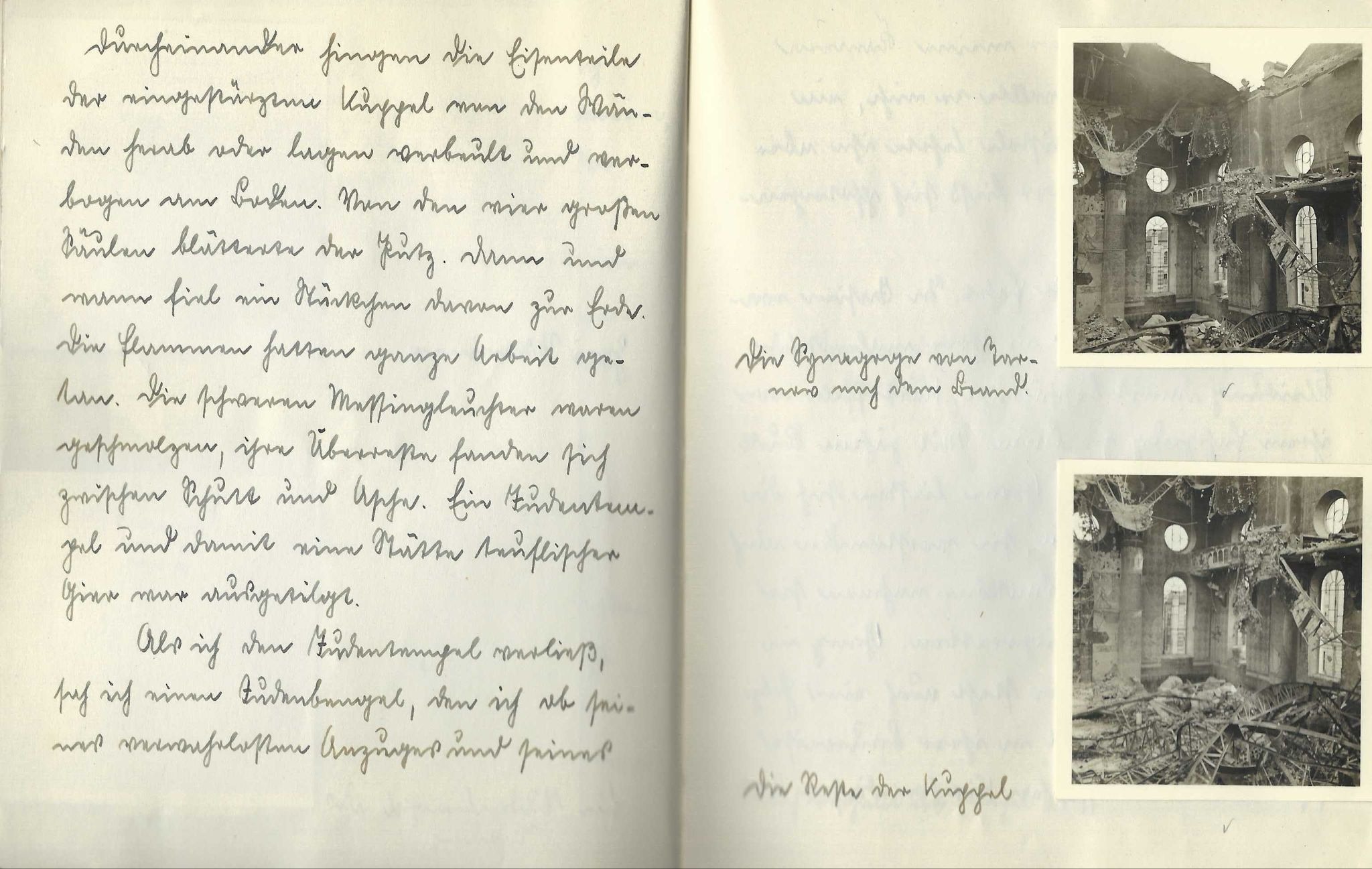
Even in just a handful of its pages, this diary traces a chilling pattern: Schönkarl—who by many measures appears to be a pretty regular guy—moves through town after town, reducing Jewish religion and culture to rubble as he goes and photographing it for his scrapbook.
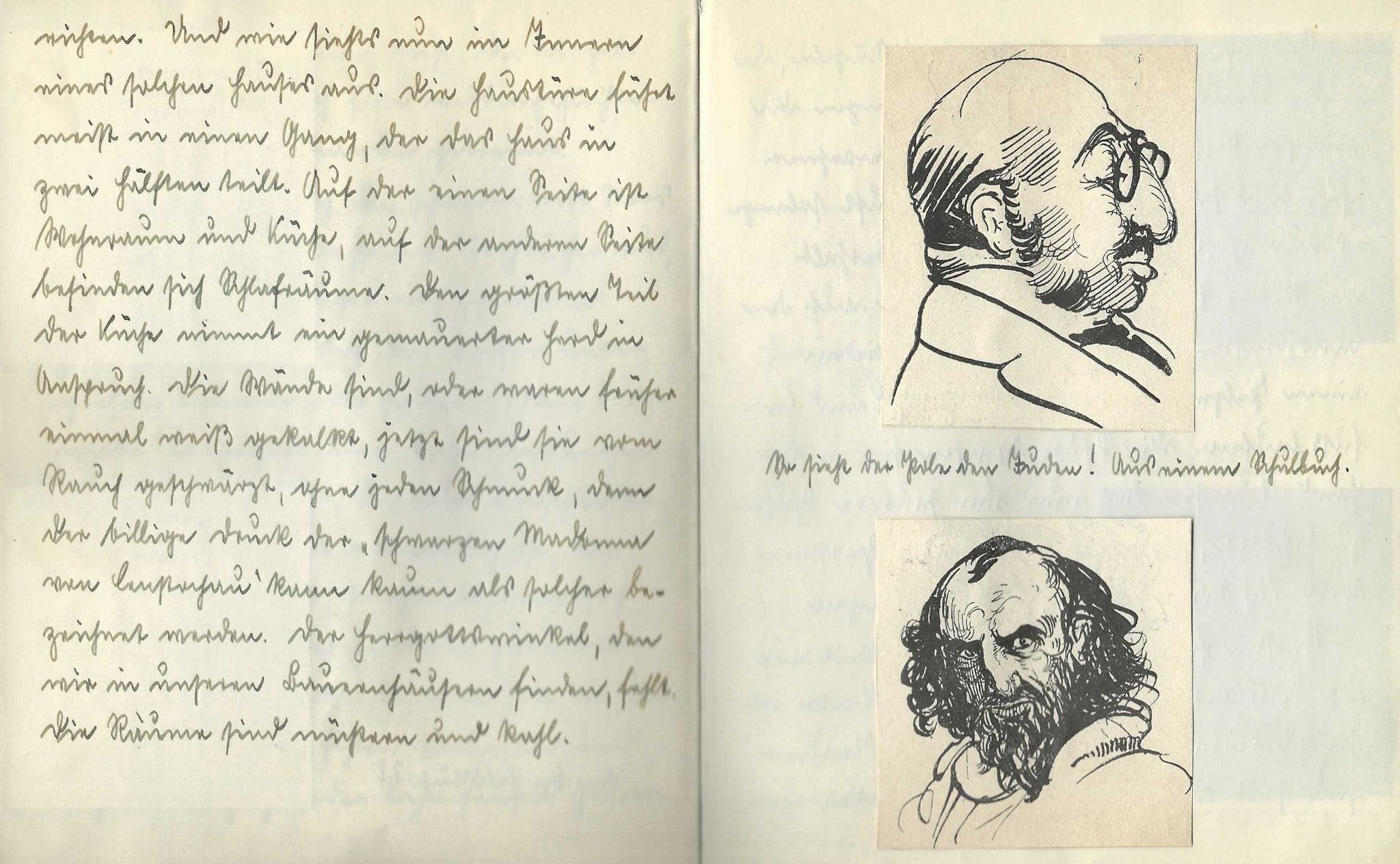
Why Schonkarl’s “Ordinaryness” Makes Him So Much Scarier
It would be more comfortable, in a way, if diaries like this read as pure malevolence cover to cover—if they didn’t also include gardening and pastries. That kind of document would let us keep monstrousness safely contained in monstrous people. It would be easily identifiable and easily avoidable.
What Schönkarl's diary shows instead is a really difficult truth: The Nazis and their far too many collaborators weren’t made up exclusively, or even primarily, of sadists and fanatics. The machinery was operated by men who also loved their families, missed their gardens, and groused about their neighbors. Historian and political theorist Hannah Arendt called this "the banality of evil." The evil acts themselves weren’t banal, of course—far from it—but the people committing them so often were. They were ordinary people on the surface, but where they were capable of tenderness in one direction, they were also capable of unthinking cruelty in another—without seeming to register the contradiction.
Schönkarl's own words show this contradiction functioning almost seamlessly in his grousing about the younger men avoiding service:
“One observation must be recorded here: back home, countless young men between the ages of 25 and 35 were loitering about, while we older ones, who had already served in the World War [WWI], were standing at the front lines again. But as if that were not enough, I noticed—what other comrades had already reported before—that these people looked down their noses [lit. over their shoulders] at us front-line soldiers. A situation that is incomprehensible and therefore hardly bearable.”
He can write, with real anguish, about how he and his old wartime comrades are looked down upon by young men who avoided service. He writes about how unbearable it is to feel wronged, misunderstood, and unworthy of respect…and then he goes on to participate in the attempted destruction of an entire race because Nazi ideology looks down its nose at them.
We don’t say any of this or share this diary to humanize its author in the sense of excusing him—there is no excuse, and nothing here should be read as an appeal for sympathy. Rather, we hope it serves as a reminder that the people who did these things in the past were not a separate species that was easy to identify and therefore avoid. They were just regular people—the kind we all might interact with in our daily lives.
It’s uncomfortable, but it’s worth dealing with—not because Schönkarl deserves the benefit of the doubt, but because the century since has made clear how easily "ordinary" and "monstrous" can share a diary.