
Generally, piecing together stories involves piecing together several different artifacts. How do they relate to each other? How do they contradict each other or add nuance to each other? Sometimes, however, a singular artifact stands out as a story in and of itself, illustrating a major theme all on its own.
That’s the case with this Nazi Feldpostkarte (a field postcard—military mail) postmarked October 3, 1940, in German-occupied Warsaw.
Does that date ring a bell? This is just days before the official establishment of the Warsaw Ghetto (October 12, 1940), and for weeks already, tens of thousands of Jewish residents of Warsaw had been forced to relocate into the designated ghetto boundaries.
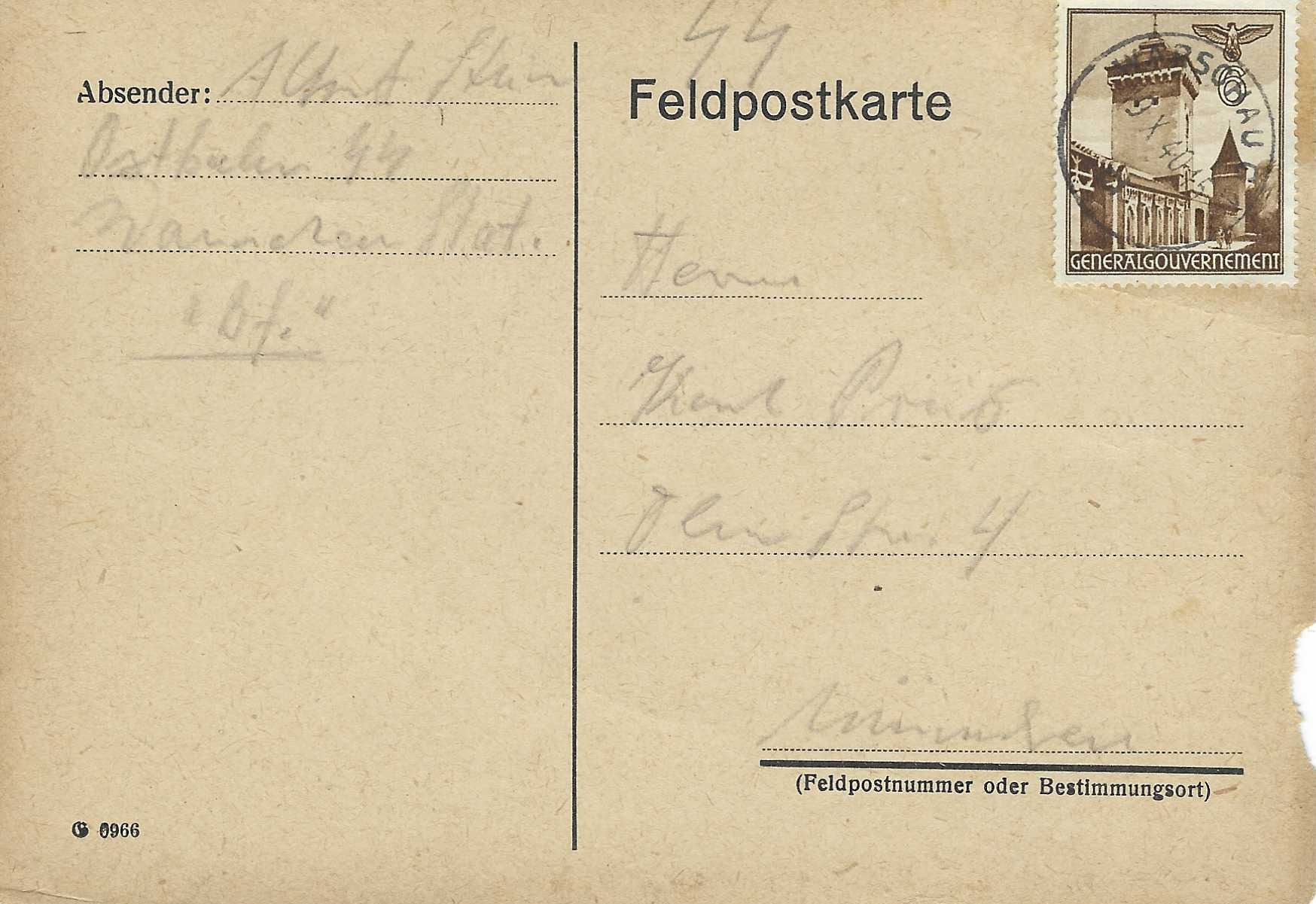
The sender is a soldier named Albert Stein, and he’s writing to someone named Karl Preis, in Munich.
Stein was a Waffen SS member assigned to the Ostbahn SS/ Railway Administration, Warsaw Main Station, as indicated by the return address. During World War II, the Ostbahn (the Nazi German Eastern Railway in occupied Poland) operated the transport system that carried hundreds of thousands of Jews from Warsaw to the Treblinka extermination camp. Trains run by the Ostbahn departed from Warsaw's notorious Umschlagplatz transfer point during the violent liquidation of the Warsaw Ghetto.
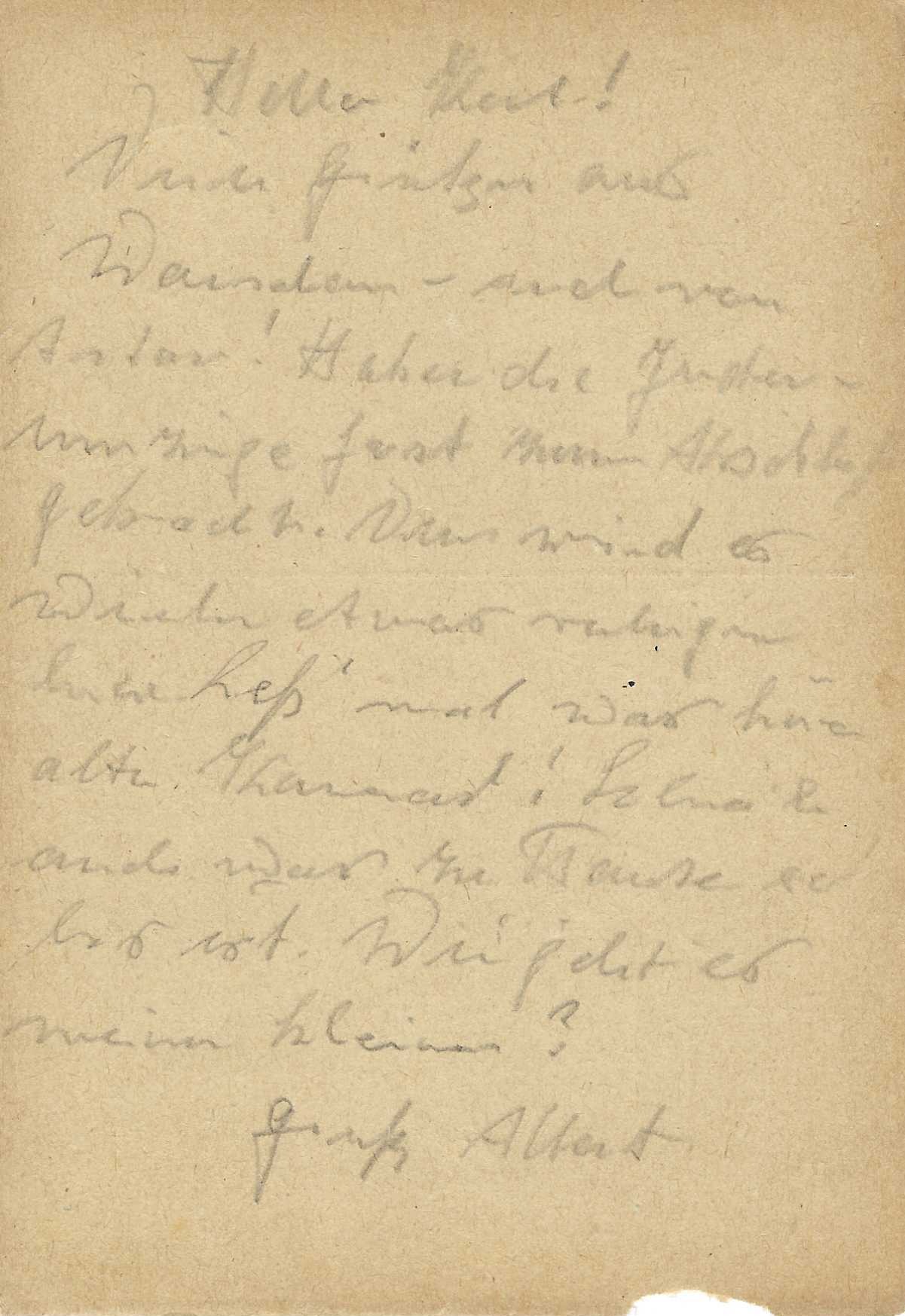
The handwriting isn’t easy to read. Here’s what he wrote:
Hallo Karl! Viele Grüße aus Warschau – auch von Anton! Haben die Juden-Umzüge fast zum Abschluß gebracht. Dann wird es wieder etwas ruhiger. Bitte hör’ mal was für [unsere] alte Kamerad’ [oder: Heimat?] [ist]... und was zu Hause los ist. Wie geht es meinem Kleinen? Gruß Albert
And in English:
Hello Karl! Many greetings from Warsaw – also from Anton! [We] have almost completed the relocation of the Jews. Then things will be a bit quieter again. Please check what’s going on with [our] old comrades... and what’s happening at home. How is my little one doing? Greetings, Albert
The casual way Stein writes about the relocation of the Jewish people is sickening to me.
“It’s been a crazy time at work,” he’s telling his friend—in the way we’ve all told our friends things should calm down soon and maybe we can grab drinks next week. Except, he’s not talking about corporate reports or client deliverables or quirky bosses. He’s talking about human lives. With no apparent sense that sending thousands of people into horrific living conditions and—ultimately, to their deaths—is anything other than normal. Just a little bureaucracy to deal with before we can relax.
It’s a simple artifact. Just a postcard from a man asking after his friends, his family, his "little one," in the same breath as a euphemistic update for the machinery of mass murder he’s helping to run. It's a small, ordinary object, and that's exactly what makes it unbearable: It wasn't written by a monster who knew he was one. It was written by someone filing a status update.
That gap between the banality of the language and the scale of what it's describing is the whole history of how atrocity gets normalized by the people carrying it out—one casual sentence at a time.
View the full Polish Ghetto collection here.