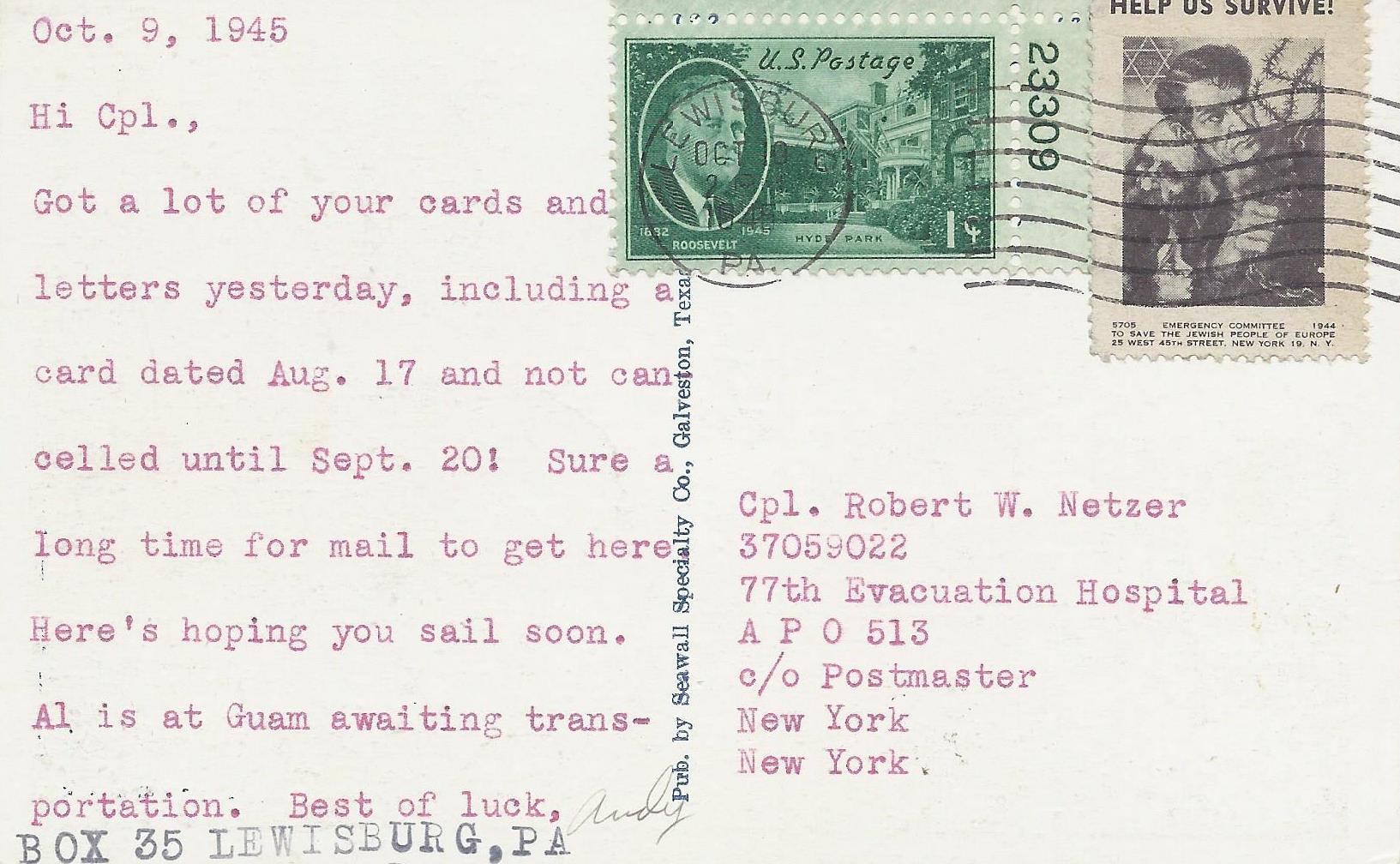
Arthur Szyk
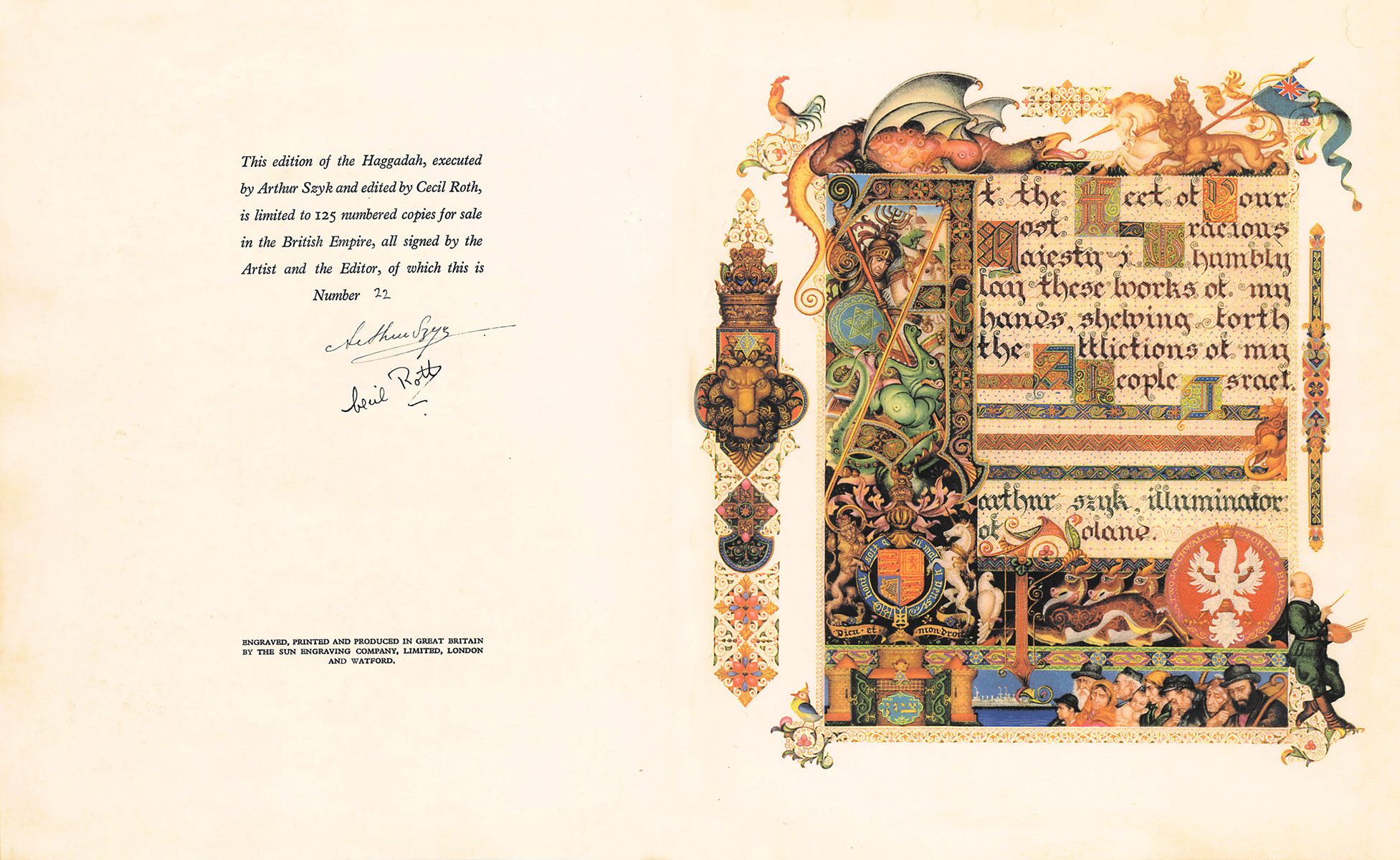
Arthur Szyk (1894–1951) was a Polish-born Jewish artist whose formal training in Paris and Kraków laid the foundation for a prolific career spanning political cartoons, book illustrations, caricatures, and illuminated manuscripts. Working primarily in watercolor and gouache, Szyk earned international acclaim for the extraordinary detail and craftsmanship of his work—perhaps most famously his 1940 Passover Haggadah, of which only 240 copies were produced in London and which remains one of the most celebrated examples of illuminated manuscript art in the modern era. Szyk saw himself as a committed American patriot and a soldier in art, using his remarkable talent to advocate for religious tolerance and racial equality—not only for Jewish people but for African Americans and other minorities as well.
When the Nazis invaded Poland on September 1, 1939, Szyk was working on the Haggadah in London, which spared him the fate of millions of Polish Jews, including his own mother, who was murdered at the Maidanek death camp. From that moment forward, his art became an urgent weapon against fascism. Through magazine covers, poster stamps, charity labels, and booklets produced for organizations like the Emergency Committee to Save the Jewish People of Europe and the American League for a Free Palestine, he channeled his grief and outrage into some of the most powerful anti-Nazi imagery of the era. He continued working until his death in New Canaan, Connecticut in 1951, leaving behind a vast body of work that spanned continents and causes—and that continues to be exhibited in museums, universities, and schools today.
Important Moments
Highlights from the Collection
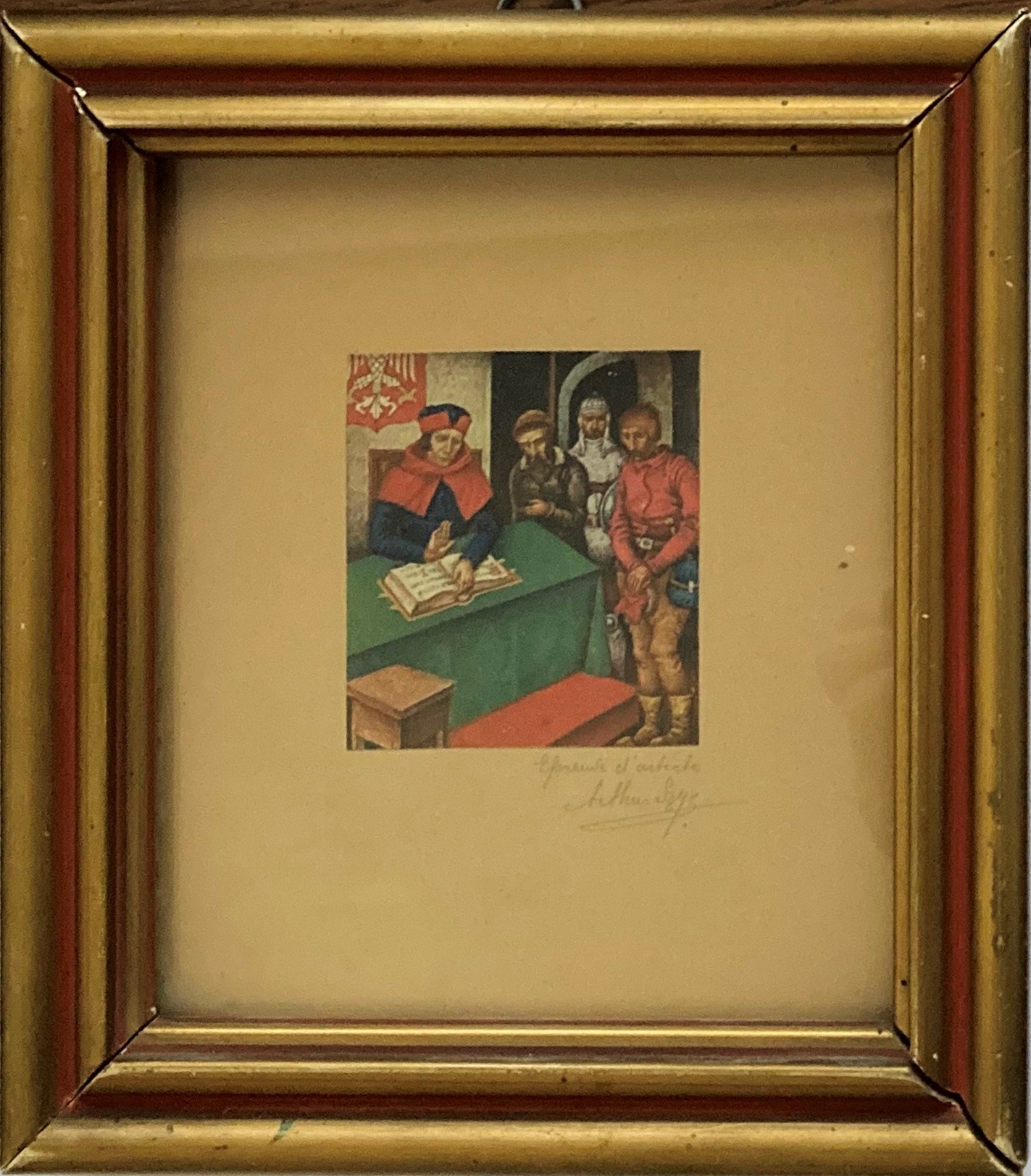
This 1920s print, still in its original frame, was one of a series of “practice” prints, done to check the color and registration of color before printing the actual edition of prints which would be signed and numbered.
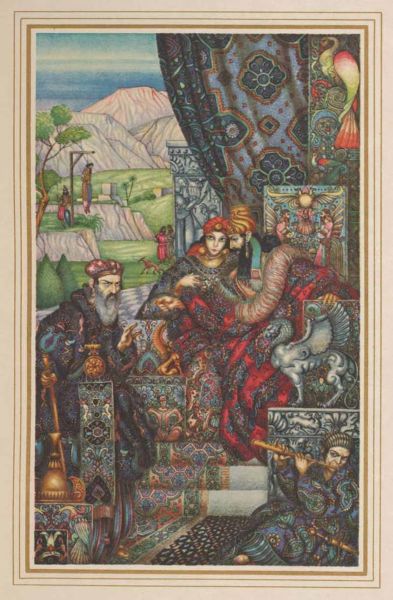
An illustration of Queen Esther, King Ahasuerus, and Mordecai created by Polish-Jewish artist Arthur Szyk.Queen Esther, King Ahasuerus, and Mordecai that Szyk created for his 1925 edition of the BOOK OF ESTHER, published in Paris.

Two WWII-era postcards drawn by Arthur Szyk in 1939, featuring Polish soldiers.
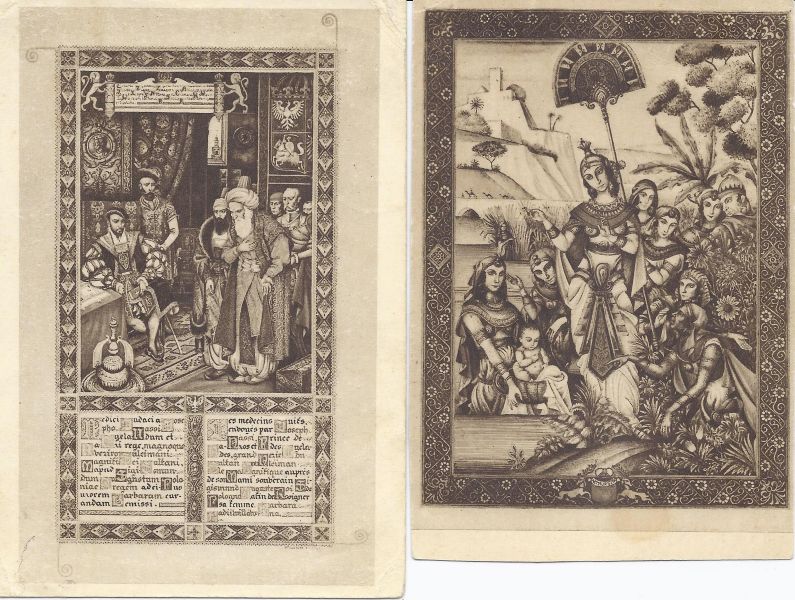
Two postcards featuring illustrations by Arthur Szyk. Both of these were mailed in the early 1930s.

Two WWII-era postcards drawn by Arthur Szyk in 1939.
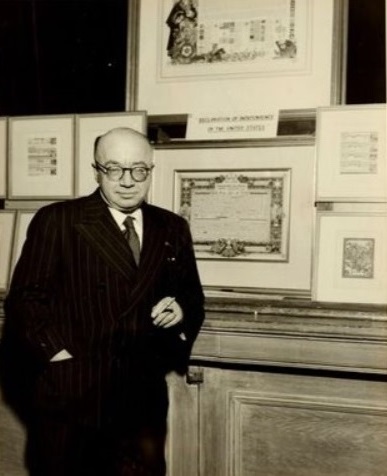
The artist himself, Arthur Szyk pictured with his own works, circa 1950.
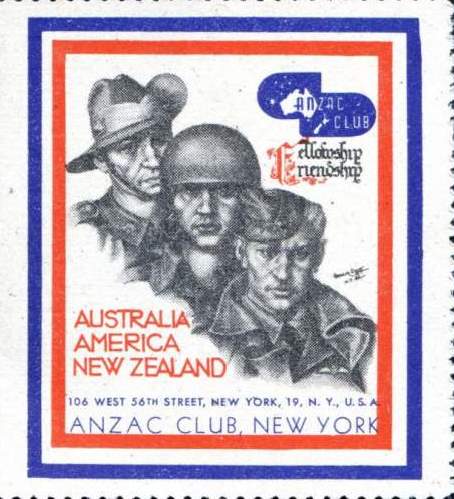
Arthur Szyk drew this cinderella label advertizing the ANZAK club in New York. The ANZAK club was established to provide "a home away from home" for military personnel from Australia and New Zealand. Consider it more or less the equivalent of the USO
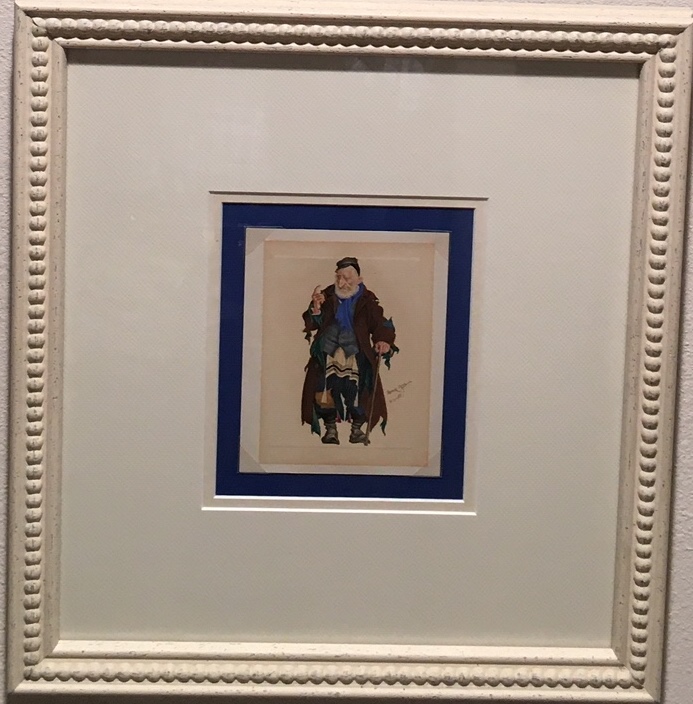
This miniature Arthur Szyk original lives on our living room wall.

"Trumpeldor's Defense of Tel Hai," painted by Arthur Szyk in 1936
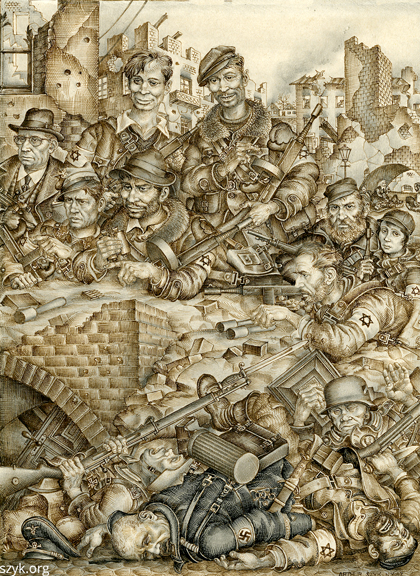
"The Repulsed Attack" is part of Szyk's series, called "The Songs of the Ghetto," depicting the Warsaw Ghetto Uprising.