Jewish Strongmen
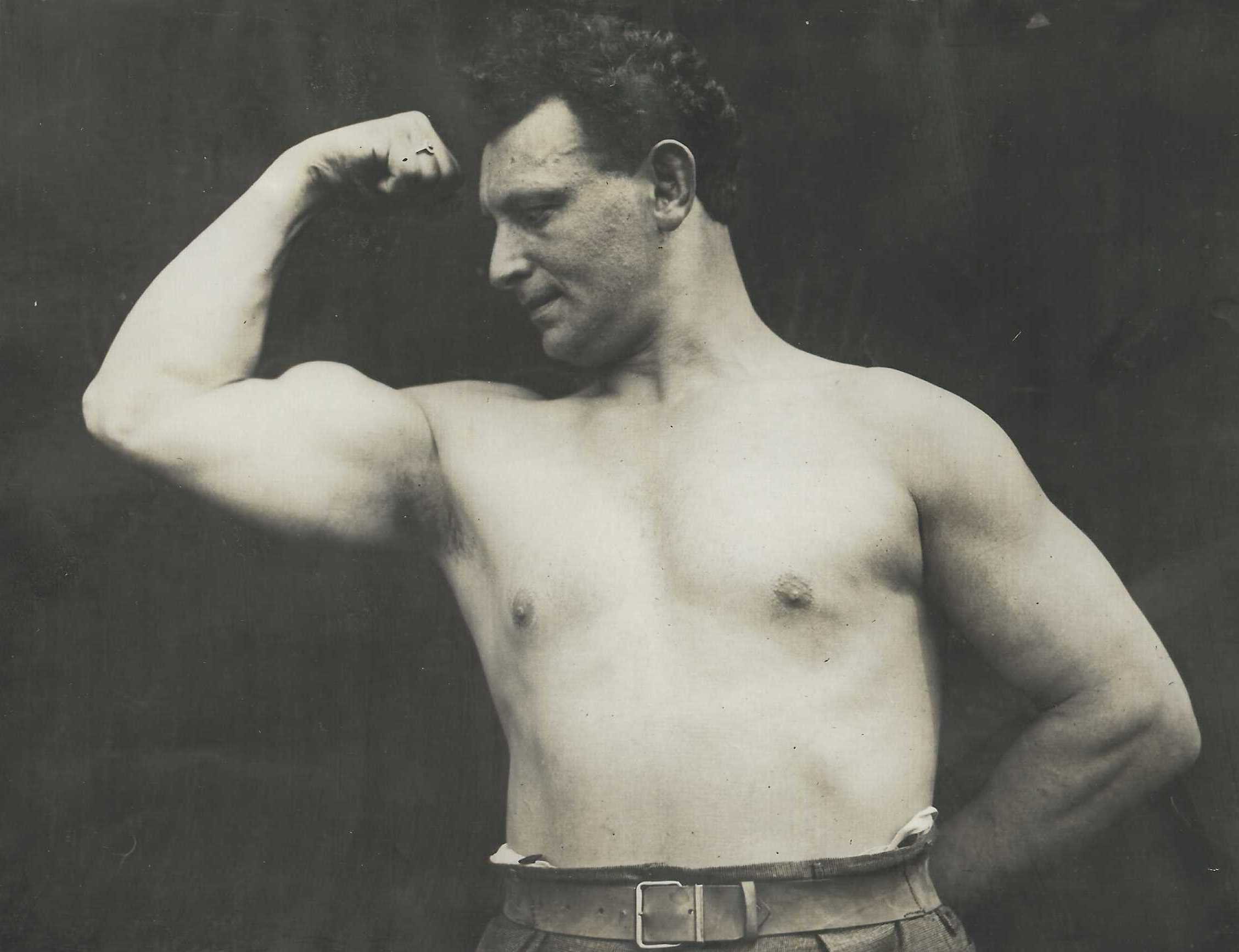
Across the early decades of the twentieth century, when prejudice—and often the law—narrowed opportunity for Jewish men across Europe and the United States, a remarkable group carved out a different path. Figures like Zishe Breitbart, Joseph Greenstein, and Barney Ross recognized something powerful: In an era that restricted where they could work, their sheer physical strength could open even the heaviest doors.
They stepped onto stages, into rings, and onto film sets as wrestlers, performers, and stuntmen, but their careers were about far more than throwing heavy things around. Many of these men were as entrepreneurial as they were physical. Joe Bonomo translated his feats into a successful Hollywood career and later into widely distributed fitness courses—not to mention helping his family's Turkish Taffy company reach exponential heights. Ralph Silverstein and Abe Kaplan similarly leveraged their reputations into teaching systems, publications, and personal brands—early examples of turning expertise into scalable influence. What began as performance became powerful and lucrative business platforms that lasted long beyond their performing years.
For many, their work extended beyond spectacle. Raphael Halpern balanced life in the ring with religious leadership, while Armand Emanuel and Ben Darwin built careers that quietly but firmly affirmed Jewish presence in public life. Others, like Zishe Breitbart, became international symbols, using their visibility to stand in open defiance of rising anti-Judaism in Europe.
Together, these men reveal a pattern that is both practical and deeply human: When traditional avenues were closed, they identified where opportunity existed, and then they made the absolute most of it. They did not simply perform strength; they built livelihoods from it, created educational systems around it, and, in many cases, used it to represent something larger than themselves.
This collection brings their stories into focus not as isolated feats, but as a shared legacy of ingenuity, resilience, and self-definition. Through photographs, memorabilia, and personal histories, we see how strength became more than a spectacle—it became a strategy, a profession, and, ultimately, a way to claim space in a world that often sought to limit it.
Important Moments
Highlights from the Collection

A promotional poster featuring Joseph Greenstein, AKA “The Mighty Atom.” Despite being only 5’4” and about 140 pounds, Greenstein was a renowned strongman for 5 decades in the 20th century.

Greenstein capitalized on his fame by adding healthcare products to his brand. Pep-O-Lax was an “herbal regulator” (read: laxative) intended to clean the colon. Greenstein’s Pep-O-Lax, sold at markets and fairs from the 1940s through ’70s, was marketed to relieve constipation and “boost vigor.” This intact box is a rare find!

Despite his size, Levy was surprisingly agile. Records show he was able to high-kick a tin can, hung six feet off the ground, while standing—a feat many more apparently athletic wrestlers couldn’t achieve.
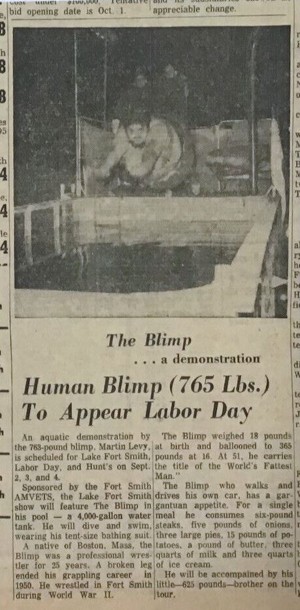
A newspaper article promoting Blimp Levy’s Labor Day aquatic demonstration. This was after a broken leg ended his wrestling career, but Levy still drew crowds. In this case, by diving and swimming in a 4,000-gallon water tank “wearing his tent-size bathing suit.”

A production photo from The Great Circus Mystery, featuring “screen’s strongest man” Joe Bonomo lifting a 250-pound cannon overhead with one hand.
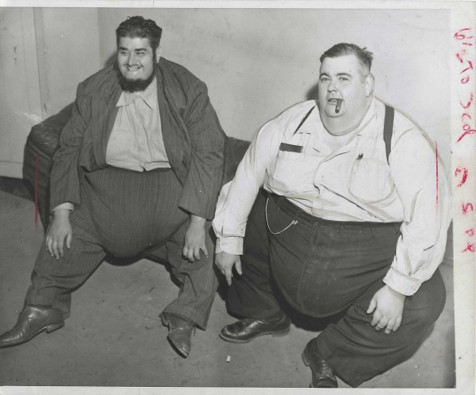
Pictured here are Levy and Thomas “Tiny” Wickam, who served as Levy’s corroborating witness in family court when Levy fought his ex-wife Juanita Thomas’s alimony claims.

The Bonomo Institute of Physical Culture offered several correspondence courses on bodybuilding and physical fitness. In this image from one of the courses, diving champion Bobbie Kashade demonstrates an exercise from Lesson 9.
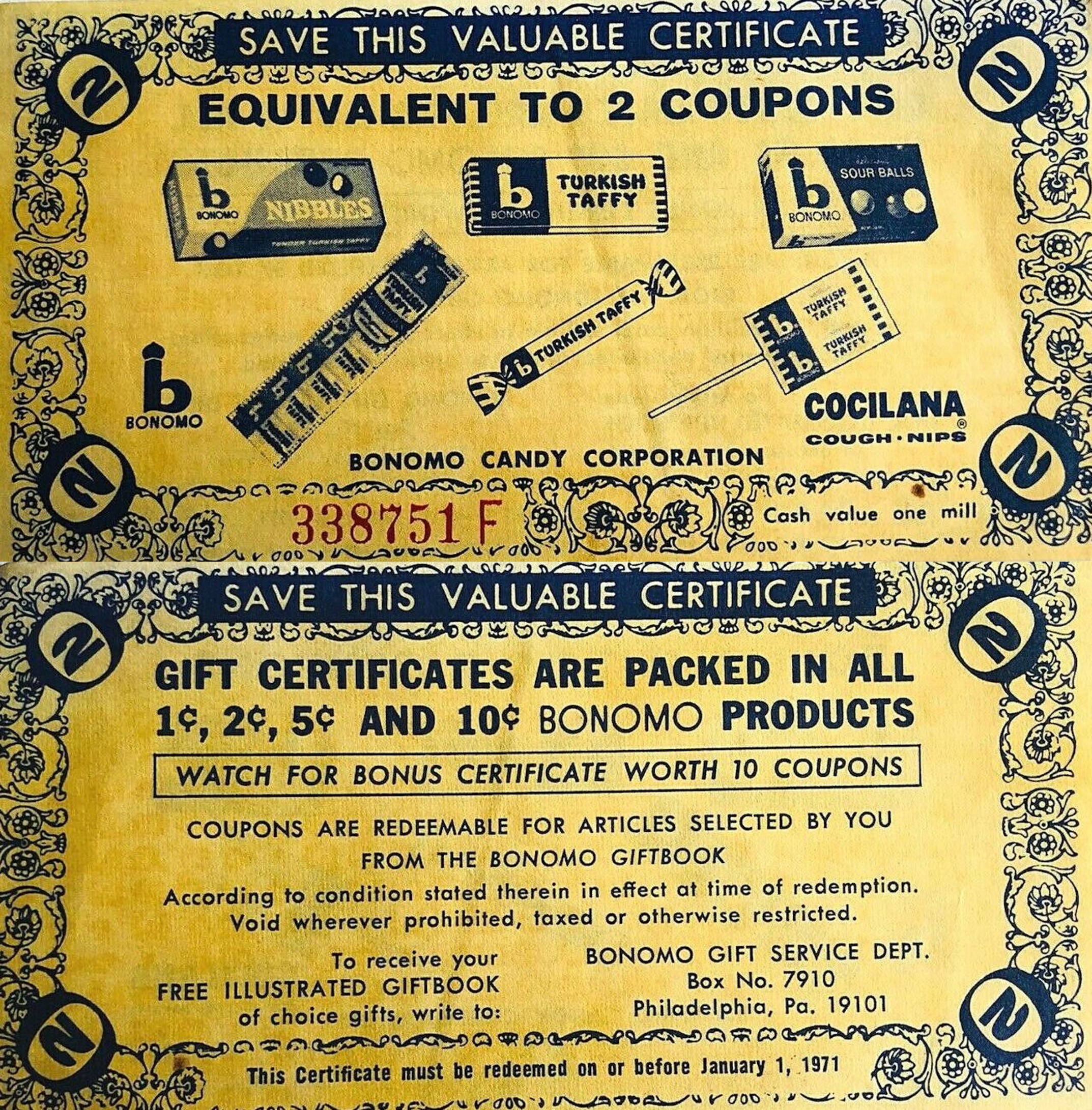
These gift certificates were packed into Bonomo products and redeemable for items in the Bonomo catalog.
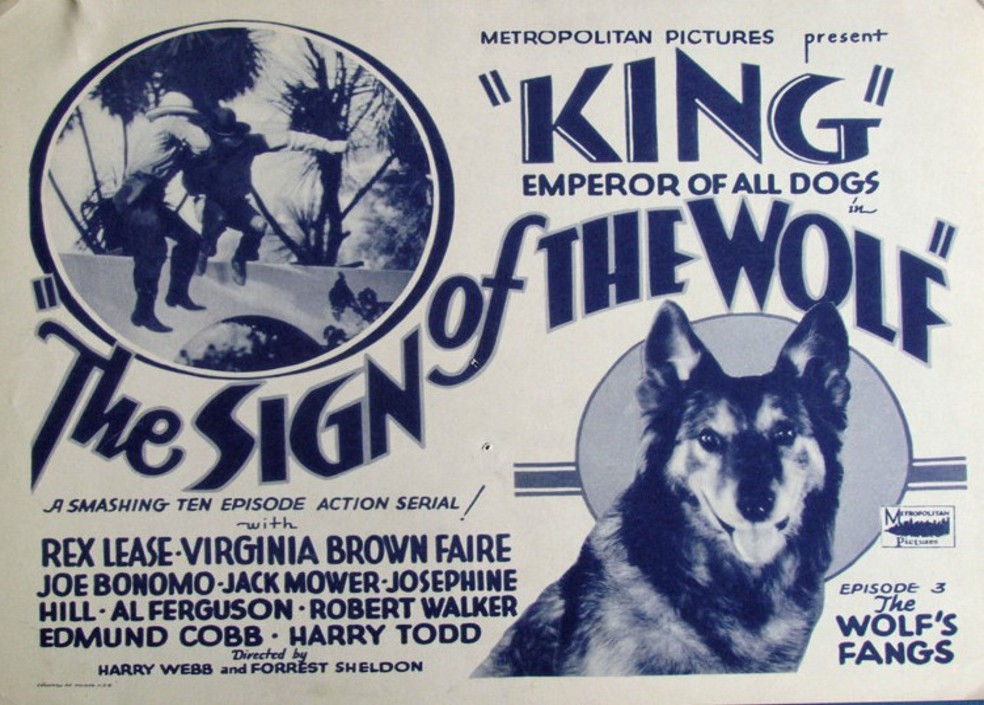
A promotional poster for episode 3 of Metropolitan Pictures 1931 ten-episode action serial, “The Sign of the Wolf,” featuring Joe Bonomo alongside canine silent film star King, often billed as “Emperor of All Dogs.”
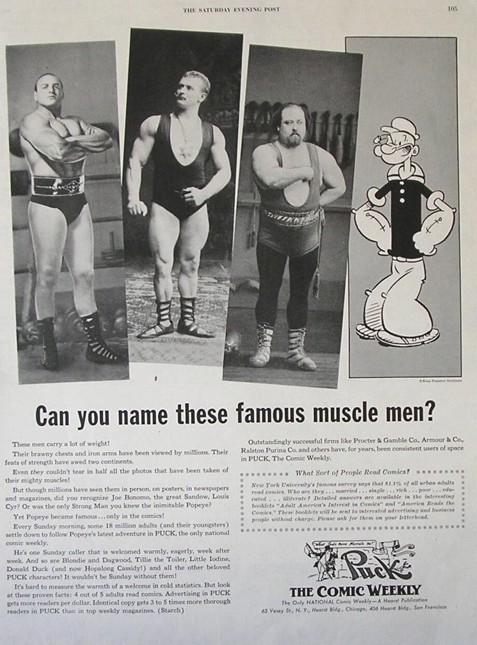
This advertisement for “Puck: The Comic Weekly” (the print home of Popeye the Sailor Man) positions Popeye next to famous muscle men including Joe Bonomo (left).
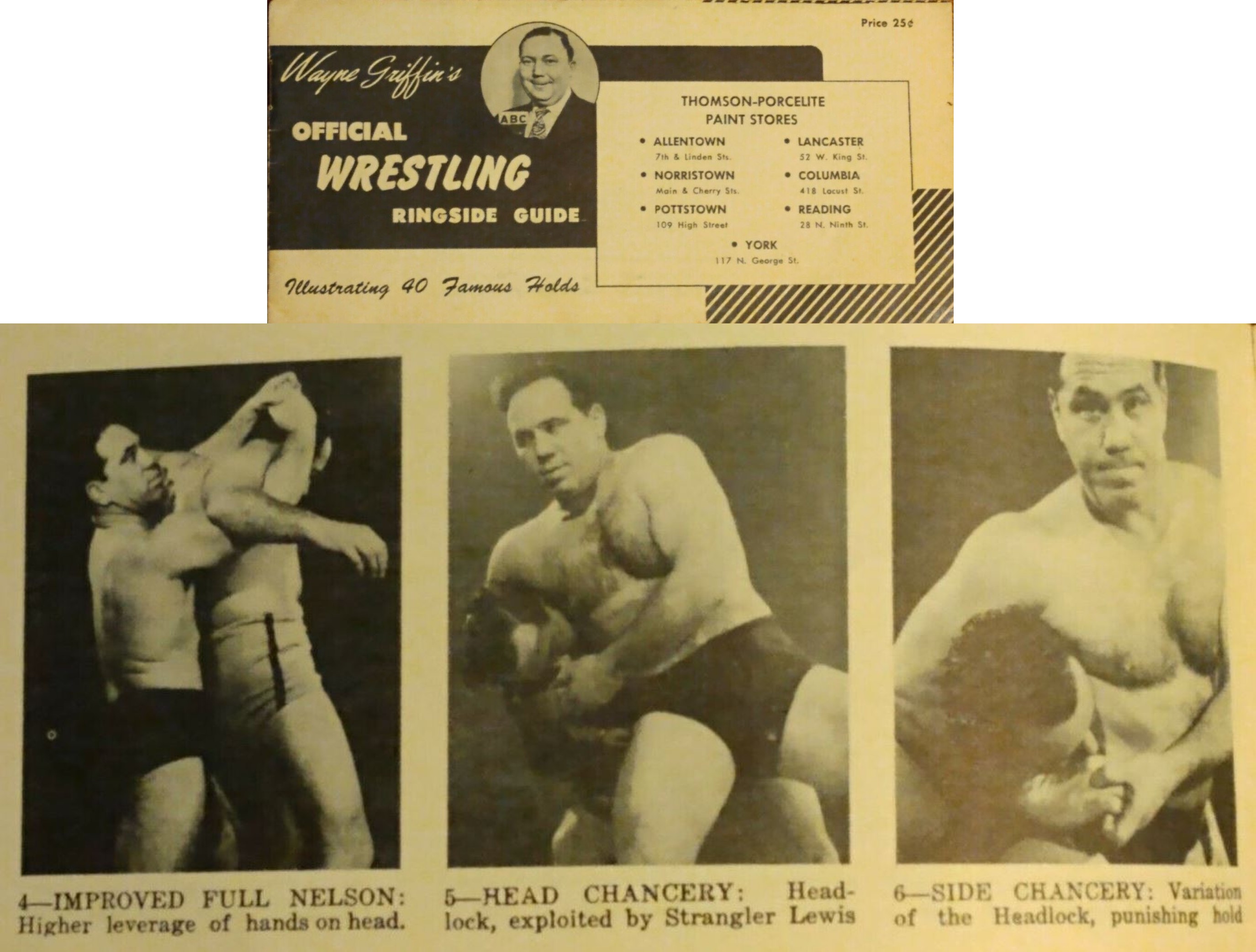
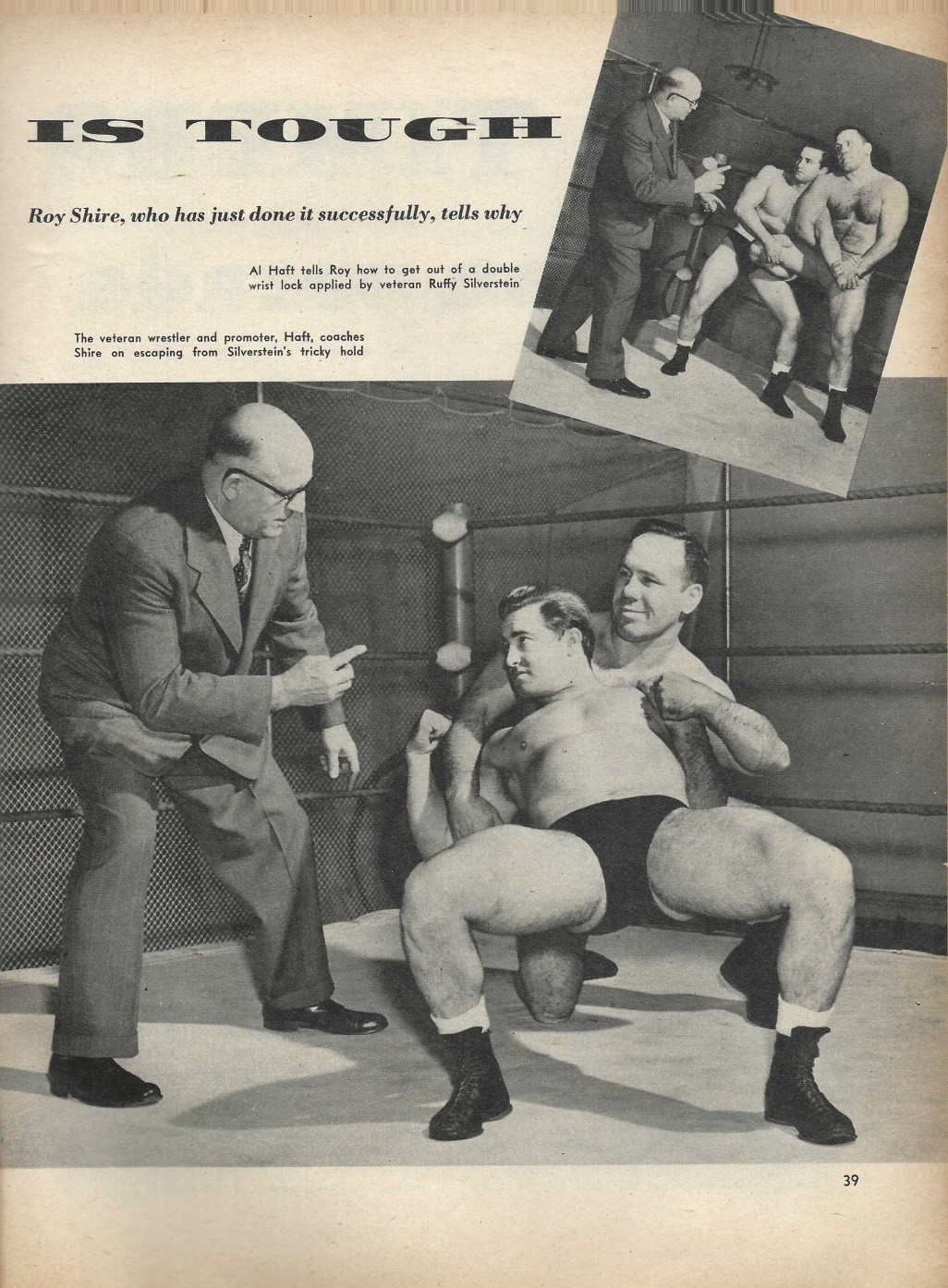
Wayne Griffin’s Official Wrestling Ringside Guide illustrated 40 holds for fans to study, including three of Ruffy Silverstein’s signature holds. Griffin was a well-known wrestling announcer active during the 1940s and ’50s.

A program for the third annual “Polio Wrestling Show,” which took place in 1954 to raise money for March of Dimes.